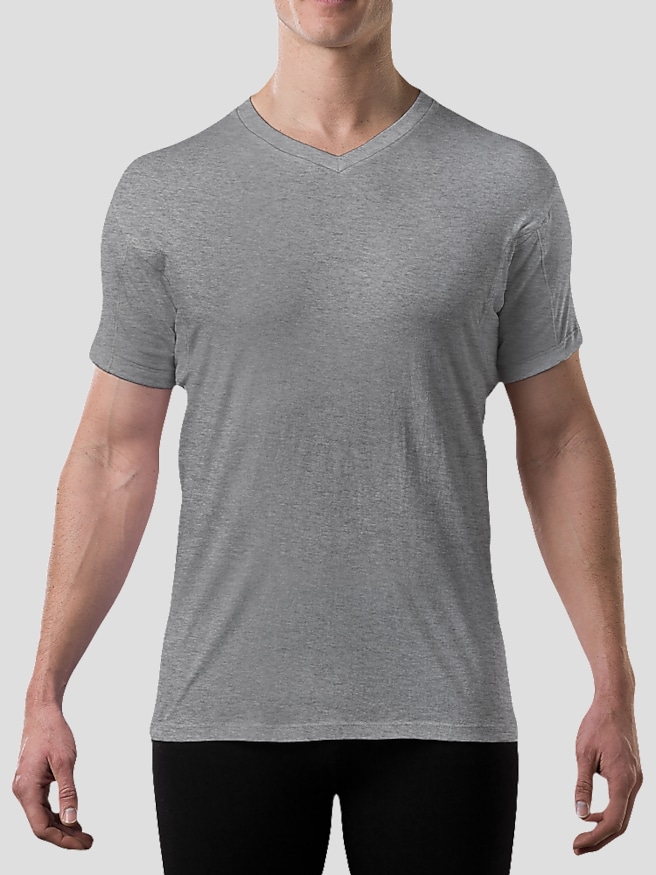
An undershirt for suits is a close-fitting base layer worn beneath a dress shirt to absorb perspiration, help limit the transfer of body oils, and create a smoother foundation under tailored clothing. It is meant to stay out of sight while making the layers above it more comfortable to wear. At a desk, across a conference table, or during a wedding reception, that extra layer can reduce direct contact between skin and a dress shirt, particularly through the chest, back, and underarms. An undershirt does not make a dress shirt stainproof, but it can help intercept moisture and residue before they reach the outer fabric. The details that distinguish Men's Undershirts, including neckline depth, sleeve shape, fabric weight, and stretch, become especially noticeable beneath a fitted dress shirt and suit jacket. A crew neck generally works best when the dress shirt is buttoned high enough to conceal it, as with many tie-and-collar combinations. A V-neck provides a lower neckline for an open collar, though the depth needs to match how many shirt buttons are left undone. A broad or shallow V can still appear at the collar opening when the wearer sits or leans forward. Color also affects how discreet the layer looks. White is familiar, but it can create a visible outline beneath a lightweight white dress shirt. A shade closer to the wearer’s skin tone often produces less contrast, while light gray may be less conspicuous than bright white beneath some fabrics. The most useful match depends on the dress shirt’s weave, opacity, and fit rather than color alone. Underarm coverage matters, too: short sleeves place fabric between the skin and the shirt in an area where moisture commonly collects, while a sleeveless shape leaves that area exposed. The right combination keeps the attention on the suit rather than the layer beneath it.
Fabric determines much of an undershirt’s feel over a full day of wear. Cotton is soft and absorbent, making it a familiar choice for everyday dressing, although it can hold moisture after absorbing it. Cotton blends can add stretch, improve shape recovery, or change how quickly the fabric dries, depending on the fibers and construction. Modal and similar regenerated cellulose fibers often have a smooth hand and fluid drape, which can feel less bulky beneath a closely fitted shirt. Synthetic performance blends may be designed to move moisture across the fabric and dry more quickly, but those qualities depend on the particular textile rather than the fiber name alone. Fabric weight matters just as much as composition. A substantial everyday T-shirt can bunch at the waist or leave noticeable sleeve edges beneath fine shirting, whereas a lighter undershirt is generally easier to conceal. Thin fabric still needs enough resilience to withstand regular wear and washing without becoming stretched or misshapen. A useful fit follows the torso without pulling tightly across the chest or restricting movement through the shoulders. Excess fabric can collect above the waistband, creating folds that show through a dress shirt when the jacket comes off. Too little room can pull at the armholes or cause the hem to creep upward. Stretch can help the layer move with the body, but it should not have to compensate for an unsuitable size. Smooth seams, soft neckline bindings, and unobtrusive hems reduce the chance of ridges showing through. A tag-free neckline or soft label can also make a difference when a collar and tie stay fastened for hours. Enough body length helps the undershirt remain tucked while reaching for an overhead bag, sitting through a meeting, or raising an arm to greet someone. Sleeves should lie flat without bunching inside the dress shirt or extending beyond its short sleeves when worn without a jacket.
Care and durability are part of the value of an undershirt that sees frequent use. Following the care label helps preserve the intended fit, particularly with cotton fabrics that may shrink and stretch blends that can lose recovery with excessive dryer heat. Washing after wear removes perspiration, skin oils, and deodorant residue before they build up in the fabric. Overloading the wash or using more detergent than needed can make thorough rinsing harder, leaving a layer that feels less comfortable against the skin. Fabric softeners may interfere with moisture-management finishes on some performance fabrics, so the garment’s instructions matter more than a universal laundry routine. Neckbands, underarm seams, and hems are useful places to notice wear: a stretched collar, persistent twisting, or seams that no longer lie flat can affect how discreetly the undershirt sits beneath a dress shirt. Rotating several undershirts through regular use makes it easier to keep a clean base layer ready without repeatedly washing and wearing the same one. For someone who wears a suit most workdays, consistent fit and dependable laundering may matter more than an especially plush feel. For occasional formal dressing, concealment beneath a particular dress shirt may be the deciding detail. A wedding outfit with an open collar calls for a neckline that stays hidden in photographs as well as while standing at the ceremony; a job interview outfit benefits from a smooth torso and a hem that remains tucked when sitting down. Travel adds another consideration, since a base layer that folds compactly and dries according to its care requirements can be easier to manage between engagements. Undershirts can also be a practical gift for a graduate beginning a professional wardrobe or someone who regularly dresses for client meetings, provided the recipient’s size and neckline preferences are known. Across these uses, the best foundation is unobtrusive: comfortable against the skin, proportioned for the clothing above it, and sturdy enough to maintain its shape through repeated wear.