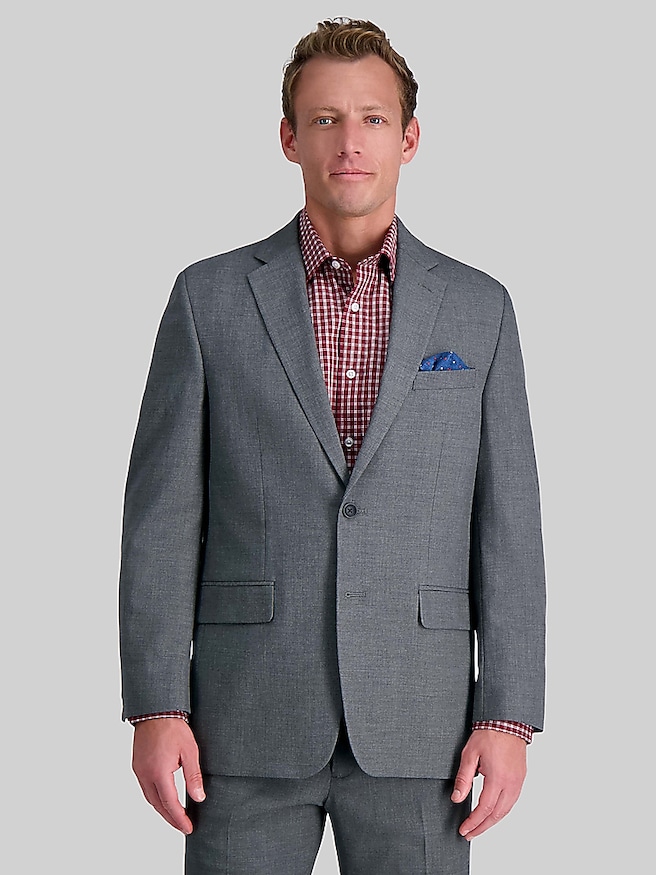
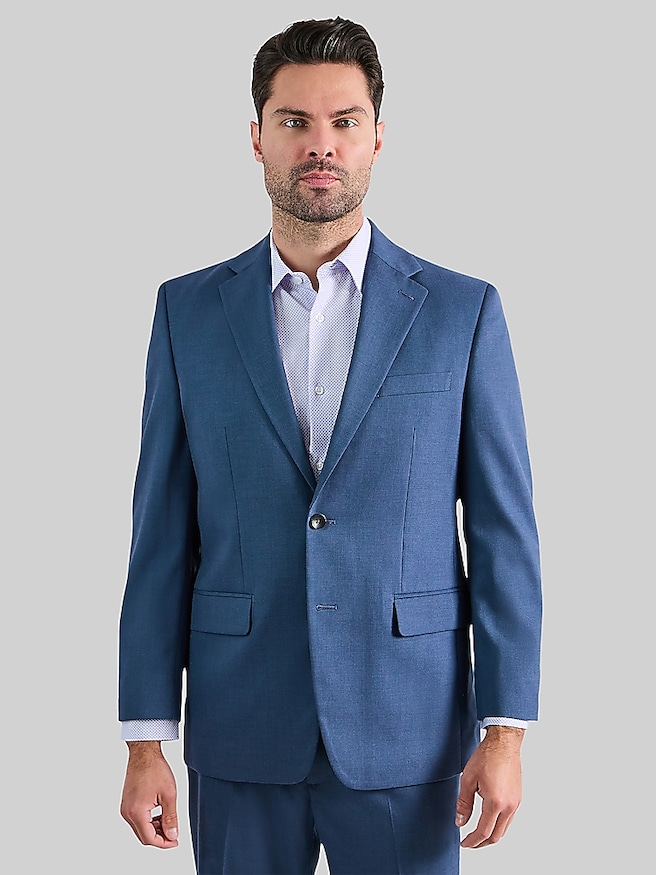
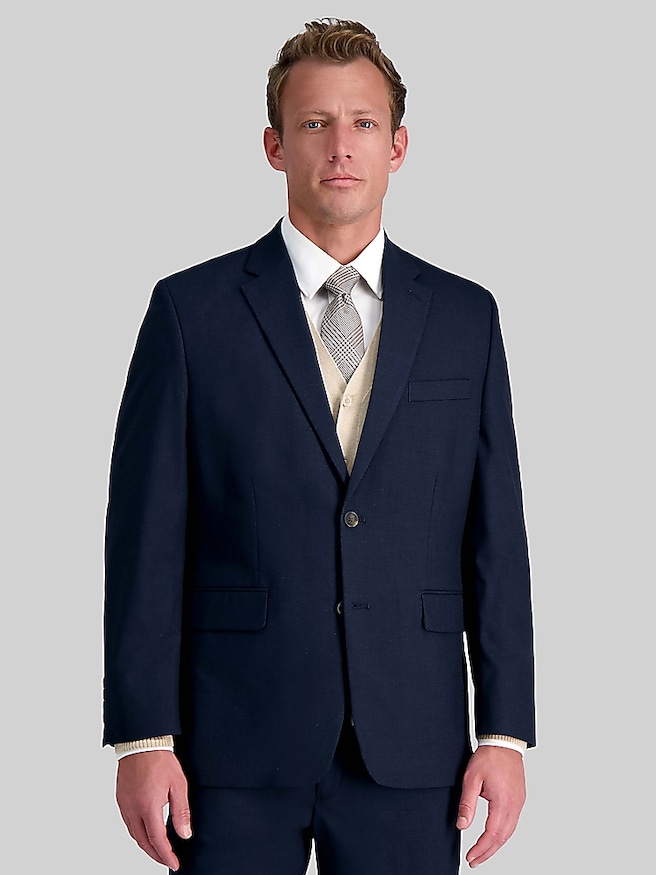
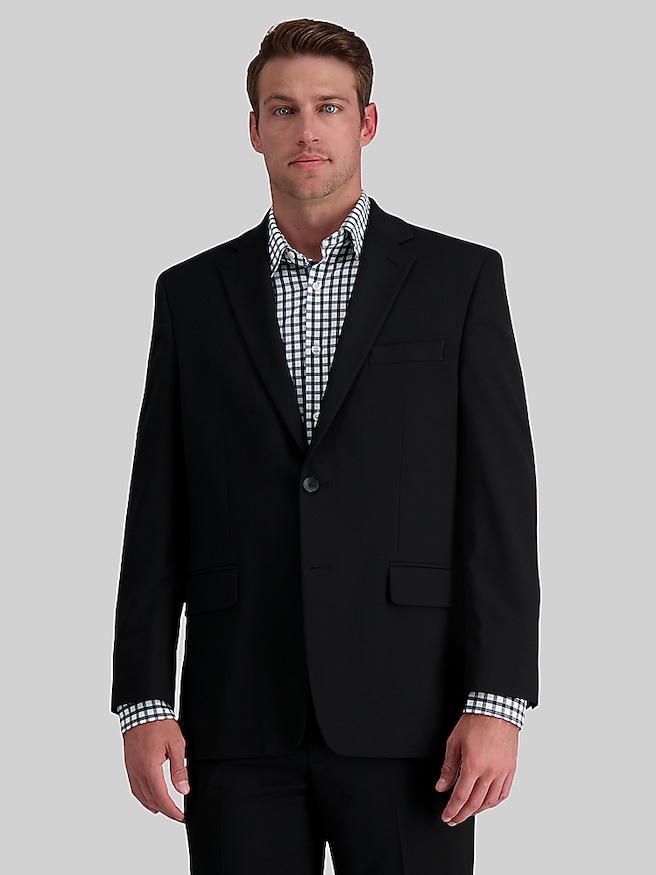
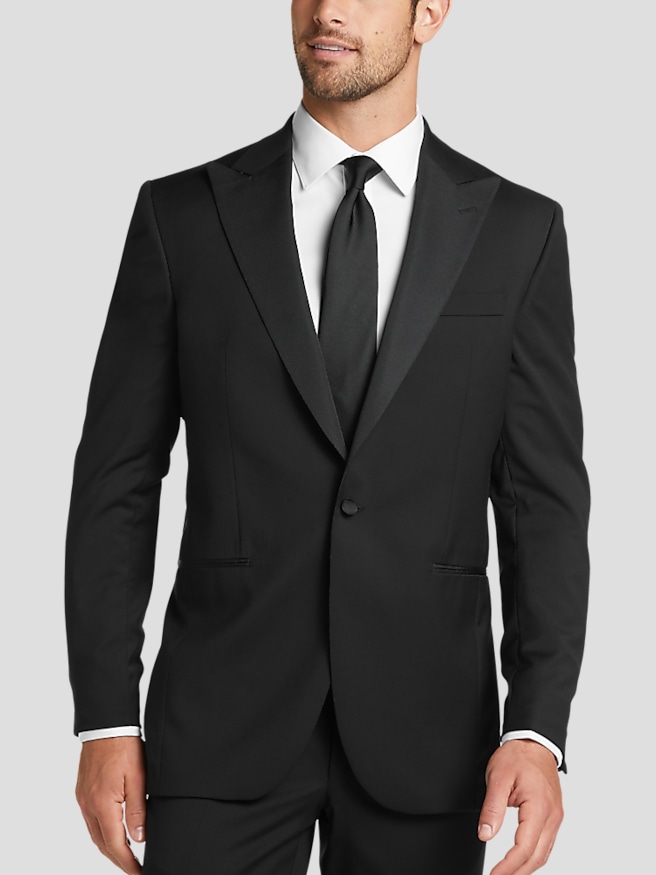
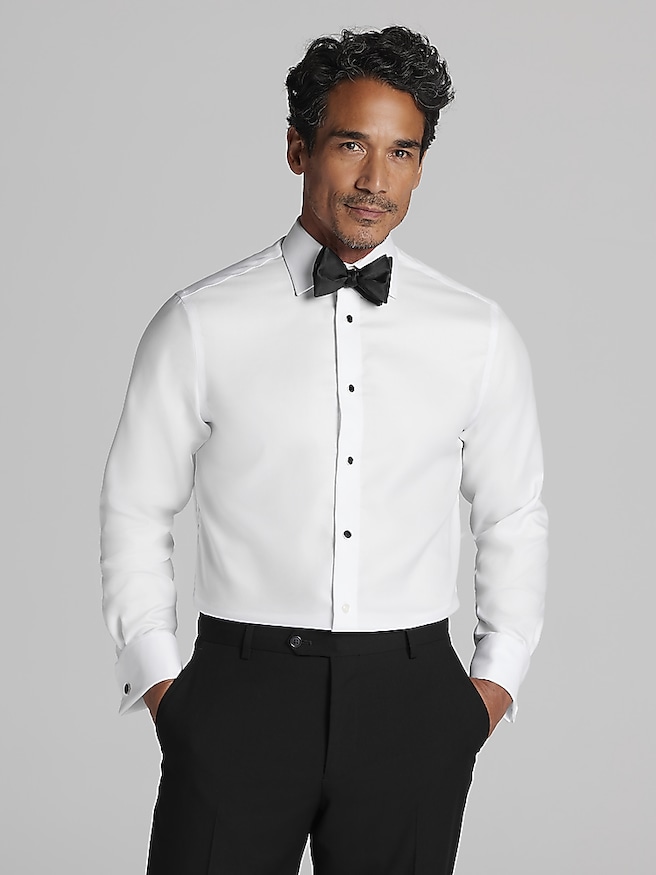
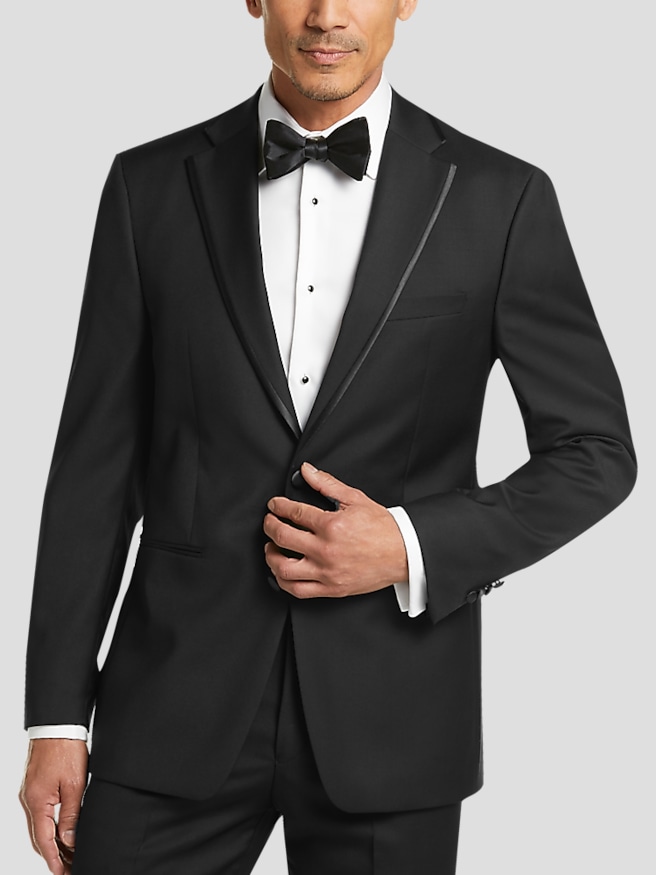
A tuxedo fit should create a clean, confident outline while allowing you to move naturally through a ceremony, reception, gala, or evening celebration. The right proportions begin at the shoulders: the jacket seam should meet the edge of your natural shoulder bone rather than extending beyond it or pulling inward. From there, the chest should lie smoothly when the jacket is buttoned, with no pronounced pulling across the front and no excess fabric collapsing beneath the arms. A well-fitted jacket typically ends around mid-crotch and should cover the seat without appearing oversized. The sleeves should finish near the wrist bone, leaving roughly a quarter to half an inch of shirt cuff visible for a polished, intentional frame around the hands. These details work together to make formal clothing look composed from every angle, whether you are standing beneath warm reception lights, seated at a long dinner table, or greeting guests outdoors during the cooler months. Fit also shapes comfort. A jacket that follows your natural frame can feel secure without restricting your reach, while trousers should sit comfortably high on the hips and remain in place without relying on a belt. Since formal trousers commonly have no belt loops, the waistband deserves particular attention: it should feel supportive when standing and sitting, with enough room for easy movement but not so much space that the trousers sag or require constant adjustment. Measurements taken while wearing the shirt you plan to pair with the tuxedo can provide a more realistic starting point, especially around the chest, waist, sleeve, and inseam. For additional outfit context, the Tuxedo Essentials collection brings together the foundational pieces that help create a complete formal look.
When choosing among tuxedo fits, consider both your proportions and the way you expect to move during the event. A slim fit follows the body closely through the chest, waist, and legs, creating a streamlined appearance for those who prefer a sharper, narrower profile. A modern fit offers a balanced shape with room through key movement areas while maintaining a neat line, making it a versatile choice for many builds and occasions. A classic fit provides additional ease through the chest, waist, and thigh, which can be especially helpful if you value a relaxed feel or spend long hours seated, walking, and greeting people. None of these options is automatically better than the others; the best choice is the one that follows your frame without disguising it beneath excess fabric or forcing you into a restrictive silhouette. When assessing the jacket, close the front and observe the button area. The fabric should remain flat rather than forming a starburst of tension, and the lapels should rest smoothly against the chest. Raise your arms, reach forward, and sit down to make sure the armholes and back allow natural movement. For trousers, look for a clean line from the hip through the thigh and knee. Flat-front styling often creates a sleek, current appearance, while a modest taper can keep the leg line refined without clinging. At the hem, the trouser edge should rest lightly on the shoe with a minimal or slight break. Too much fabric pooling around the ankle can make an otherwise well-proportioned tuxedo look untidy, while a hem that sits too high may interrupt the formal line. Shoes, shirt thickness, and the height of the waistband can all influence how the finished trouser length appears, so try to judge the full outfit together rather than evaluating one piece in isolation.
Tuxedo fit matters for anyone preparing for a milestone evening, including a groom, a member of the wedding party, a graduate attending a formal celebration, or a guest dressing for a black-tie gathering. It can also make a thoughtful gift for someone preparing for a ceremony, anniversary dinner, winter gala, or another event where polished formalwear will be part of the experience. If the tuxedo is being given as a gift, useful details include the recipient’s jacket size, dress-shirt size, waist and inseam measurements, preferred fit, and typical shoe height. A trusted jacket from the closet can offer helpful reference points, but measuring the body is often more accurate, particularly when switching between different fit profiles. Personal preference should guide the final choice as much as numerical measurements. Someone who prefers a trim silhouette may appreciate a closer cut, while someone who values room for movement may feel more confident in a classic shape. Consider the event setting as well: an indoor evening ceremony may call for a precise, structured appearance, while a celebration that includes travel, mingling, or time outside may make ease and mobility especially important. Small adjustments can have a noticeable effect. Shirt cuffs should show evenly beneath both sleeves, the jacket collar should sit close to the neck without bunching, and the trouser waistband should remain level as you walk. A tuxedo should look intentional when you are standing still and remain comfortable when the evening becomes active. Choosing a fit with these practical details in mind helps create a polished appearance that photographs well, feels natural through every part of the occasion, and remains dependable across the cooler months.