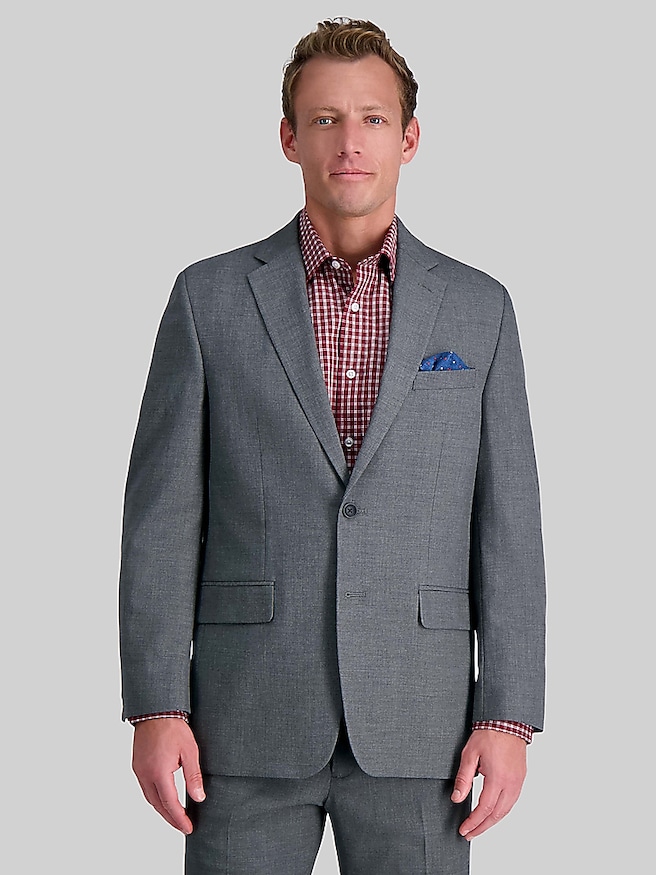
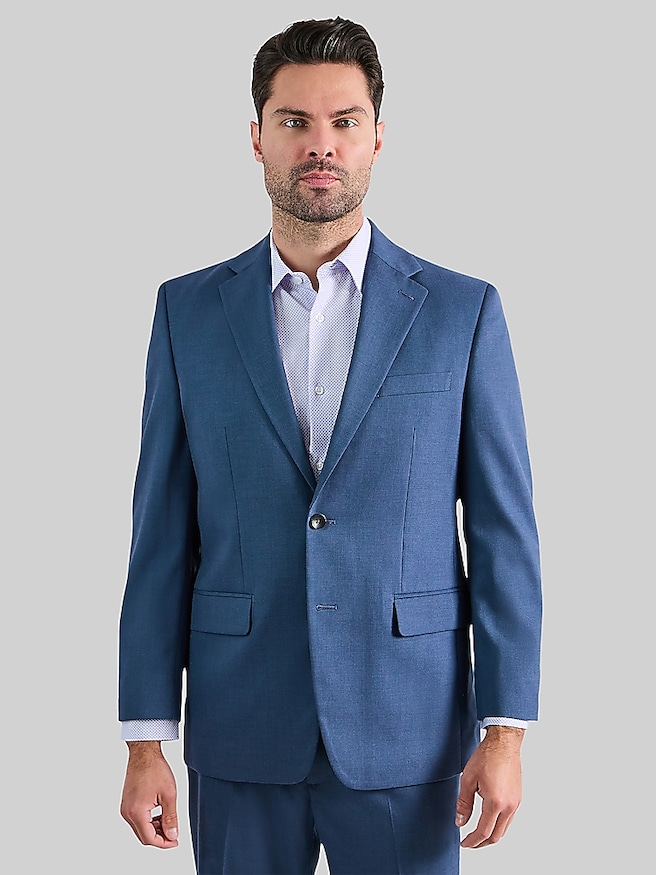
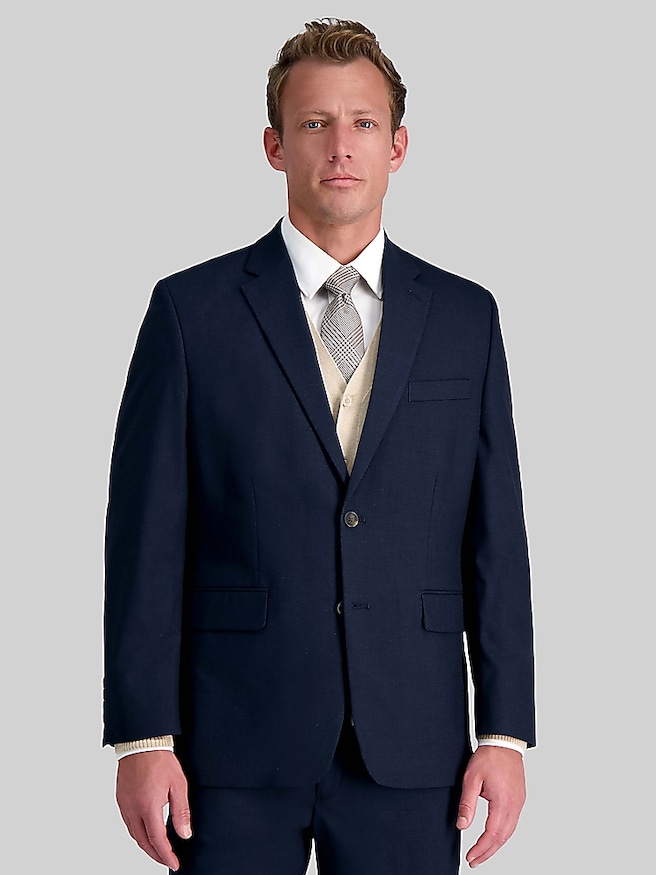
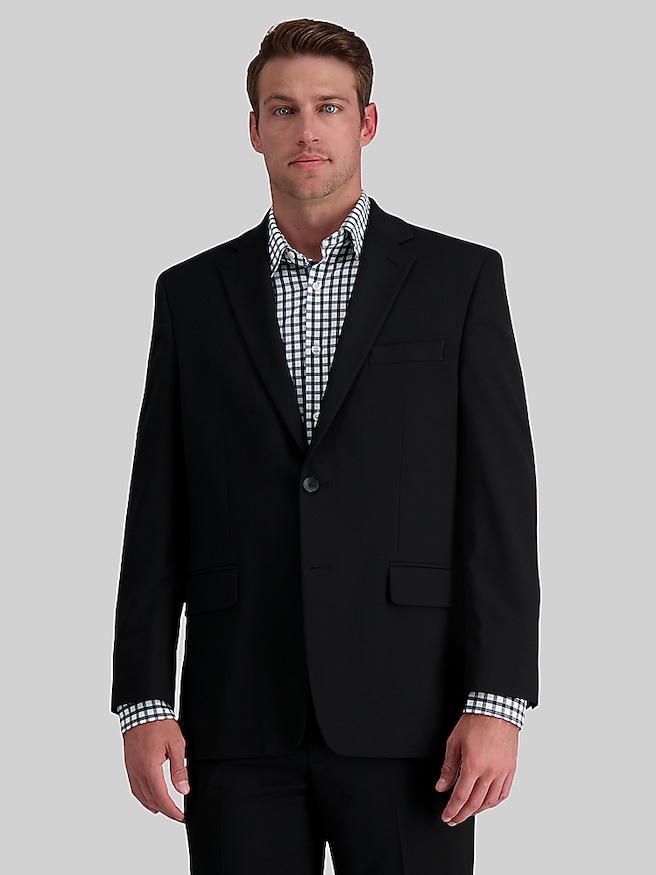
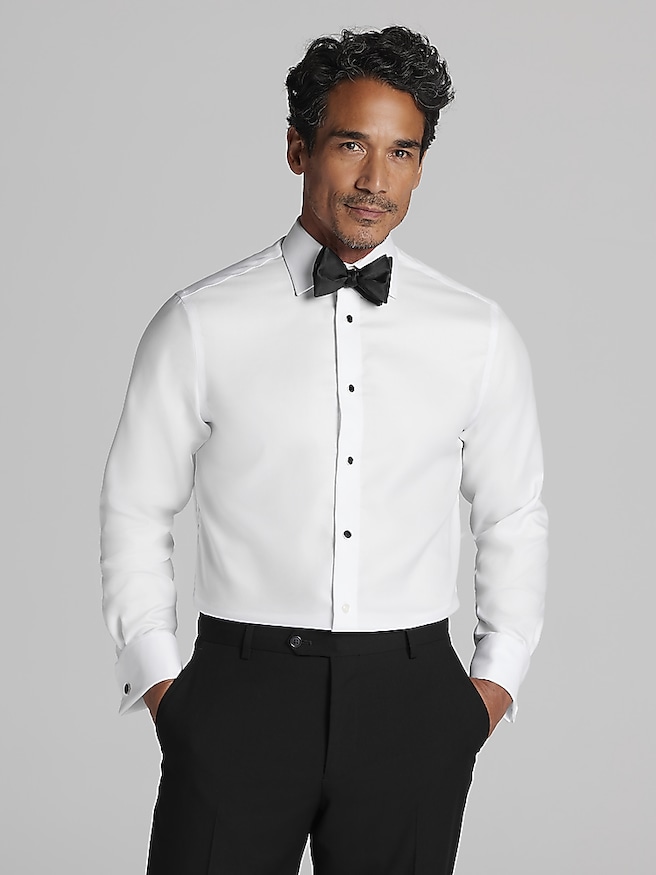
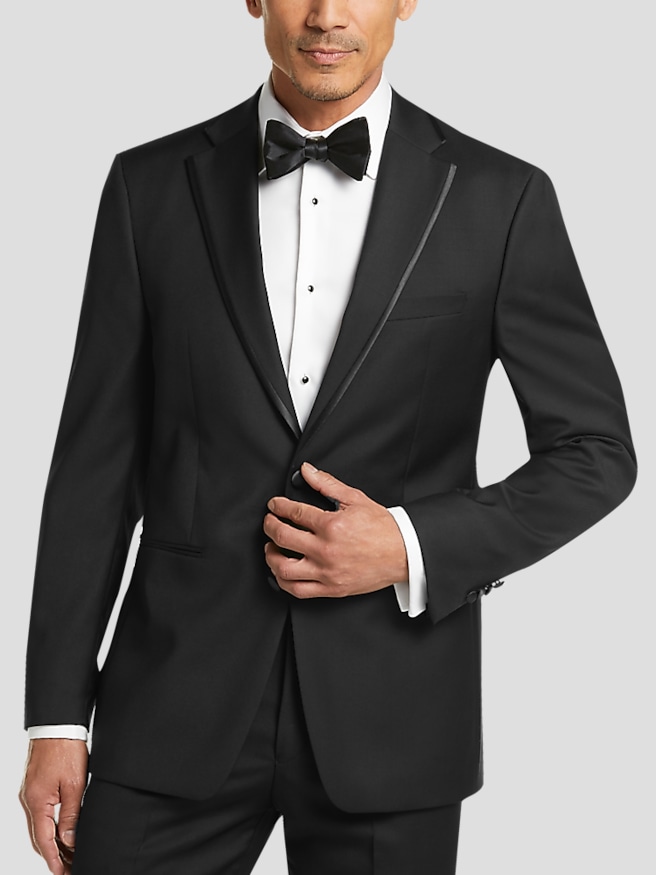
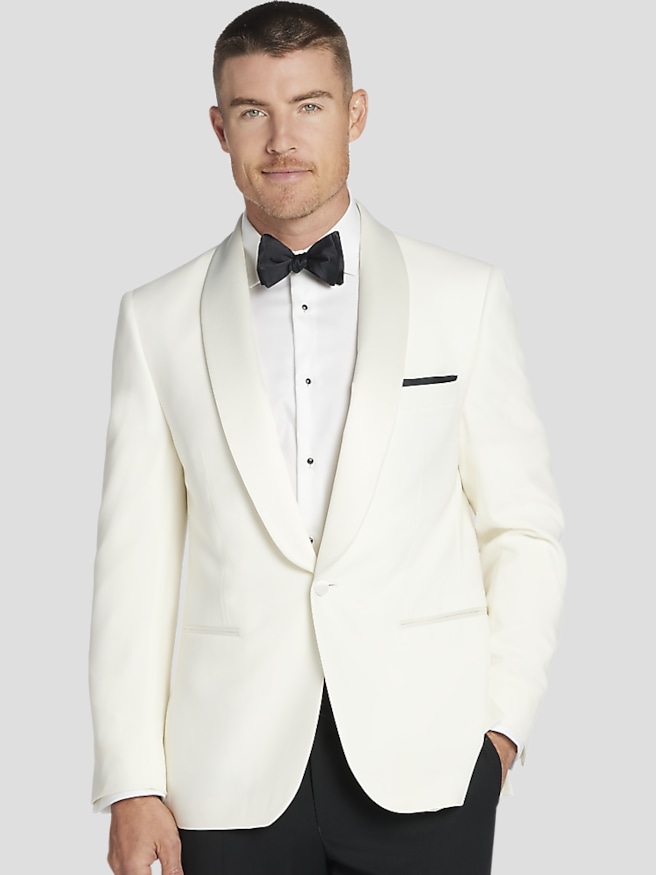
Tuxedo trends bring fresh color, texture, and proportion to a category grounded in classic eveningwear. Black remains the benchmark for a traditional tuxedo, while midnight navy offers a subtle alternative with similar formal appeal. Forest green and burgundy introduce richer color, particularly in settings where the invitation leaves room for personal style. The strongest looks balance those choices with familiar tuxedo details: satin or grosgrain lapel facings, clean trouser lines, and a shirt that sits neatly beneath the jacket. A tuxedo is distinguished from an everyday suit by its formal construction and finishing, often including covered buttons and a matching stripe along the outside trouser seam. Those details matter more than novelty alone. Peak lapels create a defined, upward line across the chest, while a shawl collar forms a smooth curve that feels especially natural with a bow tie. Slim silhouettes remain part of the picture, but a close fit does not need to mean a tight fit; modern tailoring can follow the body while leaving enough room to sit through dinner or move comfortably across a dance floor. Alongside fitted shapes, more relaxed proportions offer another way to make formalwear feel personal without losing its structure. The appeal of Contemporary Tuxedos lies in that balance between recognizable black-tie styling and an updated silhouette. For a groom, a wedding guest, or someone attending a gala, the occasion still provides the clearest starting point. A strict black-tie invitation generally calls for greater restraint than a creative formal celebration, where a textured jacket or deeper color may fit the setting. A coordinated tuxedo in black or midnight navy provides a dependable foundation for repeated formal occasions, while expressive colors and finishes make a stronger visual statement. In photographs, restrained accessories keep attention on the overall shape and the person wearing it rather than a collection of competing details.
Fabric gives these tuxedo trends much of their character. Wool is a traditional choice because it can drape cleanly, hold a pressed line, and offer natural resilience through repeated wear. Its appearance varies with the weave and finish: some cloth has a smooth, understated surface, while other fabric shows more texture up close. Wool blends can combine that tailored appearance with other performance qualities, though the fiber percentages and construction determine how a particular cloth feels and behaves. A small amount of stretch may improve ease of movement, but it cannot compensate for a jacket that is too narrow through the shoulders or trousers that pull across the seat. Velvet creates a more pronounced texture, catching light across its pile and giving deep colors visual depth. It works especially well as a statement within an otherwise restrained formal outfit, although its surface requires careful handling to avoid crushing or unwanted shine. More lustrous cloth can also look striking under event lighting, but too many shiny elements can compete with one another. Matte fabric beside a satin lapel often creates enough contrast on its own. Fit brings these material choices into focus. The jacket collar should rest against the shirt collar without an obvious gap, and the shoulders should lie smoothly rather than extend well beyond the body or bunch near the sleeve head. When the jacket is buttoned, strong diagonal pulling across the front usually signals that the fit needs attention. Trouser rise influences both comfort and proportion, especially when a formal shirt stays tucked through hours of standing, sitting, and dancing. A hem with little or no break gives a clean finish, provided it works with the trouser width and the shoes. Before an important event, trying the complete outfit together reveals details that a jacket-only fitting can miss, from an exposed waistband to a sleeve that conceals the shirt cuff. Comfortable tailoring should look composed in motion, not only in a mirror.
The most useful approach to tuxedo styling is to give each detail a clear role. A white formal shirt creates a crisp contrast with a dark jacket, while its collar should accommodate the chosen bow tie without crowding the neckline. Pleated fronts, textured bibs, and smoother shirt fronts each change the impression slightly, so consistency matters more than adding every formal detail at once. A waistcoat or cummerbund can provide a finished transition between shirt and trousers when appropriate to the ensemble; wearing both together generally adds unnecessary bulk. Polished formal shoes, discreet cuff links, and a neatly arranged pocket square complete the outfit without overwhelming it. For a wedding party, a shared level of formality creates cohesion even when each person needs a distinct cut or proportion. For someone who attends benefit dinners, awards ceremonies, or formal business celebrations, understated styling can make a tuxedo easier to wear across multiple settings. Accessories can also be thoughtful gifts for a graduate preparing for formal events or a partner marking a milestone, particularly when the recipient’s preferred metals, shirt details, and dress code are known. Long-term value depends on care as much as styling. After wear, a tuxedo benefits from time to air out before it goes back into a breathable garment bag. A broad, shaped hanger supports the jacket shoulders, and trousers should be hung carefully to preserve their crease. Following the garment’s care label is essential; tailored eveningwear often requires professional cleaning, and visible spots deserve prompt attention rather than vigorous rubbing. Unnecessary cleaning can add wear, so routine care should focus on appropriate airing, gentle surface maintenance, and professional treatment when needed. Lapel facings and velvet need particular caution around heat and pressure. Sound seams, secure buttons, a well-supported lining, and fabric that recovers after movement all contribute to durability. With thoughtful fit and consistent care, a tuxedo can reflect an individual sense of style while retaining the polished character that makes formal dressing feel distinct.