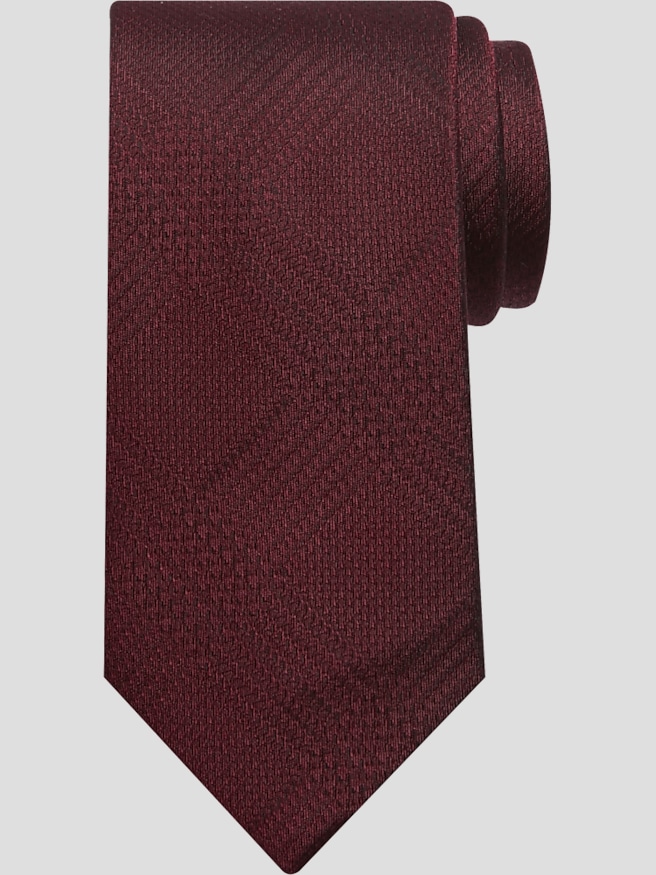
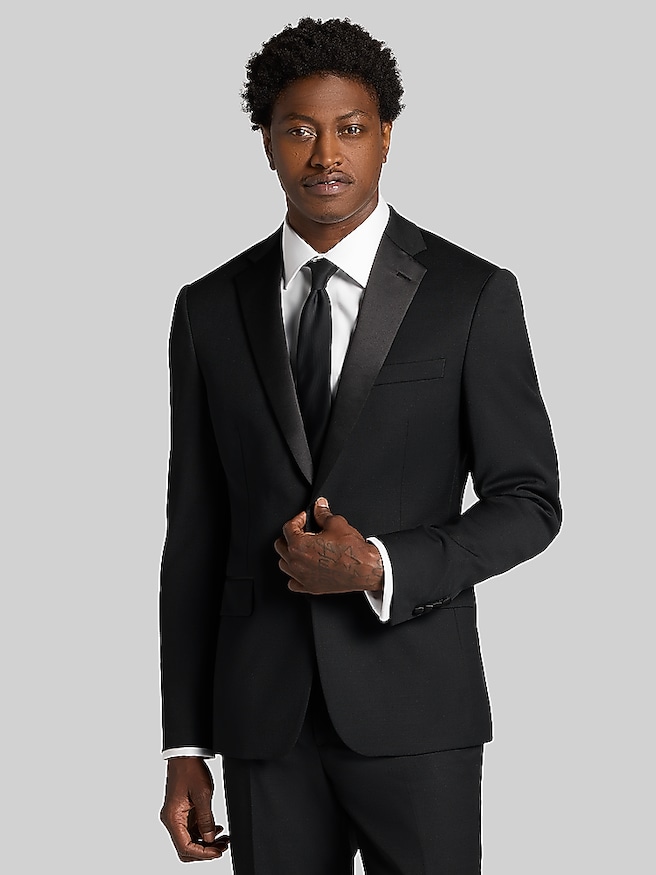
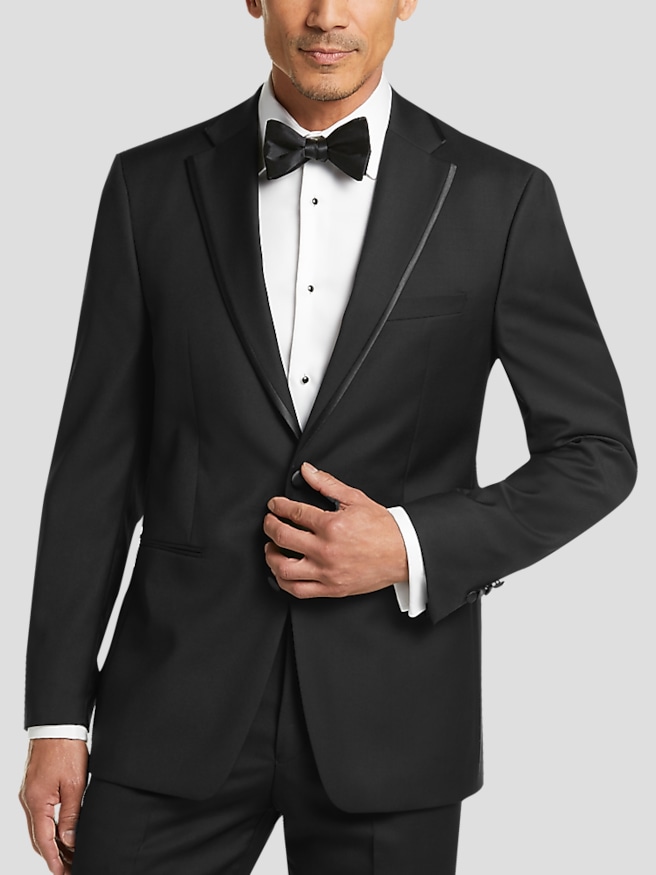
Tuxedo essentials bring together the garments and accessories that give black-tie dressing its distinctive, coordinated appearance. A traditional ensemble includes a tuxedo jacket, matching formal trousers, a white formal shirt, a black bow tie, and polished black dress shoes, with details such as cufflinks, shirt studs, and waist coverings completing the look where appropriate. Unlike a business suit, a tuxedo typically features contrasting satin or grosgrain on the lapels, with a coordinating stripe along the outside of each trouser leg. Those finishes catch the light subtly, creating definition without relying on a bold pattern. Black remains a classic choice, while midnight blue offers another established option for formal evening occasions. Peak lapels create a pronounced, angular outline; a shawl collar forms a smooth curve around the chest. The shirt supplies a crisp backdrop, whether its front is pleated, textured, or clean and understated. A turn-down collar frames a bow tie neatly, and French cuffs provide a place for cufflinks when that cuff style is chosen. Shirt studs belong with fronts designed to accommodate them rather than with every formal shirt. A cummerbund or low-cut formal waistcoat can cover the waistband and create continuity between the shirt and trousers, depending on the ensemble and the event’s expectations. A white pocket square adds a restrained finishing touch without needing to match the bow tie’s fabric exactly. Black formal shoes and socks that maintain coverage when seated keep the lower half of the outfit just as considered as the jacket. For weddings, charity galas, awards dinners, and other black-tie celebrations, these details work best as parts of a whole. The invitation’s dress code remains the clearest reference: a traditional black-tie event calls for a more specific ensemble than an occasion described simply as formal. Matching the level of formality helps the outfit feel appropriate from the arrival photographs through dinner and the last dance.
Fabric and proportion determine how tuxedo essentials look in motion, not just on a hanger. Wool is a familiar foundation for formal tailoring because it drapes cleanly, offers natural resilience, and can recover from light creasing between wears. Fabric weight and construction also influence how readily a jacket moves across the shoulders and how smoothly trousers fall. Blended fabrics may add strength or wrinkle resistance, although their feel and performance depend on the particular blend and weave. Satin has a smooth, reflective surface, while grosgrain’s fine ribs create a more textured finish; either can provide the characteristic contrast associated with tuxedo dressing. Cotton formal shirts offer a crisp appearance, and fabric construction affects softness, opacity, and the amount of pressing needed. Breathability matters during a crowded reception or an extended evening on the dance floor, even when the dress code calls for a structured look. A comfortable tuxedo fit leaves enough room to sit, shake hands, and lift a glass without the jacket pulling sharply across the chest. Shoulder seams should sit close to the natural shoulder, the collar should rest against the shirt collar, and the jacket front should lie smoothly when fastened. A small amount of shirt cuff showing beneath the jacket sleeve creates a deliberate transition to the hands and cufflinks. Trousers should sit securely at the intended waistline, with a clean line through the seat and thigh rather than excess fabric or visible strain. Traditional tuxedo trousers often use side adjusters or suspender buttons instead of belt loops, keeping the waistband uncluttered. Bow tie size should relate to the shirt collar and the wearer’s proportions rather than overwhelm the face. The same principle applies to accessories: a modest cufflink or simple stud can supply enough detail when the lapels already provide sheen. Comfortable shoes complete that balance, with secure heels, room through the toes, and a profile that suits the trouser opening.
Thoughtful care helps formal clothing retain its shape and finish across repeated occasions. The care label is the starting point for every garment, especially when wool tailoring, contrasting trim, delicate shirt fronts, and decorative fasteners appear in the same ensemble. Structured jackets and trousers often require professional cleaning, but repeated cleaning after every brief wear is not automatically necessary; visible soil, odors, fabric instructions, and professional advice should determine the approach. Between occasions, a broad, shaped hanger supports the jacket’s shoulders, while proper trouser hanging helps preserve a clean leg line. Clothing should be dry before storage, with enough space around it to prevent crushing. A breathable garment bag protects against dust without trapping moisture. Shirts benefit from timely attention to collar and cuff marks, and removable studs and cufflinks should come off before laundering or pressing. Direct heat can affect lustrous trim, so pressing methods need to suit both the main fabric and its finish. Footwear deserves equally specific care: smooth leather and patent finishes do not necessarily use the same cleaning products, and shoe care should follow the material’s requirements. Small accessories are easier to keep together in a lined case, reducing the chance of searching for a missing cufflink just before departure. For someone attending several formal events, consistent care makes the ensemble easier to return to with confidence. For a first prom, a wedding party member, or a guest preparing for a milestone celebration, practical details matter just as much as appearance: secure closures, comfortable footwear, and accessories that work with the chosen shirt can prevent distractions during the event. Cufflinks, a bow tie, or a pocket square can also make a thoughtful gift when the recipient’s style and upcoming occasion are known. Lasting appeal comes from compatible materials, sound construction, and proportions that feel comfortable throughout the evening, allowing the occasion—not adjustments to the outfit—to hold attention.