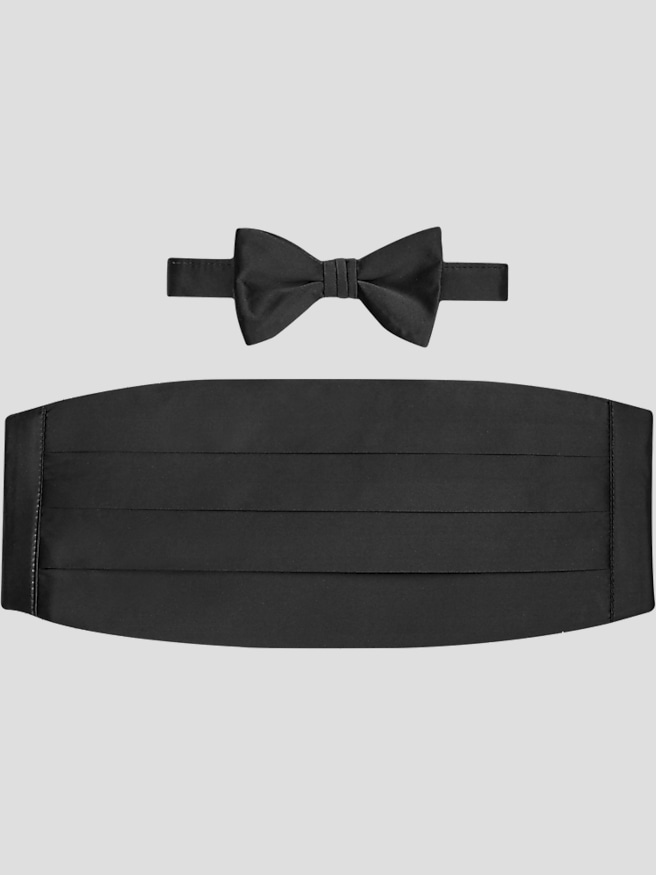
Tuxedo cummerbund and bow tie sets pair a formal waist covering with a coordinating bow tie, creating a consistent look across two of the most visible accessories worn with a tuxedo. The combination is especially well suited to black-tie weddings, formal dinners, benefit galas, and other occasions where a polished evening outfit is expected. A cummerbund covers the transition between the shirt and trousers, helping the front of the outfit look continuous rather than broken by an exposed waistband. With the jacket open, its broad band frames the shirtfront; with the jacket buttoned, it keeps the waist neatly finished beneath the closure. Traditionally, the pleats face upward, and the band sits at the natural waist, overlapping the trouser waistband rather than resting low on the hips. Proper positioning matters as much as color: a cummerbund that slides downward or bunches beneath the jacket can interrupt an otherwise clean silhouette. An adjustable closure helps accommodate the waist, but the adjustment range still needs to suit the wearer’s measurements. A comfortable fit stays secure through standing, sitting, and moving across a dance floor without digging in or pulling the pleats out of shape. Formal trousers with side adjusters or suspenders generally create a smoother foundation than a belt, which can add bulk beneath the band. The bow tie brings that same attention to proportion up toward the face. Its width should work with the wearer’s face, shirt collar, and jacket lapels rather than overwhelming them. A substantial bow can complement broader lapels, while a more restrained shape can look balanced with a narrower frame. With a turndown tuxedo shirt collar, the neckband is largely concealed, leaving the bow itself as the focal point. Together, the two accessories give a classic tuxedo definition without competing with its tailoring.
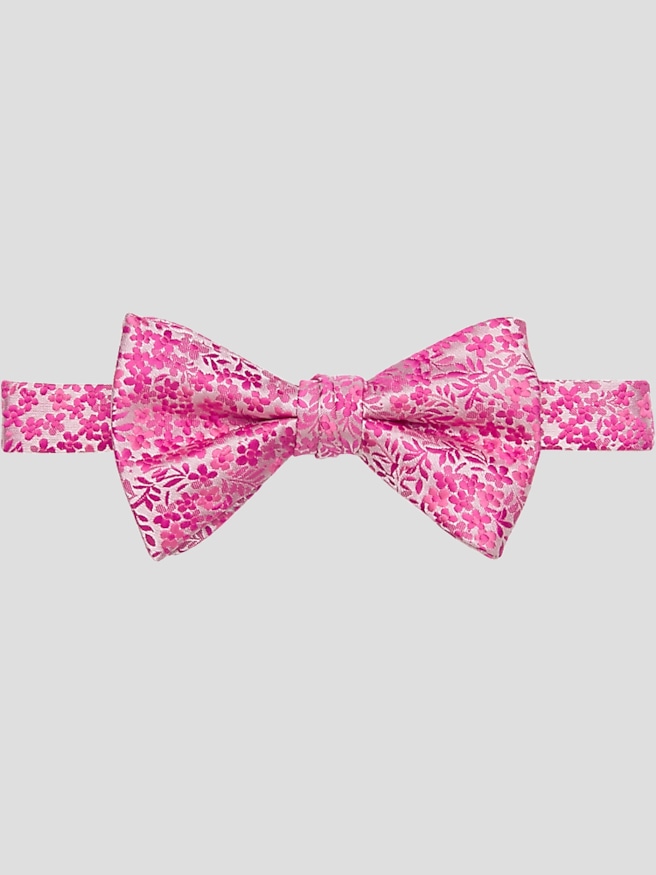
Fabric and finish influence how a tuxedo cummerbund and bow tie set looks under ballroom lights, feels against the shirt, and holds its shape over an evening. Silk can offer a supple hand and a rich luster, while polyester can provide shape retention and resilience, depending on its construction. Satin describes a weave rather than a fiber, so a satin accessory may be made from silk or a synthetic material. Its smooth surface reflects light and pairs naturally with satin-faced tuxedo lapels. Grosgrain has a fine, ribbed texture and a more understated appearance, making it a considered choice alongside similarly textured lapel facings. Matching the general character of the accessories to the jacket usually matters more than forcing every black surface to look identical under every light. A very glossy band against a softly textured jacket creates a stronger contrast than accessories with comparable finishes. Coordinated sets simplify this relationship because the bow tie and cummerbund are designed to work together, although the overall effect still depends on the shirt, jacket, and trousers. Black is the traditional choice for conventional black-tie dressing and works with both black and midnight blue tuxedos. Rich colors or subtle woven patterns can add individuality at celebrations where the dress code allows that flexibility, but a coordinated wedding palette does not automatically override a formal invitation. Texture can provide distinction without a pronounced color contrast, particularly when viewed up close in photographs or across a dinner table. Bow tie construction also changes the experience. A self-tie bow develops small, natural irregularities that give it character, while a pre-tied version offers a consistent shape and a simpler fastening routine. Neither should squeeze the neck or leave the bow hanging loosely below the collar. Adjustable neck sizing, secure hardware, and a band that lies flat help keep the finished look composed through conversation, dinner, and dancing.
Construction and care are especially important for accessories that may be worn repeatedly to weddings, performances, and formal celebrations. Neat stitching, firmly attached fasteners, and evenly formed pleats help a cummerbund retain its appearance, while a well-shaped bow should hold its proportions without looking stiff or crushed. The reverse side deserves attention, too: a smooth backing and unobtrusive closure can reduce friction against the shirt and keep the band comfortable during a long reception. Elastic adjustment sections should feel supportive rather than stretched to their limit, and hooks or clasps should close securely without twisting the fabric. For someone who attends formal events regularly, these small details can matter more over time than a dramatic pattern. Care requirements depend on both the fiber and the internal construction, so the care label is the best reference before cleaning or pressing. Some pieces require professional cleaning, and direct heat or vigorous rubbing can alter a delicate surface. Letting accessories air after wear, addressing spills according to the care instructions, and storing them away from dampness and direct sunlight help preserve their finish. A cummerbund benefits from storage that protects its pleats, while a bow tie needs enough space to avoid being flattened beneath heavier garments. These sets can also make thoughtful gifts for a groom, a partner who enjoys formal occasions, or someone building a first tuxedo wardrobe. Knowing the recipient’s waist and neck measurements, preferred bow style, and tuxedo finish makes the gift more personal and more likely to fit comfortably. For another approach to finishing the waist, Tuxedo Vests And Formal Vest Sets offer an alternative with more coverage through the torso. A formal vest and a cummerbund generally serve as alternatives rather than layers to wear together. The appeal of the cummerbund-and-bow-tie combination lies in its simplicity: two coordinated pieces that frame a crisp shirt, complement the jacket, and keep the focus on a well-proportioned formal outfit.