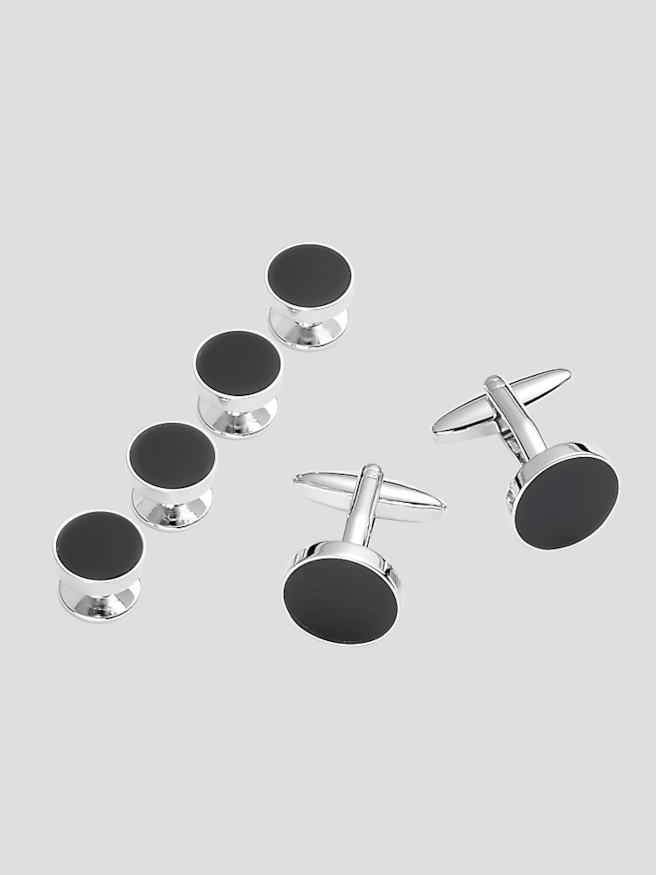
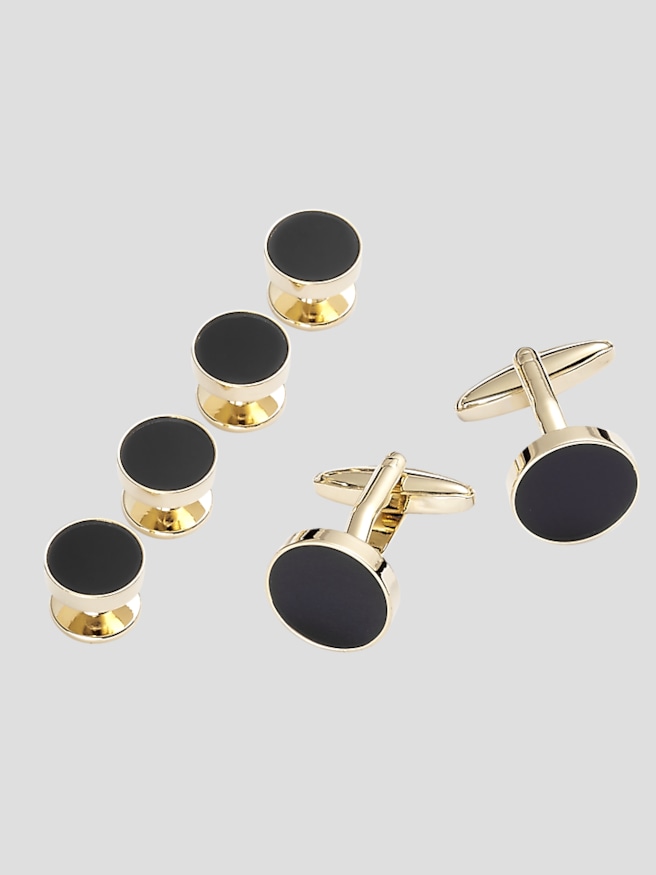
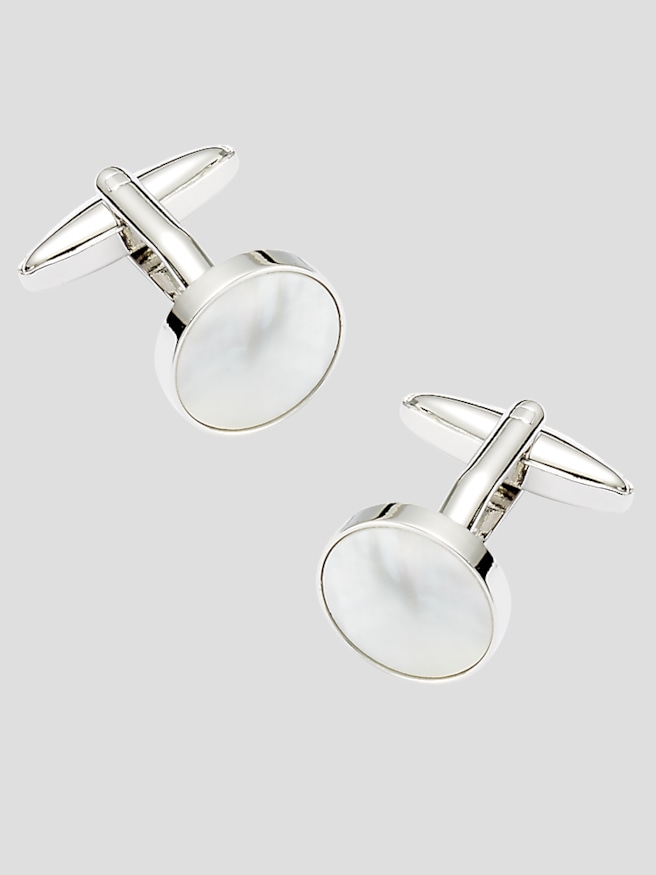
A tuxedo cufflink and stud set typically includes two cufflinks and four or five matching shirt studs, creating a coordinated finish at the wrists and down the shirt front. The cufflinks secure compatible shirt cuffs, while the studs serve as decorative fasteners on a formal shirt designed to accept them. Together, these small accessories give a tuxedo shirt a more deliberate appearance than ordinary exposed buttons. Their role is especially noticeable against a crisp white shirt, where a dark stone or polished metal face creates a clean, repeating detail. For black-tie weddings, formal dinners, benefit galas, and awards ceremonies, a matching set brings consistency to an outfit without competing with the tuxedo itself. Round faces and restrained settings have a traditional character, while square shapes, textured borders, or subtle geometric designs can introduce a more individual touch. Black onyx is a familiar choice for its deep color and understated appearance; mother-of-pearl offers a lighter look with natural variation and a soft sheen. Neither needs an elaborate setting to make an impression. The strongest effect often comes from proportion: cufflinks that sit comfortably against the cuff and studs that complement the shirt front rather than dominate it. A pleated bib can accommodate a different visual rhythm than a smooth or textured formal shirt front, so the scale of the accessories matters alongside their color. Matching the cufflinks and studs also removes one decision from getting dressed for an important occasion, leaving the bow tie, pocket square, and other details room to contribute without creating visual clutter. A coordinated set can suit someone wearing a tuxedo for the first time just as well as someone who regularly attends formal events. Its appeal lies in the balance between function and decoration: a secure cuff, a neatly fastened shirt, and a consistent detail visible in conversation, at the dinner table, or in photographs.
Materials and finishes influence both the appearance and the long-term care of tuxedo cufflink and stud sets. Common base metals include brass and stainless steel, while sterling silver offers another option with its own weight, feel, and maintenance needs. Gold-tone and silver-tone describe appearance rather than guaranteeing a particular precious-metal content, and plated finishes should be considered separately from the metal underneath. Rhodium plating can provide a bright, reflective surface, although any plated accessory benefits from careful handling to limit wear. For a cohesive formal look, Tuxedo Cufflinks and shirt studs can share a metal tone, face material, and border treatment, creating a connection between the wrists and shirt front. Silver-tone settings tend to produce a cool, crisp contrast with black fabric and white shirting; gold-tone settings introduce a warmer accent. Either can work with a classic black tuxedo, and coordinating with a watch case or another visible accessory can make the result feel considered without requiring every metal detail to match exactly. Smooth black stones provide a quieter effect than highly reflective metal faces, while mother-of-pearl can catch the light as the wearer moves. Natural shell may show differences in color and pattern, which are part of its character rather than an expectation of perfectly identical surfaces. Faceted accents and intricate textures create more sparkle and detail, making restraint elsewhere in the outfit especially useful. Beyond appearance, construction deserves attention. Securely fitted decorative faces, smoothly finished edges, and dependable closures matter more in use than unnecessary bulk. A substantial accessory should still feel comfortable against the wrist, and a polished edge should not snag the shirt fabric. For anyone with a known metal sensitivity, the composition of the parts that touch the skin matters as much as the visible finish. Material descriptions and care information help distinguish a piece chosen primarily for its look from one suited to repeated wear over time.
Compatibility is essential because cufflinks and studs are not interchangeable with every shirt fastening. French cuffs, also called double cuffs, fold back and have aligned openings for cufflinks; some convertible cuffs can accept them as well. An ordinary button cuff without suitable openings is not designed for the same use. Shirt studs likewise need a compatible stud-front shirt, and the number required depends on the shirt design and how much of its front remains visible above a waistcoat or cummerbund. Checking those details before an event prevents a mismatch between an otherwise coordinated set and the shirt intended to accompany it. Cuff thickness and the space provided by the cufflink fastening also affect comfort. A closure should sit securely without compressing the fabric excessively, and the decorative face should rest neatly on the outside of the cuff. For an evening that includes handshakes, dinner, and dancing, a low-profile shape may feel less intrusive than an oversized design, particularly beside a watch. After wear, a gentle wipe with a soft, dry cloth helps remove fingerprints and surface residue. Storage in separate compartments or a soft-lined case reduces contact between pieces, helping protect polished faces, stone settings, and plating from scratches. Moisture, fragrance, hair products, and harsh cleaners can affect finishes, so keeping accessories away from these substances is a sensible habit. Mother-of-pearl, plated metal, and set stones may need different treatment from solid metal; manufacturer care directions should take precedence over a general jewelry-cleaning routine. A matching set also makes a thoughtful gift for a groom, wedding-party member, graduate, or anyone building a formal wardrobe. A restrained design can be easier to wear across multiple occasions, while an engraved detail can add personal significance when the construction permits it. Presented in a protective case, cufflinks and studs become both a practical finishing touch and a keepsake associated with an important celebration.