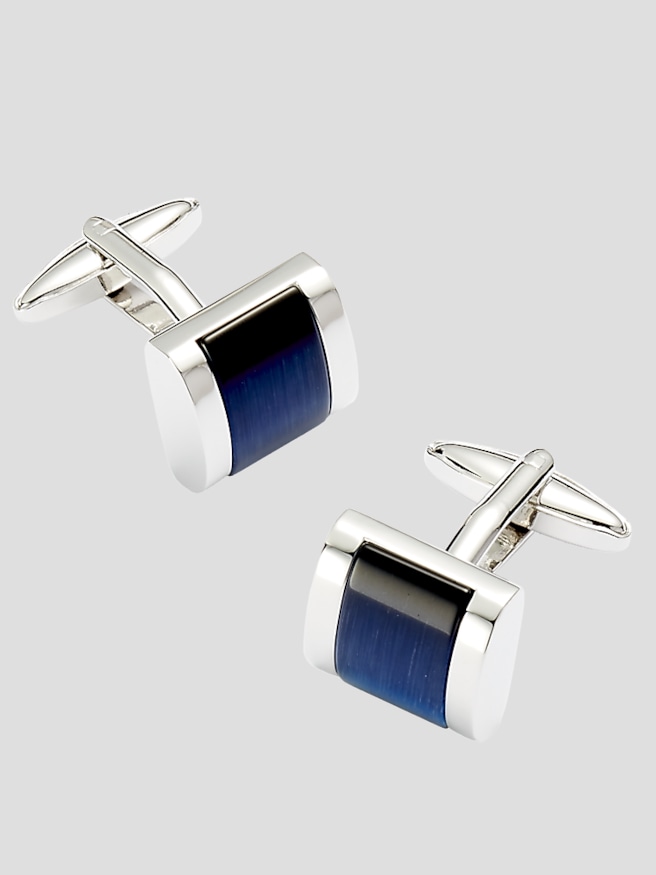
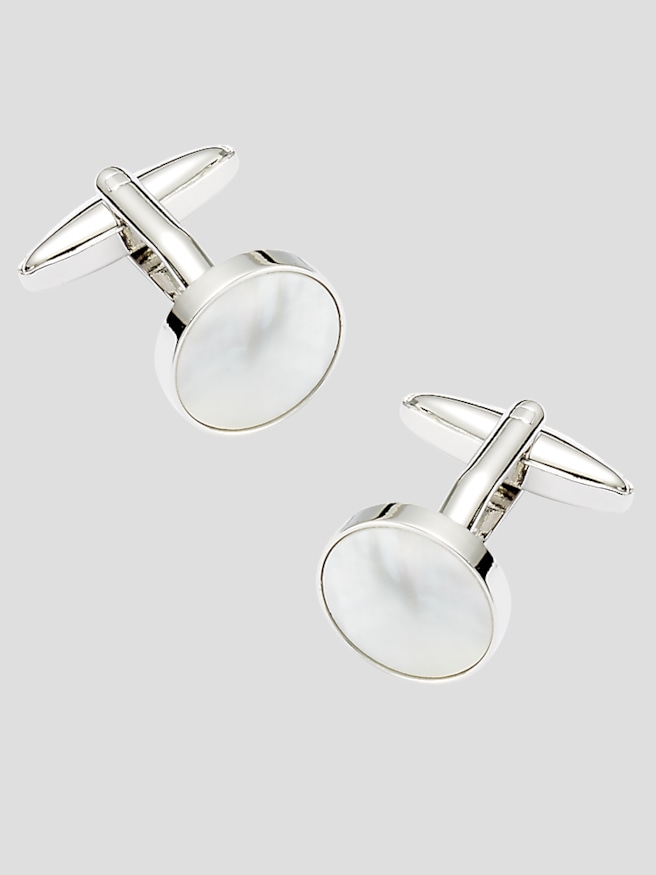
Tuxedo cufflinks fasten French cuffs on formal dress shirts, while matching shirt studs fasten the front of a stud-compatible shirt. These accessories serve separate purposes, so a shirt that uses cufflinks does not necessarily require studs. A concealed-button shirt front, for example, can look clean and complete with cufflinks alone. French cuffs fold back at the wrist, creating a double layer of fabric with aligned buttonholes that the cufflink holds together. The result is a crisp finish that sits neatly beneath a tuxedo jacket sleeve, with a small flash of metal or stone visible as the wearer reaches for a glass or adjusts a jacket. Traditional tuxedo cufflinks often feature round or square faces, polished metal borders, and dark centers that echo the contrast between a black bow tie and a white shirt. Black onyx offers a smooth, refined surface, while black enamel creates a similarly restrained appearance with a distinct construction. Mother-of-pearl brings a softer, light-reflecting quality that can complement formal shirting without drawing attention away from the tuxedo itself. Common metal choices include stainless steel, brass, and sterling silver, sometimes finished with plating for a particular color or surface effect. Silver-tone finishes offer a cool, clean accent; gold-tone finishes introduce warmth and work especially well alongside other gold-tone accessories. These descriptions refer to appearance rather than a guarantee of precious-metal content, which is established by the material details for each design. Polished surfaces catch the light, brushed finishes look more subdued, and engraved textures add interest at close range. The most versatile styles keep their proportions compact and their decoration controlled. On a tuxedo, cufflinks are a finishing detail rather than the centerpiece: enough to give the shirt a deliberate, complete appearance, but not so prominent that they compete with the lapels, bow tie, or overall line of the outfit. Their position at the wrist makes even a simple shape noticeable in conversation, at dinner, or in a close-up photograph.
The fit of tuxedo cufflinks depends on both the shirt and the fastening mechanism. A standard button cuff without suitable cufflink openings will not accommodate them, while some convertible cuffs are designed to work with either buttons or cufflinks. The space between the decorative face and the backing needs to accommodate the cuff fabric comfortably, without pinching thick folds or leaving the closure excessively loose. Toggle-back designs use a moving bar that turns to secure the cuff; fixed-back designs have an integrated backing with no rotating part. Chain-linked styles connect the two ends with a short chain and can create a less rigid connection at the wrist. Each construction has its own feel during dressing and wear, making ease of handling a useful consideration for someone who wears formal clothing only occasionally. Smooth edges and a well-finished underside matter, too, particularly against fine cotton shirting. The cuff should remain comfortable when the wrist bends or rests on a table, and the cufflink should sit securely without pulling the fabric out of shape. With a well-proportioned tuxedo sleeve, a narrow band of shirt cuff remains visible, allowing the accessory to appear naturally rather than requiring an exaggerated sleeve length. For black-tie weddings, galas, formal dinners, and awards ceremonies, restrained shapes and coordinated finishes create a cohesive look. Matching cufflinks and studs can reinforce that effect, although exact matching is less important than a consistent level of formality and compatible colors. A watch, wedding band, or other meaningful accessory can also influence the metal tone without making every detail identical. For a groom or wedding party, Men's Wedding Cufflinks offer a closely related finishing touch, whether the preference is a coordinated appearance or a subtle personal distinction. In photographs of a handshake, a toast, or a jacket adjustment, a modest cufflink can become one of the clearest details of the outfit.
Durability in tuxedo cufflinks comes from more than the material on the face. Secure settings, sound joints, smooth finishing, and a backing that operates reliably all contribute to long-term wear. Stainless steel generally resists corrosion and handles regular use well, while sterling silver can develop tarnish that requires appropriate care. Plated finishes need gentle treatment because abrasive cleaning can wear away the surface over time. Stone, enamel, and mother-of-pearl accents also deserve attention to their particular care requirements; a cleaning method suitable for plain metal may not be appropriate for a delicate inset. A soft, dry cloth is often sufficient for removing fingerprints after an event, with any additional cleaning guided by the maker’s instructions. Harsh household chemicals, prolonged moisture, and abrasive polishing compounds can damage finishes or decorative surfaces. Cufflinks should be removed before a shirt is laundered or pressed, then stored separately from loose jewelry that could scratch them. A lined compartment or small protective pouch also helps keep a pair together between occasions. For travel, keeping cufflinks and studs in a secure case makes it easier to locate the full set when dressing away from home. These practical details matter for anyone building a formal wardrobe, from a first-time prom attendee to a frequent guest at black-tie events. Tuxedo cufflinks also make thoughtful gifts for a groom, a father, a partner, or a close friend marking a meaningful occasion. An understated design can remain useful across many events, while an engravable surface, where suitable, can carry initials or a date without changing the character of the outfit. The strongest gift choice reflects how the recipient dresses: simple polished metal for a minimal wardrobe, a dark inset for traditional evening attire, or a subtle texture for someone who appreciates detail. A comfortable fastening, dependable construction, and a finish that complements familiar accessories give cufflinks lasting usefulness beyond a single celebration. Their appeal lies in that combination of function and personal significance: a small accessory that holds the shirt together and helps a formal outfit feel considered from jacket to wrist.