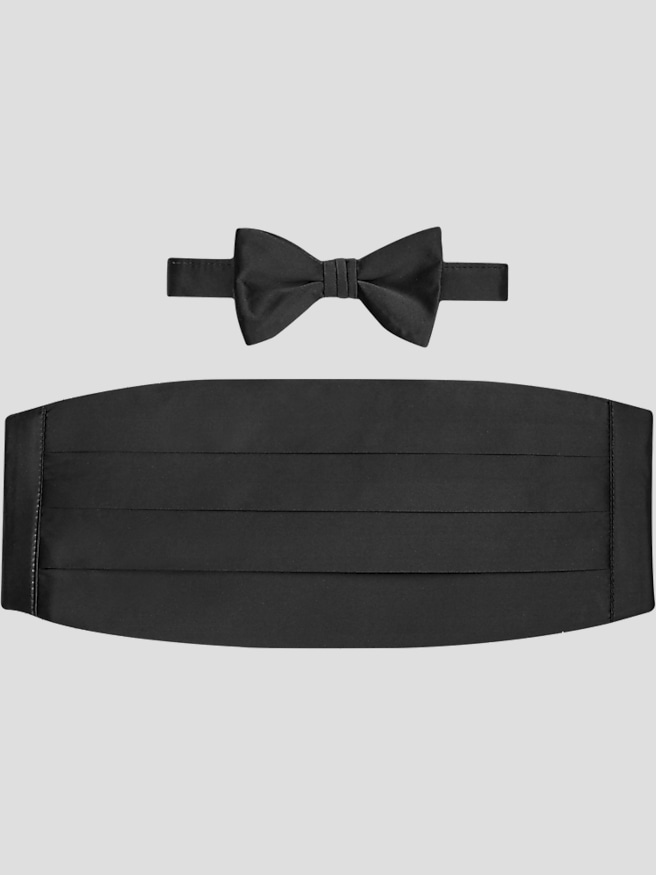
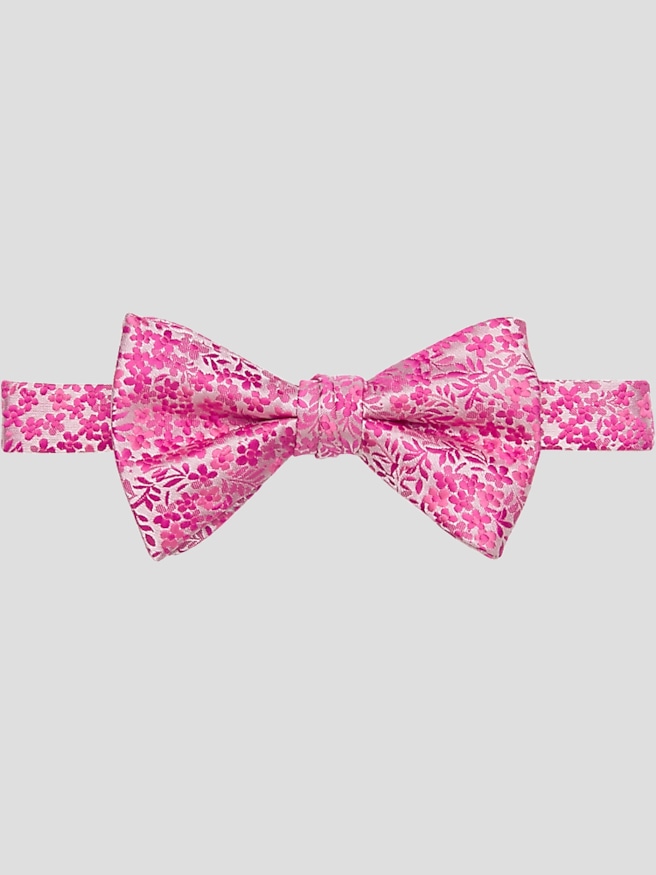
Cummerbund and bow tie sets combine a coordinated bow tie with a pleated waist sash, creating a classic finishing touch for a tuxedo. The bow tie frames the shirt collar, while the cummerbund covers the meeting point between the shirt and trousers for a clean, uninterrupted line beneath an open dinner jacket. Together, these accessories bring balance to formal attire without competing with the shape of the jacket or the crisp front of a dress shirt. They are especially well suited to black-tie weddings, galas, formal dances, and evening celebrations where a tuxedo fits the dress code. A black set is a traditional choice, particularly with a black dinner jacket and white formal shirt, while deeper colors can introduce personality when the invitation allows some flexibility. Coordinating the two pieces keeps that color choice deliberate: the bow tie draws attention toward the face, and the cummerbund repeats the shade at the waist. Texture matters as much as color. Satin has a smooth surface that catches the light, whereas grosgrain has a fine ribbed texture and a more restrained sheen. A finish that complements the tuxedo’s lapels can make the entire outfit feel connected, though every surface does not need to look identical. Silk can provide softness, a supple drape, and a distinctive luster; polyester can offer a consistent finish and resilience with appropriate care. Satin describes a fabric construction rather than a fiber, so checking the material details helps distinguish between otherwise similar-looking sets. Under ballroom lighting or in close-up wedding photographs, the difference between a glossy finish and a quieter texture becomes more noticeable. The most convincing formal look comes from that relationship among fabric, proportion, and occasion, rather than from adding more accessories. For a wedding party, a consistent color and finish can also connect the group while allowing each person’s tuxedo to fit properly.
Fit gives cummerbund and bow tie sets their polished appearance, but comfort is just as important during a ceremony, dinner, or several hours on the dance floor. A cummerbund belongs at the natural waist, covering the trouser waistband rather than sitting low across the hips. Its pleats traditionally face upward, and its front should lie smoothly instead of bunching beneath the jacket. A properly adjusted band stays secure while leaving enough room to sit, breathe, and move without feeling compressed. Tuxedo trousers with an appropriate rise help the sash cover the shirt-to-trouser transition; trousers that sit too low can leave an exposed strip of shirt above the cummerbund. The bow tie needs a similarly considered fit. Its neckband should sit comfortably beneath the collar, with the bow centered over the top shirt button rather than tilted or pulled tightly against the neck. Adjustable closures can accommodate a range of measurements, but the stated neck and waist ranges still deserve attention. The bow’s width should work with the wearer’s face and collar: an oversized shape can dominate a narrow collar, while a very small bow may look lost against broader proportions. Pre-tied styles provide a consistent shape and straightforward fastening, which can be helpful when several people are dressing for the same event. Self-tie styles have a softer, subtly irregular character that many formalwear enthusiasts appreciate. Neither needs to look stiff or overly perfect to look dressed up. A cummerbund is generally worn as an alternative to a formal waistcoat, not layered over one, keeping the waist area streamlined. With the jacket unbuttoned while seated, that smooth coverage becomes especially noticeable. For someone attending a first black-tie event, a coordinated set simplifies two decisions at once, leaving more attention for the fit of the tuxedo and shirt.
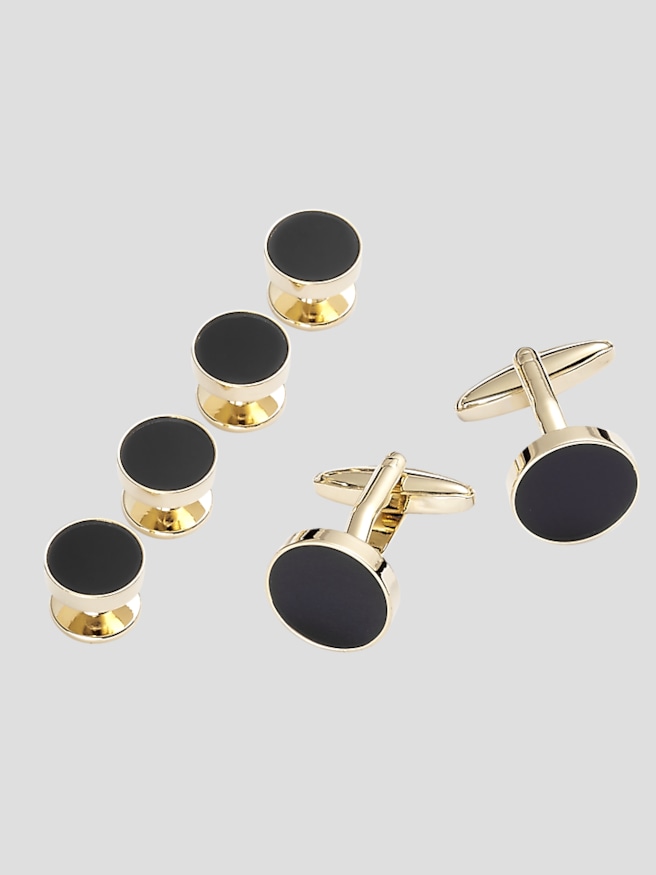
Care and construction help these formal accessories retain their shape between occasions. Even stitching, neatly finished edges, secure fastenings, and well-formed pleats are useful details to consider, especially when a set will be worn repeatedly. A bow tie should hold its shape without looking crushed, and a cummerbund should have enough structure to lie flat without feeling rigid around the waist. Fabric care instructions take priority over general cleaning habits, particularly with silk, lined pieces, or accessories made from more than one material. A mark from a dinner reception is better handled according to the care label than rubbed aggressively, which can disturb the surface or spread the stain. Direct heat can flatten texture or create unwanted shine, so pressing requires particular caution and may be best left to a professional when the label calls for specialized care. Between events, allowing the pieces to air briefly before storing them helps keep them fresh. A dedicated box or drawer space protects the bow from being flattened and the cummerbund from developing sharp, accidental folds; keeping fasteners away from delicate fabric also reduces the risk of snags. These small habits matter for someone who attends formal benefits regularly, a wedding participant hoping to wear the set again, or a graduate keeping formal accessories for future celebrations. A set can also make a thoughtful gift for someone who already owns a tuxedo, provided the neck and waist measurements, preferred fastening style, and usual dress codes are known. Finishing accessories work best with the same attention to restraint. For a formal shirt designed with French cuffs and a stud front, Cufflink and Stud Sets add coordinated details without taking attention away from the bow tie. Keeping metal finishes consistent creates a cohesive result, while a neatly folded pocket square can add contrast without duplicating every fabric. The overall effect is composed and personal: a well-fitted tuxedo, a clean shirt front, and two coordinated accessories that look appropriate from the opening reception through the final photograph.