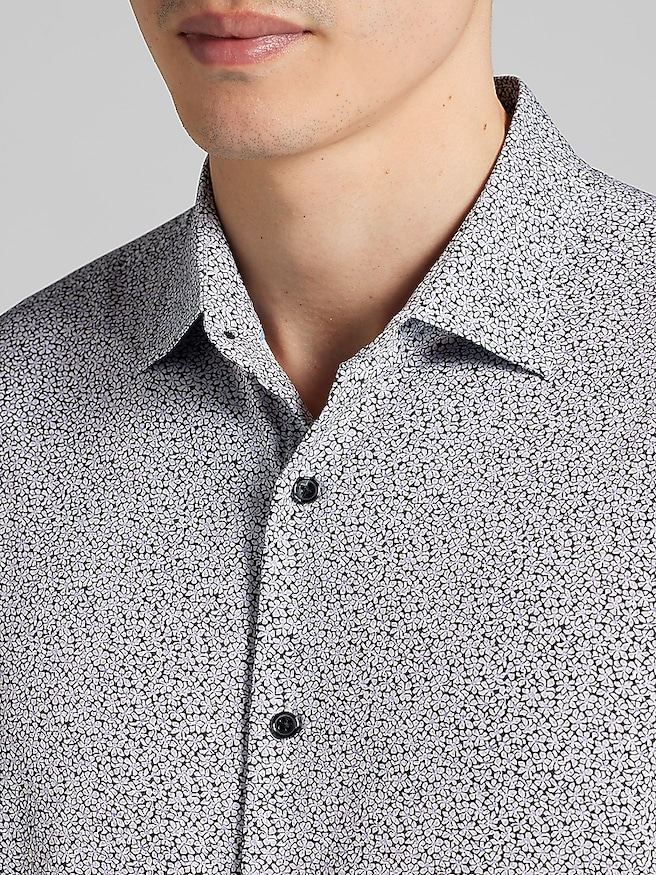
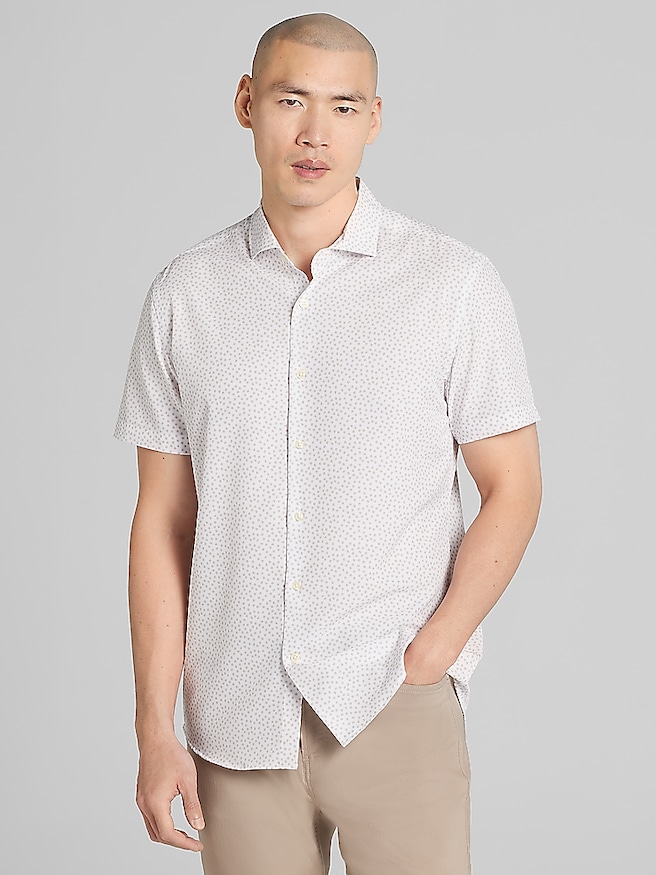
Trendy short-sleeve shirts bring personality to everyday outfits through relaxed camp collars, textured knit polos, clean button-front designs, and expressive prints. Their appeal comes from the balance between an easy silhouette and details that make an outfit feel considered: a collar that sits neatly, a subtle woven pattern, or sleeves with just enough room to move. Camp collars lie open at the neckline and create a relaxed frame, while more structured collars give a short-sleeve shirt a sharper outline. Knit polos offer another direction, combining a defined collar with the softness and flexibility of a knit. Vintage-inspired geometric patterns, abstract motifs, and understated stripes can each set a distinct mood without requiring complicated styling. A small repeating print reads differently from a large graphic pattern; the former can blend easily into a familiar wardrobe, while the latter becomes the focus of an outfit. Solid colors let texture do more of the work, whether that means a softly pebbled weave, a fine rib, or an open-stitch effect. For a casual office that permits short sleeves, a restrained pattern with tailored chinos can feel polished without looking overly formal. For dinner with friends or an afternoon at a gallery, an open-collar shirt with straight-leg trousers creates an easy, intentional combination. Boxier shapes lean toward a relaxed, contemporary look, especially with pants that have some room through the leg, while cleaner, closer cuts work well when a more streamlined appearance is preferred. Chest pockets, contrasting buttons, and a straight hem can shift the character of a shirt, but those details work best when they support the overall look rather than compete for attention. A wardrobe built around Trendy Shirts benefits from both expressive pieces and quieter options, with short-sleeve designs offering plenty of scope to vary color, texture, and proportion.
Fabric has a major influence on how a short-sleeve shirt looks, moves, and holds its shape. Cotton is a familiar choice for its soft feel and versatility, though the weave matters as much as the fiber itself: a crisp poplin has a smoother, more defined appearance than a textured slub cotton. Linen brings visible texture and a naturally relaxed finish, including the creases that are part of its character. Linen blends can soften that effect, depending on the other fibers and the construction. Rayon and lyocell often give woven shirts a fluid drape that suits open collars and looser silhouettes, while cotton-rich knits can provide a softer outline with more natural give. Added stretch may make reaching, sitting, and moving more comfortable, but it does not replace a well-proportioned fit. Across fabric types, a shirt should sit comfortably through the shoulders and allow the front to lie smoothly without pulling between buttons. Sleeves generally look balanced when they finish around the middle of the upper arm, although personal preference and the intended cut matter more than a fixed rule. A close sleeve opening creates a different effect from a wider, boxier one; neither should pinch when the arm bends. Length matters, too. A shorter, straight hem often works naturally untucked, while a longer curved hem may be easier to keep tucked into trousers. Someone who spends much of the day seated may appreciate extra ease across the back and waist, whereas someone seeking a sharper silhouette may prefer less excess fabric through the torso. The useful distinction is between relaxed and oversized: a relaxed shirt still has deliberate proportions rather than simply fitting large everywhere. Consistent stitching, secure buttons, and neatly finished seams are worthwhile construction details because they support repeated wear. Fabric weight also affects structure, with a substantial weave holding a boxier outline and a lighter, more fluid material falling closer to the body.
The most wearable short-sleeve shirts tend to have a clear role in an existing wardrobe. A textured neutral can work with dark denim for a casual dinner, then take on a cleaner feel with pressed trousers and leather loafers. A patterned camp-collar shirt can stand on its own with plain chinos, allowing the print to remain the main visual element. Wearing a button-front shirt open over a simple crewneck creates a more casual layered look, provided the outer shirt has enough room to hang without catching across the chest. Color connections help these combinations feel natural: picking up one understated shade from a print in the pants or shoes is often enough, without matching every detail. For someone who usually wears solid shirts, a tonal pattern offers a manageable change; for someone already comfortable with bold prints, an interesting weave or a new silhouette may add more variety than another bright motif. These preferences also make short-sleeve shirts thoughtful birthday or graduation gifts when the recipient’s size, preferred fit, and usual colors are known. A familiar shape with a distinctive texture can feel personal without requiring a complete change in style. Care is part of keeping that appeal intact. The garment’s care label should determine washing, drying, and pressing, since cotton, linen, fluid woven fabrics, and knits can have different requirements. Prompt attention to stains, washing with compatible colors, and avoiding more heat than the label allows can help preserve the finish. Knit shirts may need reshaping or flat drying to prevent stretching, while woven styles often benefit from smoothing the collar, placket, and hem after washing. Following pressing instructions is particularly important around textured surfaces and stretch fibers. Giving shirts enough space in storage also helps prevent unnecessary crushing. With suitable care and a fit that feels comfortable throughout the day, a trend-forward short-sleeve shirt can remain useful well beyond a single outfit, bringing distinctive character to familiar pants, shoes, and everyday plans.