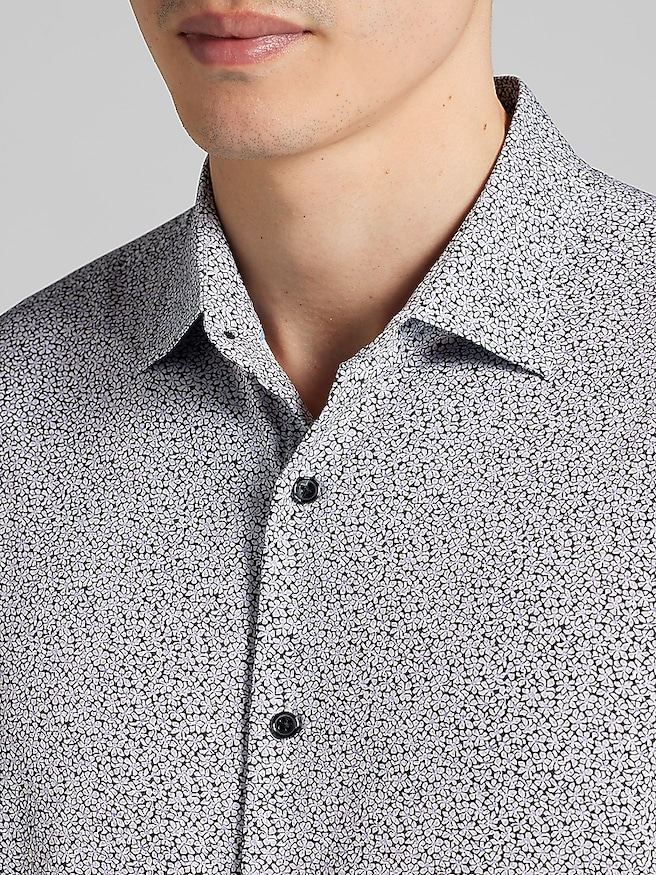
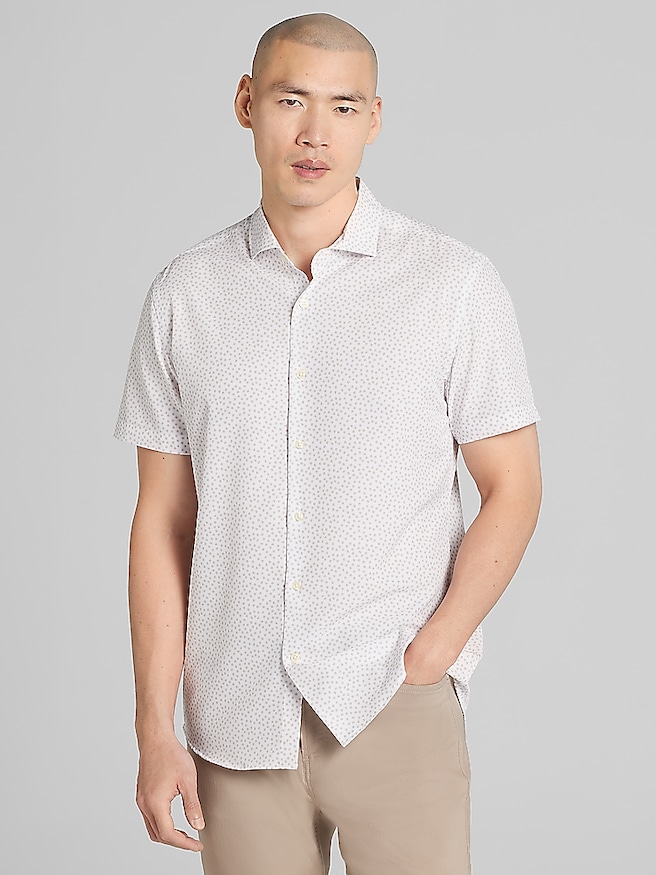
Stylish short-sleeve shirts combine an easy range of motion with the structure, texture, and detail that make an outfit feel considered. The category stretches from crisp button-front styles to relaxed camp collars and finely textured knit polos, with each silhouette offering a distinct level of polish. A camp collar rests open against the chest, creating a laid-back neckline that works naturally with chinos or straight-leg jeans. A traditional collar gives a woven shirt a more defined outline, while a knit polo bridges the gap between a T-shirt and a button-front shirt. Fabric makes just as much difference as the collar. Cotton can feel smooth and crisp in a tightly woven poplin or softer and more dimensional in an Oxford weave. Slub cotton has subtle variations in the yarn that create a gently irregular surface, giving a solid color more visual interest without adding a print. Linen has a recognizable texture and an easy drape, with natural creasing that belongs to its character rather than signaling poor care. Cotton-linen blends can balance those qualities, though their feel depends on the proportions and construction. Knit fabrics generally offer more give than traditional woven fabrics, making them appealing for long stretches of sitting, walking, or moving between appointments. Some performance blends are designed to manage moisture or resist wrinkles; those benefits depend on the material and finish, not simply on a shirt having short sleeves. Fabric weight and opacity also matter: a substantial knit creates a different outline from a light, fluid weave, even when both shirts share the same color. Color and pattern bring another layer of personality. Navy, white, olive, and muted blue are versatile foundations, while narrow stripes, small geometric motifs, and restrained botanical prints add distinction. The appeal of Men's Short Sleeve Casual Shirts lies in that breadth: familiar silhouettes can look understated, expressive, or neatly dressed depending on their fabric, proportions, and finishing details.
Fit is what allows those details to read clearly. In a traditionally fitted short-sleeve shirt, the shoulder seam generally sits close to the shoulder’s outer edge, and the body follows the torso without pulling across the chest or collecting heavily at the waist. A relaxed cut may intentionally place the seam farther out and provide more room through the body, so the overall silhouette matters more than a single measurement. The sleeve opening deserves particular attention because it frames the upper arm. An opening that sits comfortably around the arm usually looks cleaner than one that grips tightly or flares dramatically, while a sleeve ending around the middle of the upper arm offers a balanced starting point rather than a fixed rule. Arm length, chest size, and personal preference all affect where that hem looks best. Comfortable movement is equally important: reaching forward should not cause strong pulling across the back, and sitting should not make the front buttons strain. Shirt length helps determine how naturally a style works tucked or untucked. A shorter, fairly even hem often suits untucked wear; a longer curved hem generally provides more fabric to stay securely inside trousers. Those proportions influence how a shirt works beyond the fitting room. A small-scale patterned button-front shirt with tailored chinos can suit a casual dinner, while a solid knit polo with flat-front trousers offers a composed option for an office that permits casual attire. A softly structured camp-collar shirt paired with clean denim feels appropriate for a gallery visit or a relaxed restaurant setting. For gatherings with a stated dress code, the required level of formality takes priority; a short-sleeve shirt is not a substitute for a long-sleeve dress shirt when the occasion calls for one. Keeping the rest of the outfit visually balanced lets the shirt do its work. A pronounced print pairs easily with solid trousers, while a textured solid can carry an outfit through depth and drape rather than bold contrast.
The lasting value of a short-sleeve shirt comes from construction, care, and how comfortably it fits into an actual routine. Even stitching, secure buttons, neatly finished seams, and a collar that lies evenly are useful signs of considered construction. Around the underarms and side seams, smooth finishing helps reduce distracting bulk and friction. Pattern alignment across a pocket or front placket can contribute to a tidy appearance, although deliberate design choices may create a different effect. Durability depends on the combination of fabric, construction, fit, and maintenance; a heavier shirt is not automatically a longer-lasting one, and an overly tight fit can place unnecessary stress on seams. The care label remains the best reference for washing, drying, and pressing because similar-looking fabrics may need different treatment. Excessive heat can affect shrinkage, surface texture, and elasticity, while leaving a shirt crumpled after laundering can make creases harder to remove. Prompt reshaping, appropriate drying, and storage that supports the garment help preserve its intended outline. Woven shirts often hang neatly on well-shaped hangers, while some knits retain their shape better folded, particularly when their fabric stretches under its own weight. A linen shirt does not need to be pressed into rigid smoothness to look intentional, and textured cotton can lose some of its character when flattened aggressively. These practical differences matter for frequent travelers, commuters, and anyone who prefers a straightforward clothing routine. They also help make short-sleeve shirts thoughtful gifts for a partner, father, brother, or friend. A familiar collar shape, a color already present in the recipient’s wardrobe, and a comfortable cut are often more useful than an unfamiliar statement print. For someone who regularly wears denim, a softly textured button-front style may feel natural; for someone who favors tailored trousers, a refined knit can offer a similarly polished finish. The most useful choice connects personal taste with repeatable wear, giving everyday outfits a clear sense of intention without requiring elaborate styling.