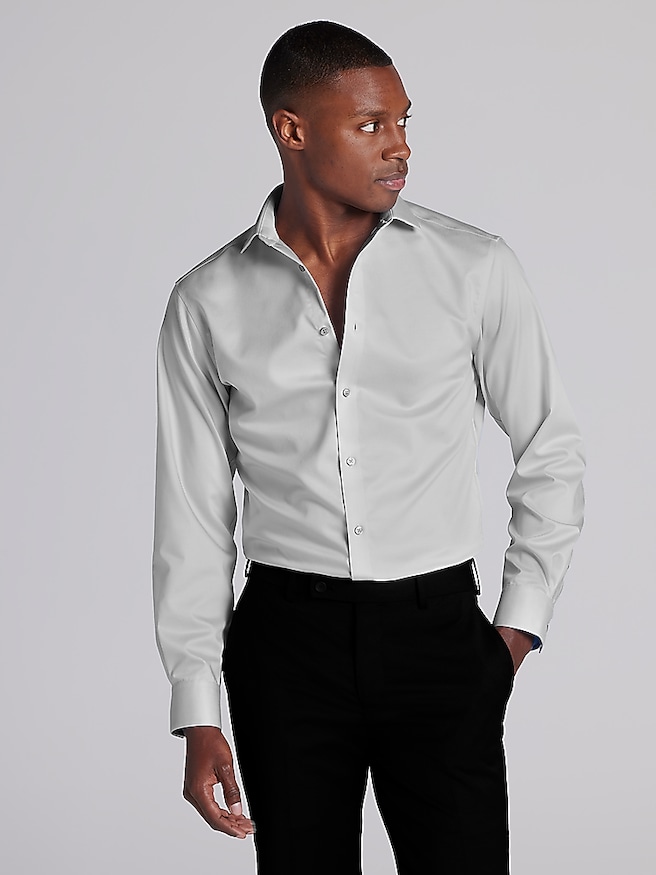
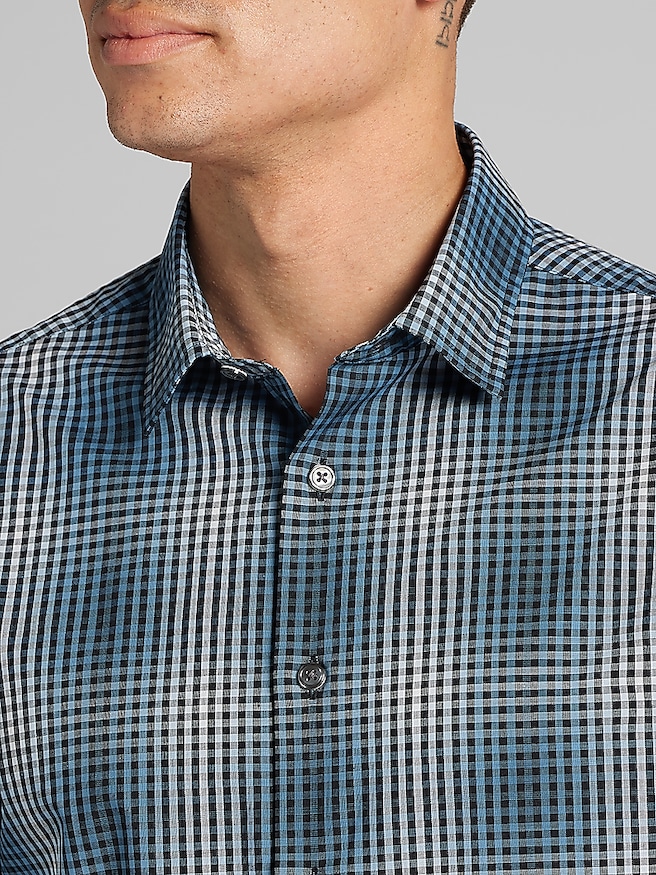
Trendy shirts bring personality to everyday dressing through color, texture, proportion, and the details that make a familiar silhouette feel fresh. A distinctive collar, an expressive print, or a fabric with subtle dimension can give a simple outfit a clear point of view without making it difficult to wear. The appeal is often in the balance: a shirt can feel modern while still working with the jeans, chinos, and tailored pants already in a wardrobe. Small geometric patterns offer visual interest from across a table without overwhelming an outfit, while broader stripes and larger prints create a more noticeable focal point. Solid colors have their own impact, especially when the fabric has a textured surface or the silhouette departs from a traditional close fit. Muted shades tend to blend easily with established wardrobe staples; saturated colors bring more contrast and can help an otherwise understated outfit feel intentional. For a dinner reservation, a shirt with a clean collar and fluid drape can look polished without the formality of a tie. For a creative workplace, a restrained pattern can add character under an unstructured jacket while remaining appropriate for meetings. Casual gatherings, date nights, gallery openings, and celebrations all leave room for shirts that express individual taste rather than simply fulfill a dress code. Details influence that impression more than a trend label alone. A button-down collar tends to have a familiar, relaxed character, while a spread collar creates a more open frame around the face. An open camp collar gives a shirt an easygoing attitude, particularly when worn untucked with neatly proportioned pants. Pockets, plackets, cuffs, and contrasting buttons can either reinforce a clean design or add another layer of interest. The most versatile trendy shirts have enough distinction to stand on their own, yet enough restraint to feel comfortable in the places their wearer actually goes.
Fabric and fit determine how that visual character translates into daily wear. Cotton is a familiar choice for its softness and breathability, though the weave makes a meaningful difference in how a shirt feels and holds its shape. Smooth poplin has a clean surface that suits crisp patterns and sharper outfits, while Oxford cloth brings a more visible texture and an approachable, less formal appearance. Twill has a diagonal structure that can give the fabric a substantial feel and a gentle drape. Linen contributes natural slubs and a relaxed texture, with creasing that is part of its character rather than a flaw to eliminate completely. Blends can combine qualities from several fibers, including softness, shape retention, or easier wrinkle management, but their performance depends on the fabric construction and care requirements. A small amount of stretch may make reaching, sitting, and moving through a long day more comfortable without noticeably changing the shirt’s appearance. Knit shirts generally flex and fall differently from woven shirts, making them useful for outfits that need a softer outline. Fit matters just as much as fiber content. Shoulder seams that sit close to the natural shoulder line usually create a balanced starting point, while the chest and back need enough room to move without pulling across the buttons. A slim silhouette follows the torso more closely; a classic fit leaves additional room; a deliberately relaxed cut uses extra volume as part of the design. None should require constant adjustment when seated or reaching forward. Sleeve length, cuff placement, and the space around the upper arm also affect how polished a shirt looks in motion. Hem shape helps establish intended use: a longer curved hem typically stays tucked more securely, while a shorter, more even hem often looks more natural worn loose. The relationship between shirt and pants completes the silhouette. A roomier shirt can look balanced with clean, straight-leg pants, while a closer-fitting shirt creates a streamlined foundation beneath a jacket.
Good construction and thoughtful care help a distinctive shirt remain a dependable part of a wardrobe rather than a piece worn only once. Even stitching, secure buttons, neatly finished seams, and a placket that lies flat are useful signs of careful assembly. Pattern alignment at prominent areas can also contribute to a more considered appearance, though intentional design choices may interrupt a print. Durability comes from the combination of fabric, construction, fit, and maintenance; a heavier material is not automatically the better choice for every occasion. A shirt that is too tight across the back or elbows places repeated strain on seams, while an appropriate fit allows the garment to move more naturally. Care labels provide the most reliable direction because similar-looking shirts can require different treatment. When machine washing is permitted, gentle handling and suitable water temperatures can help protect color and fabric texture. Turning printed shirts inside out may reduce surface abrasion, and avoiding an overloaded washer gives garments more room to move. Drying methods matter as well: excessive heat can affect some fibers, finishes, and stretch components. Promptly hanging or reshaping a shirt after laundering helps limit deep creases, while pressing or steaming should follow the label’s instructions. These practical details are especially valuable for shirts worn regularly to work, dinners, or social occasions. Personal style remains the deciding factor, whether the wearer favors quiet texture, graphic patterns, or a more expressive silhouette. For gifts, familiar colors and preferred fits are generally more dependable than an unfamiliar statement print; knowing whether someone wears shirts tucked, open over a tee, or buttoned beneath a jacket adds useful context. Neck and sleeve measurements can matter for tailored styles, while other shirts use standard letter sizing. For a broader view of complementary shapes and styling possibilities, Trendy Tops For Men offers a related perspective. A well-chosen shirt earns its place through repeated wear, comfortable movement, and details that continue to feel like the person wearing it.