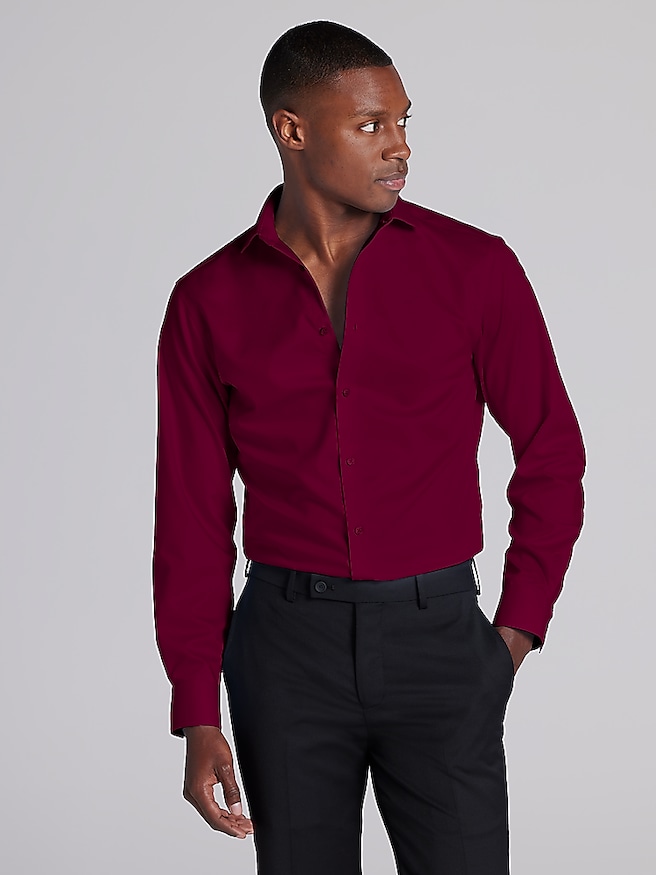
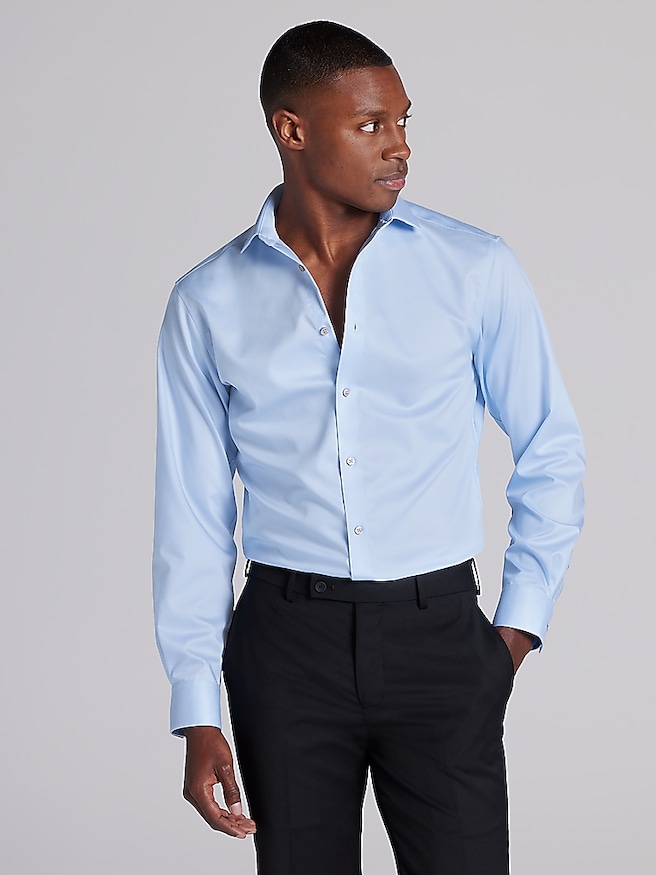
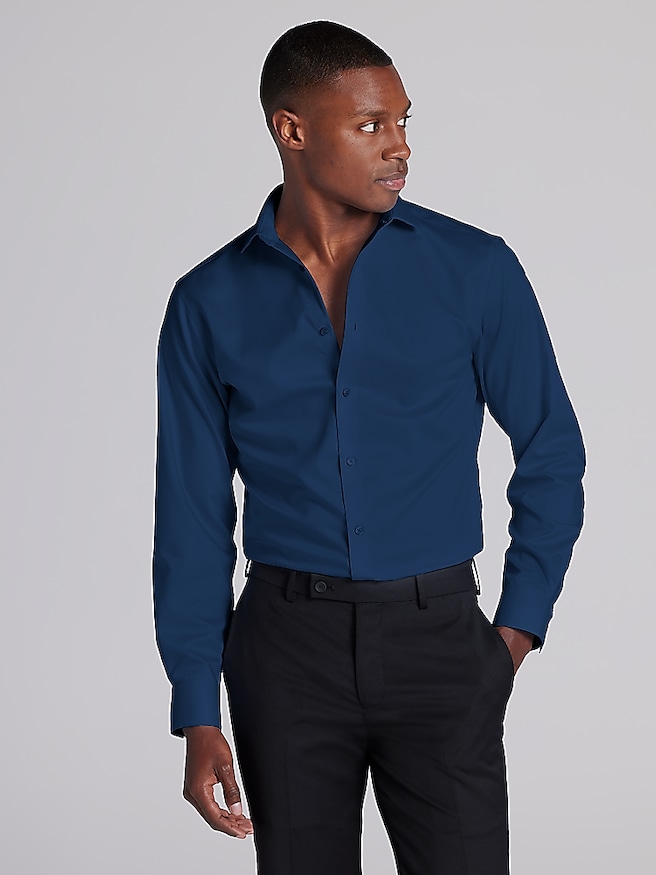
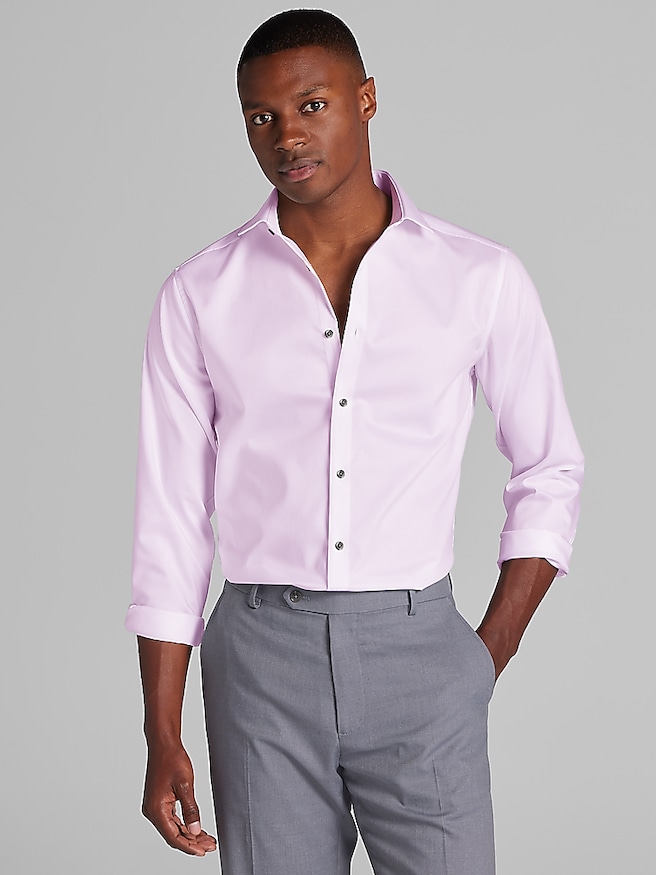
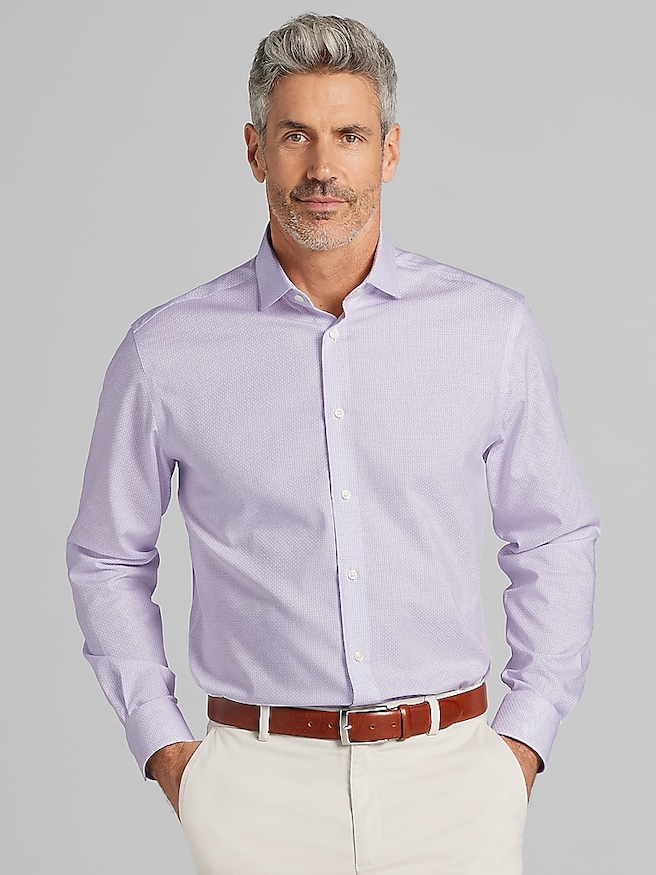
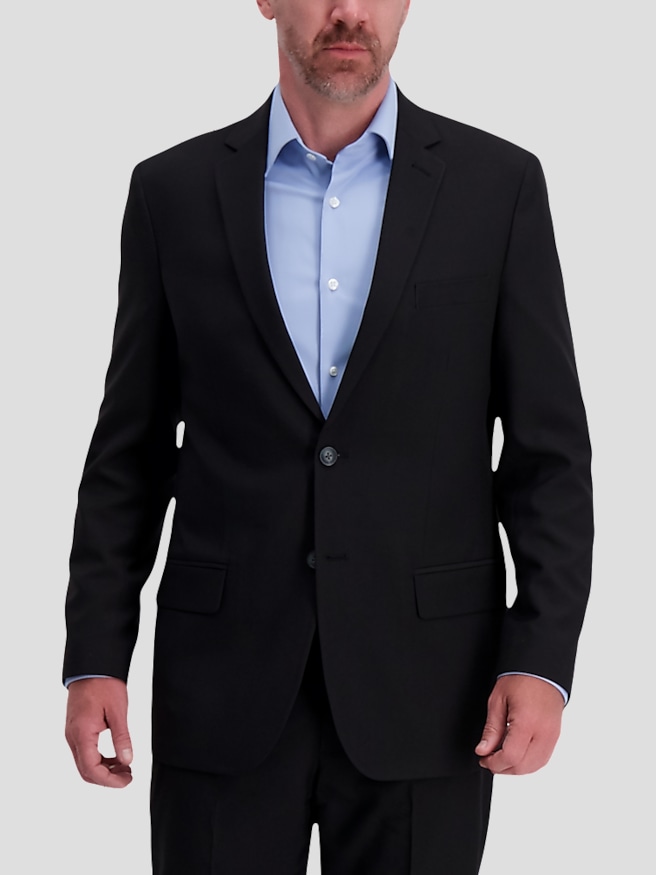
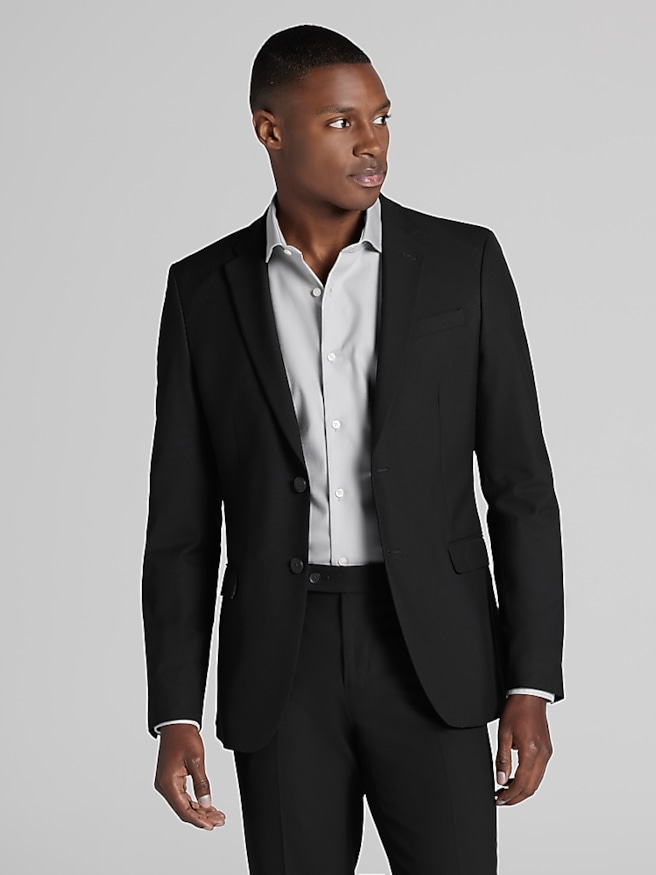
Tops for formal wear establish the foundation of a dressed-up outfit, bringing a clean neckline, a smooth shirt front, and balanced proportions to tailored trousers and a jacket. In men’s formal clothing, dress shirts and tuxedo shirts are central to that look, while a coordinating waistcoat can add another layer of structure. The occasion helps define the details: a crisp dress shirt complements a suit for a wedding or an evening reception, while a tuxedo shirt supports the more specific requirements of a black-tie invitation. White remains a classic choice because it creates a clear contrast with dark tailoring and works naturally with traditional neckwear. Pale blue and other restrained shades can suit business-formal settings or celebrations where a suit is appropriate, though they do not replace the traditional white shirt in every formal dress code. The surface of the fabric also shapes the effect. Smooth broadcloth has a clean, quiet appearance, while a fine twill introduces subtle texture that becomes noticeable up close. A pleated front or textured bib gives a tuxedo shirt its distinctive character beneath an open jacket. Collar shape matters just as much as color: a spread collar provides room for a fuller tie knot, and a well-proportioned point collar creates a narrower frame. A turndown collar is a familiar choice with a tuxedo, while wing collars call for closer attention to the conventions of the occasion. French cuffs accommodate cuff links and add a deliberate finishing detail at the wrist; barrel cuffs offer a simpler closure for many suit-and-tie settings. Seen as part of a complete outfit, these elements should feel connected rather than compete for attention. The broader context of Adult Formal Wear brings the shirt, tailoring, trousers, and accessories into the same picture, whether the setting is a candlelit reception, an awards dinner, or a formal celebration during the cooler months.
Fabric and fit determine how comfortable that polished appearance feels over several hours. Cotton is valued for its breathability and familiar feel against the skin, making it a practical foundation for formal shirts worn through a ceremony, dinner, and an evening of conversation. Long-staple cotton can produce smooth, strong yarns, although the weave, fabric weight, and construction also influence softness and durability. Cotton blends may offer easier maintenance or improved wrinkle recovery, and a modest amount of stretch can provide welcome movement across the shoulders and elbows. Stretch does not compensate for a shirt that is too small, however; the fabric should lie comfortably without pulling between the buttons. Linen has an airy texture and a relaxed character, but its natural creasing generally makes it better suited to less rigid dress codes than traditional black tie. A subtle woven sheen can look refined under evening lighting, while a highly reflective finish creates a more conspicuous effect and may not suit every formal setting. During the cooler months, a breathable shirt beneath a lined jacket can be more comfortable than a heavy base layer, especially when the evening moves from an outdoor arrival into a warm dining room. Fit is particularly visible around the collar, shoulders, and waist. A buttoned collar should sit neatly without pressing into the neck, shoulder seams should align close to the shoulder edge, and the body should have enough ease for sitting and reaching without excessive fabric gathering under the jacket. Slim, tailored, and classic fit labels describe broad silhouettes, but their proportions can vary, so neck and sleeve measurements remain useful reference points. Sleeve length should allow a small amount of cuff to show beyond the jacket sleeve with the arms resting naturally. A sufficiently long shirttail helps keep the shirt tucked through a seated meal or a turn on the dance floor. For a waistcoat, a close, comfortable fit and enough length to cover the trouser waistband create a continuous line when the jacket is unbuttoned.
The smaller construction details of formal tops often become most noticeable after repeated wear. Even stitching, neatly finished seams, secure buttons, and well-shaped collars help a shirt maintain its appearance through regular use and cleaning. Removable collar stays can support a crisp collar line, while a carefully constructed cuff should close neatly without twisting around the wrist. On tuxedo shirts, the front closure deserves attention because some designs accommodate decorative studs and others use buttons or a concealed placket. That distinction affects which accessories complete the outfit, particularly when cuff links and shirt studs are intended to coordinate. Care requirements are equally important for clothing that may spend time stored between occasions. The care label should determine washing, drying, and pressing methods, since fabric blends, finishes, and decorative details do not all respond to heat and moisture in the same way. Prompt attention to marks at the collar and cuffs can help prevent buildup, and avoiding unnecessary heat may reduce stress on fibers and finishes. When ironing is permitted, a clean iron and the appropriate temperature help smooth the shirt front without leaving unwanted shine. Removable stays and accessories should come out before cleaning, and a freshly cleaned, fully dry shirt belongs on a suitable hanger with enough space to prevent deep creases. These practical qualities matter to anyone who dresses formally for work functions, performances, ceremonies, or milestone gatherings. For someone attending several weddings, a versatile dress shirt can serve across suit-based outfits; for a black-tie guest or a groom, a dedicated tuxedo shirt provides details suited to that level of dress. Formal tops can also make thoughtful gifts for a graduate beginning a professional career or someone preparing for a significant celebration, especially when measurements, preferred fit, and usual dress codes are known. The most useful choice supports both the occasion and the person wearing it: a collar that stays comfortable through dinner, sleeves that move easily beneath tailoring, and fabric that still looks composed when the jacket comes off at the end of the evening.