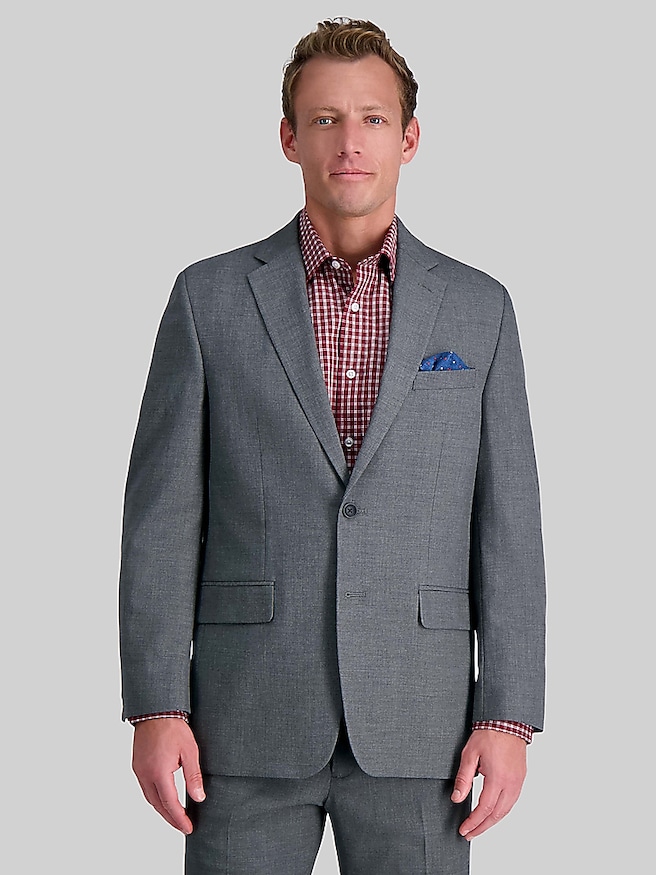
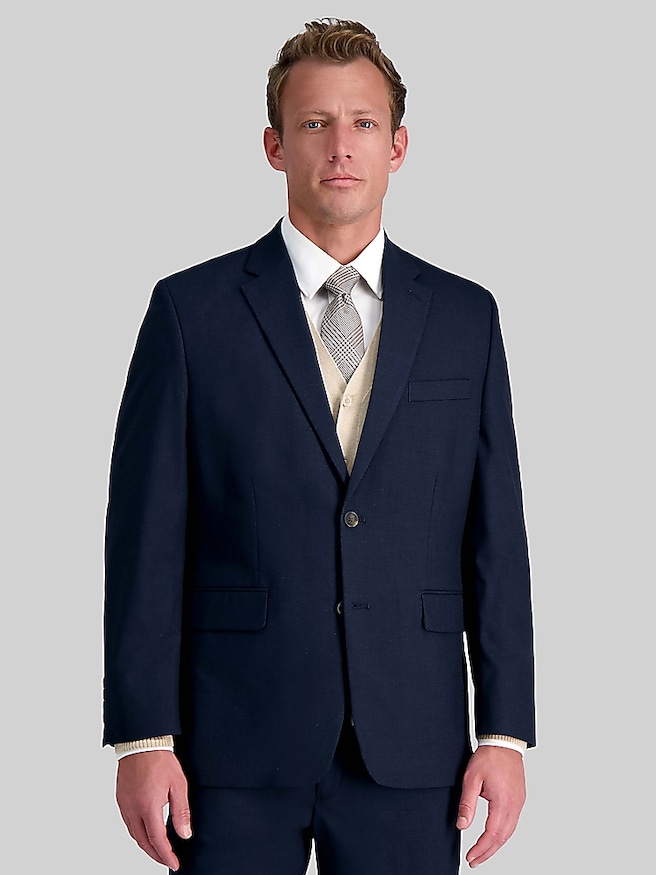
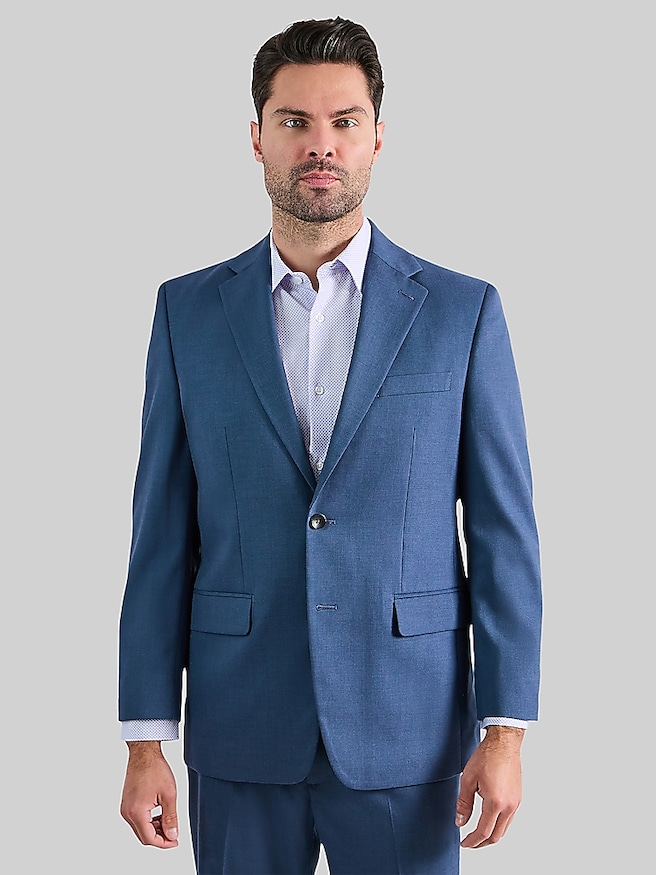
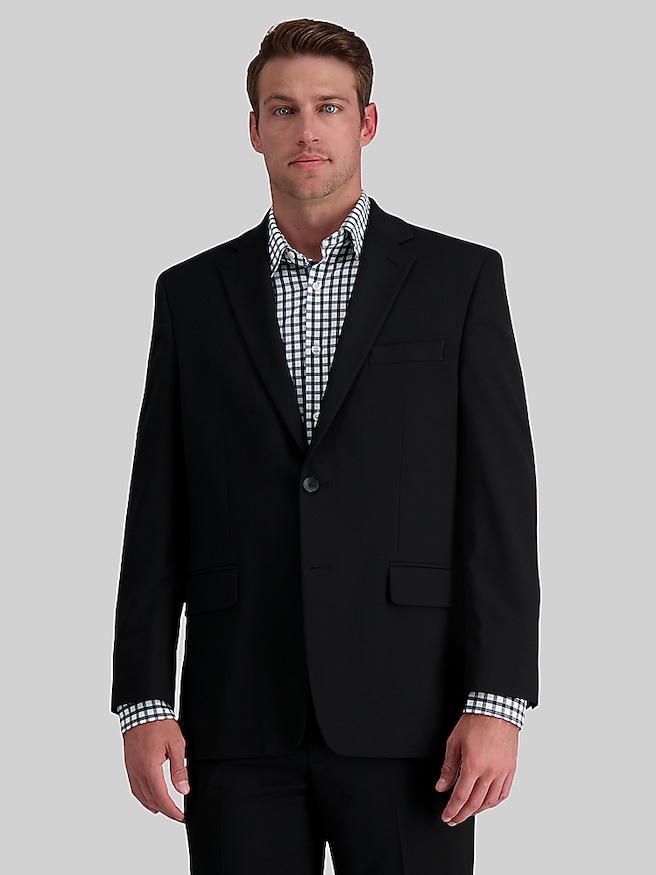
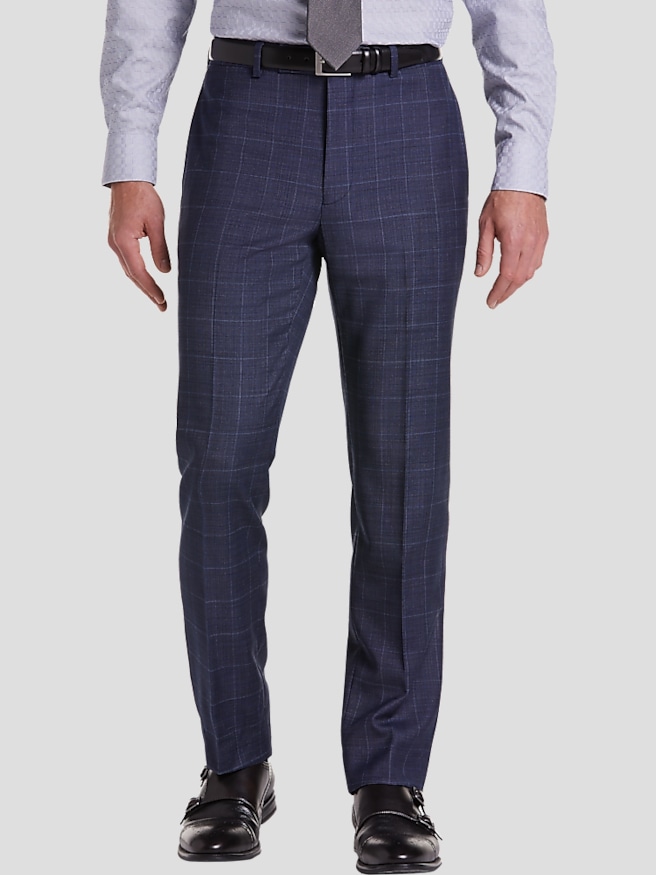
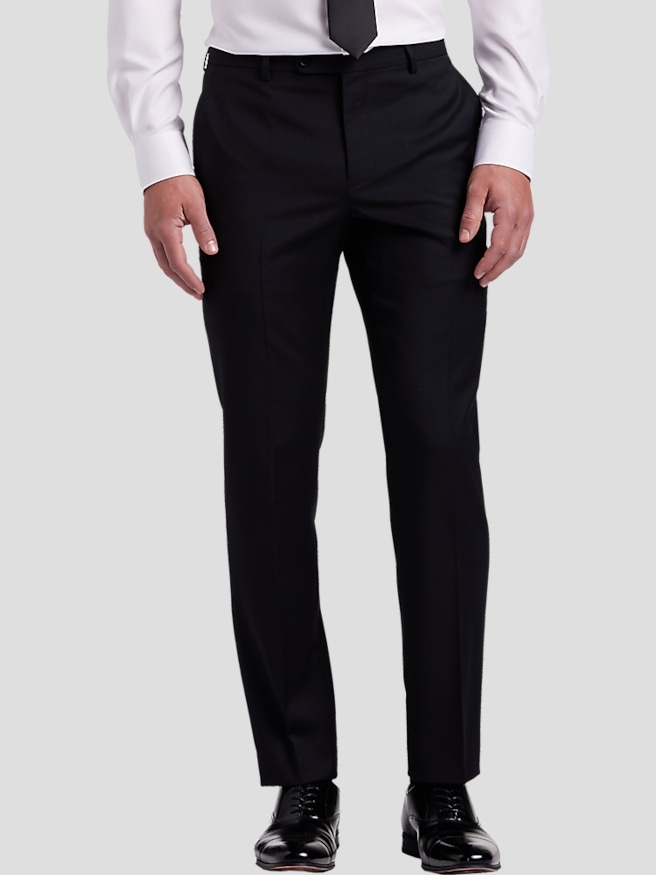
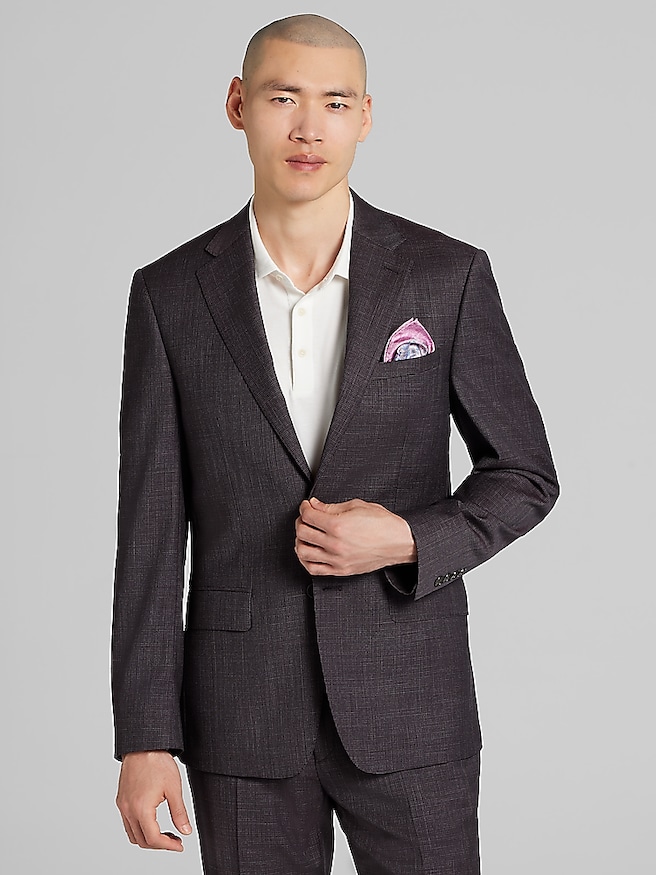
Textured suit trousers bring depth to tailored clothing through the surface of the fabric, whether that means a fine herringbone weave, a softly brushed finish, or subtle variations in the yarn. Unlike a smooth, uniform cloth, a textured fabric catches light unevenly, giving solid colors more dimension without relying on a bold print. Charcoal can reveal a quiet mix of gray tones, navy can look richer against a crisp white shirt, and brown can take on the warmth of a traditional wool cloth. That visual interest makes textured dress pants useful for office days, wedding celebrations, evening gatherings, and other occasions that call for a polished outfit with some personality. The effect depends on both the material and its construction. Herringbone describes a repeating zigzag pattern rather than a particular fiber, while tweed is typically a wool or wool-blend fabric with a more substantial, often flecked appearance. Slub yarns have intentional variations in thickness that create an irregular surface, and corduroy has raised ribs that usually give tailoring a more relaxed character. Not every textured trouser has the same level of formality: a fine tonal weave can sit comfortably in a business setting, while a pronounced rib or rustic finish often feels more suited to a dinner out or a daytime celebration. For a coordinated jacket-and-trouser outfit, men's textured suits carry that fabric interest through the full silhouette. A true matching suit uses coordinating pieces made from the same cloth; two fabrics labeled navy or charcoal may still have noticeably distinct shades, weights, and finishes. Worn as separates, textured suit pants can also anchor an outfit built around a smooth shirt or fine-gauge sweater. The contrast gives each fabric room to stand out, keeping the overall impression considered rather than busy. From across a room, the outfit can read as understated; up close, the weave supplies the detail.
Fabric weight and fit have as much influence on textured suit trousers as the visible pattern. Wool is valued in tailoring for its drape, breathability, and natural resilience, although a lightweight woven wool will feel quite unlike a dense, brushed cloth. Wool blends can combine those qualities with other characteristics, depending on the fibers and proportions involved. Polyester may contribute strength and crease resistance, while a small amount of elastane can add stretch; neither feature replaces the need for a comfortable cut. Cotton-rich fabrics often have a drier hand and a more casual appearance, and their tendency to crease is part of the wearing experience. During the cooler months, a fuller fabric can feel especially appropriate with layered clothing, but indoor comfort still matters during a long meeting, a seated dinner, or a crowded reception. A soft lining, where included, can help the trouser legs move smoothly and reduce direct contact with a coarse fabric. Across slim, tailored, and classic cuts, the most useful fit is one that maintains a clean line while allowing normal movement. Slim trousers sit closer through the thigh and leg, while roomier cuts leave more space; the exact shape varies by maker. A waistband should sit securely without relying on a tightly cinched belt, pockets should lie reasonably flat, and the seat should allow sitting without strain. Persistent horizontal pulling across the hips or thighs can signal that more room is needed. Rise affects where the waistband rests and how comfortably the trousers move between standing and sitting. Pleats can provide additional ease and complement a fuller drape, while a flat front creates a simpler line. At the hem, a slight break over the shoe often suits traditional tailoring, whereas a shorter, cleaner finish emphasizes a tapered leg. Substantial cloth needs enough room to hang well, so an extremely narrow cut can work against the texture rather than showcase it.
The versatility of textured suit trousers comes from balancing their surface detail with the rest of an outfit. For a presentation or client meeting, a fine-textured pair with a pressed dress shirt and leather lace-up shoes keeps the focus on a neat silhouette. At a wedding reception or an evening celebration, a matching jacket and a restrained tie let the fabric provide interest without competing with the occasion. For a less formal dinner, the same general trouser style can work with a smooth knit and loafers, provided the fabric and cut feel at home as separates. A chunky, rustic weave usually pairs more naturally with substantial shoes and layered clothing than with very sleek accessories. Color also shapes how easily trousers move between settings. Navy and charcoal support familiar combinations with white, pale blue, and gray, while brown and muted earth tones work well with cream, burgundy, and deep green. When patterns enter the outfit, a quiet shirt or tie can prevent a visible trouser weave from becoming one element too many. These are practical wardrobe pieces for anyone who wears tailoring regularly, as well as someone building a small selection of clothing for important events. As a gift, trousers are easiest to get right when waist size, inseam, preferred rise, and fit preferences are already known; texture alone cannot predict comfort. Long-term appearance depends on care as well as fabric quality. The care label should determine whether washing or professional cleaning is appropriate, since fiber content, lining, and construction all affect the method. Between wears, airing trousers and using a suitable hanger can help preserve their shape. A soft clothing brush may lift surface dust from wool fabrics, while aggressive rubbing can disturb raised fibers. Heat and pressure also deserve restraint: heavy pressing may flatten texture or leave shine, so any ironing should follow the garment's care directions. Rotating wears, avoiding overfilled pockets, and addressing loose hems promptly can reduce unnecessary stress. With thoughtful handling, a well-chosen textured fabric can retain the depth and clean drape that make these trousers distinctive.