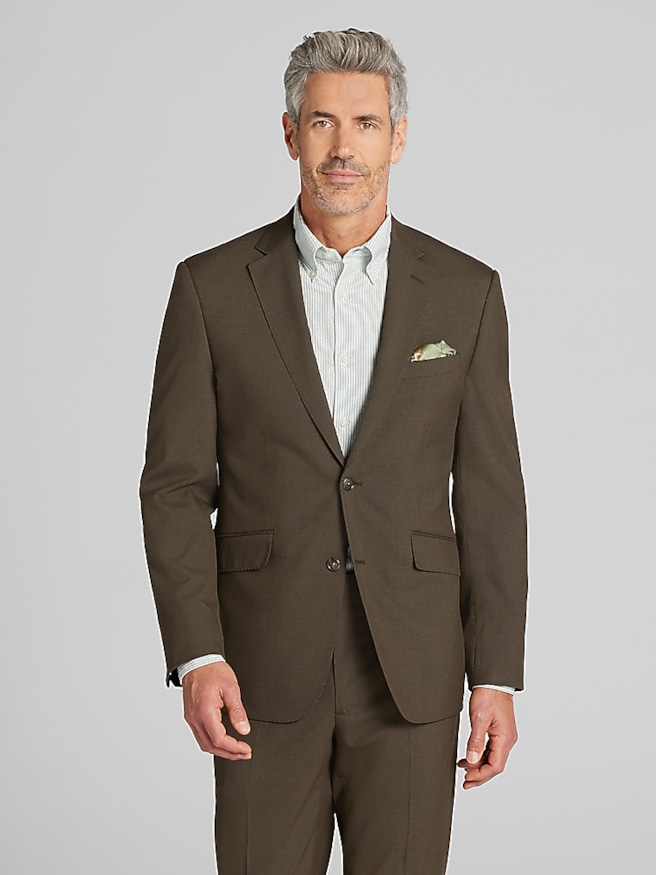
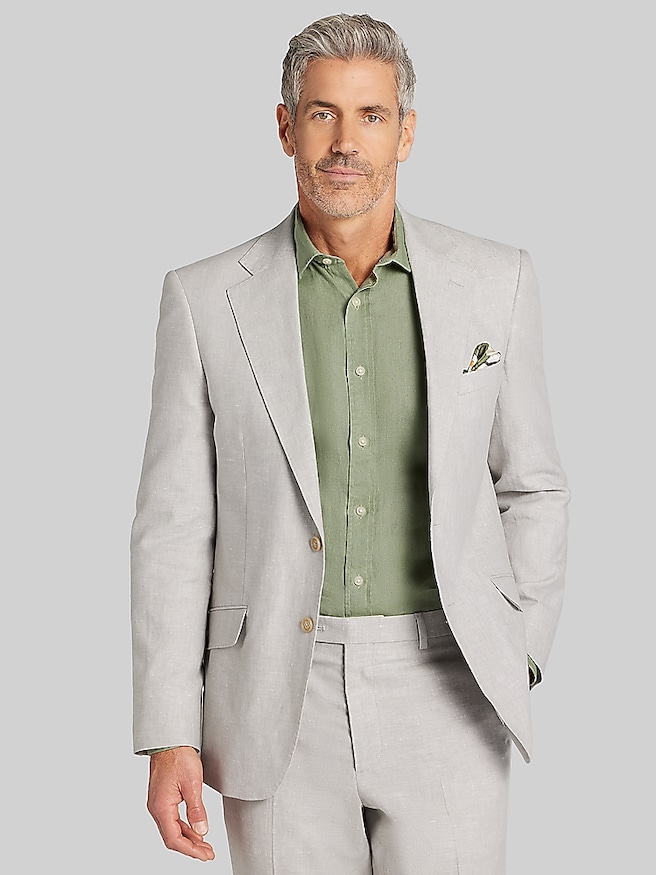
Men’s textured suits bring depth to tailored clothing through the character of the fabric itself. Rather than relying on a bold print, a textured suit may reveal a fine diagonal weave, a softly brushed surface, a small-scale zigzag, or an open basketlike construction. These details change how the cloth catches light, giving a solid navy, charcoal, gray, or brown suit more dimension without making it difficult to coordinate. Some textures are noticeable across a room; others become apparent only up close, adding interest to an otherwise understated outfit. Herringbone creates a repeating broken-chevron effect, while hopsack uses a basket weave that can lend the cloth a more open appearance. Tweed often combines visible yarn variation with a substantial feel, and flannel gets its soft character from a brushed finish rather than one particular weave. Seersucker has a distinctive puckered surface, offering a more relaxed expression of tailoring. The material matters as much as the visible texture. Wool can provide natural resilience, a pleasing drape, and the ability to recover its shape between wears. Wool blends combine that character with other fibers, which may influence softness, weight, flexibility, and wrinkle resistance. Linen blends can introduce a crisp, irregular surface, while synthetic blends may offer practical benefits such as shape retention or easier maintenance, depending on their construction. A little stretch can add give, but the amount and placement of that stretch vary by fabric. Texture alone does not determine comfort or quality: the lining, seams, overall construction, and fit also influence how a suit feels through a full day. For someone who prefers solid-colored tailoring but wants something less visually flat, a subtle textured weave offers a useful middle ground. It can make a familiar suit color feel distinctive while keeping the overall impression polished enough for professional settings, celebrations, and other occasions that call for a jacket and matching trousers.
The best fit allows the fabric’s texture to remain visible without pulling, bunching, or distorting the silhouette. A jacket should sit cleanly at the shoulders, with its collar resting close to the shirt collar and its lapels lying smoothly against the chest. When the front is fastened, pronounced tension lines around the button can indicate that more room is needed. Equally, excess fabric through the torso can hide the shape of the jacket and make a richly textured cloth look heavier than intended. Slim, tailored, and classic fits describe different proportions, not different levels of sophistication; the right choice depends on build, preferred ease, and how the suit will be used. Someone who spends much of the day seated at a desk may appreciate room through the waist and thighs, while someone attending a ceremony may prioritize a particularly clean jacket line. Trousers should sit securely at the intended waist position and allow comfortable sitting and walking. Their length affects the finished appearance, with a slight break offering a traditional look and a shorter, cleaner hem emphasizing the shape of the leg. Texture and flexibility can coexist, making men’s stretch fabric matching suits a related option for anyone who values coordinated tailoring with added give. For business meetings or interviews, a fine texture in a restrained color pairs naturally with a smooth shirt, a simple tie, and polished leather shoes. At a wedding, the same approach can look considered without competing with the occasion, whether the wearer is a groom, an attendant, or a guest. A matching vest adds another layer of coordination, while a two-piece suit keeps the silhouette simpler. More pronounced weaves can feel at home at dinners, receptions, or events with a relaxed dress code. The stated dress code still takes priority: a textured business suit is not a substitute for a tuxedo when black tie is required. Smooth accessories often provide the clearest balance, allowing the cloth to supply the outfit’s main visual interest rather than surrounding it with competing patterns.
Thoughtful care helps a textured suit retain both its shape and the definition of its surface. The care label is the starting point, since similar-looking fabrics can require different treatment. Many tailored suits call for professional cleaning, but unnecessary cleaning can place extra demands on the cloth and construction. Between wears, airing the suit in a well-ventilated space and using a suitable soft clothing brush can help remove surface dust from fabrics that tolerate brushing. A sturdy, shaped hanger supports the jacket’s shoulders, while trousers benefit from being hung neatly along their crease or on an appropriate trouser hanger. Crowding a jacket tightly into a closet can compress the lapels and leave wrinkles that distract from the fabric’s texture. Steaming or pressing should follow the garment’s care guidance; excessive heat or pressure can flatten a raised surface or leave unwanted shine. When professional cleaning is necessary, treating the jacket and matching trousers together can help maintain a consistent appearance over time. Durability depends on more than fabric thickness. Sound seams, an appropriate fit, and enough room for ordinary movement reduce strain at the seat, knees, elbows, and pockets. Rotating a suit with other outfits also gives the fabric time to rest rather than subjecting the same areas to repeated wear every day. These practical considerations matter for someone building a work wardrobe, preparing for a series of special events, or choosing a suit for occasional celebrations. Depending on their construction and finish, some textured jackets can also work separately with complementary trousers, though the matching pieces remain the most straightforward choice for a coordinated appearance. As a gift, a textured suit can mark a graduation, a career milestone, or another significant achievement, especially when the recipient’s measurements and style preferences are known. A restrained weave suits someone who favors familiar classics; a more visible texture may appeal to someone who enjoys expressive tailoring. In either case, the appeal comes from the same combination: tactile fabric, balanced proportions, and a polished look with character beyond a plain surface.