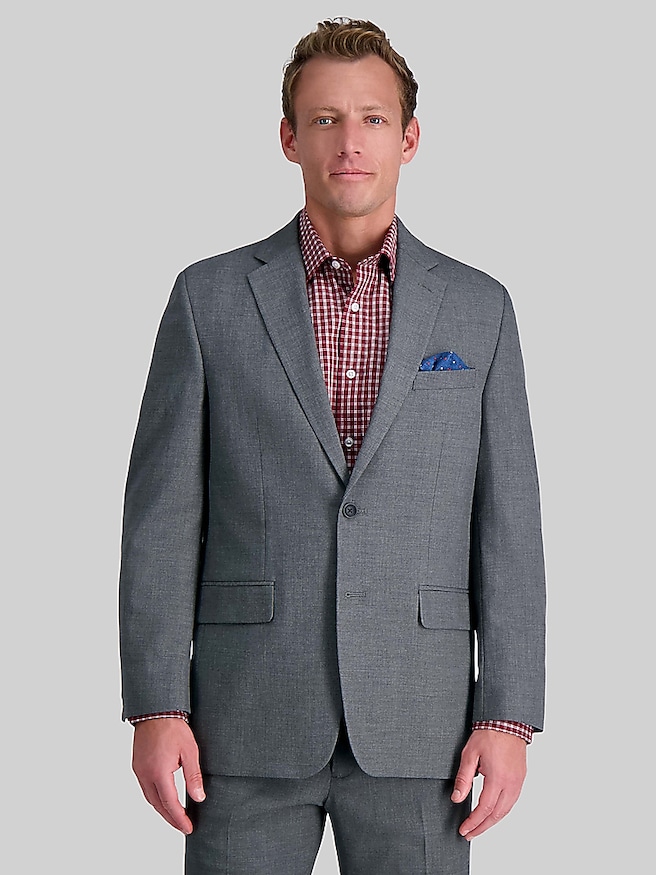
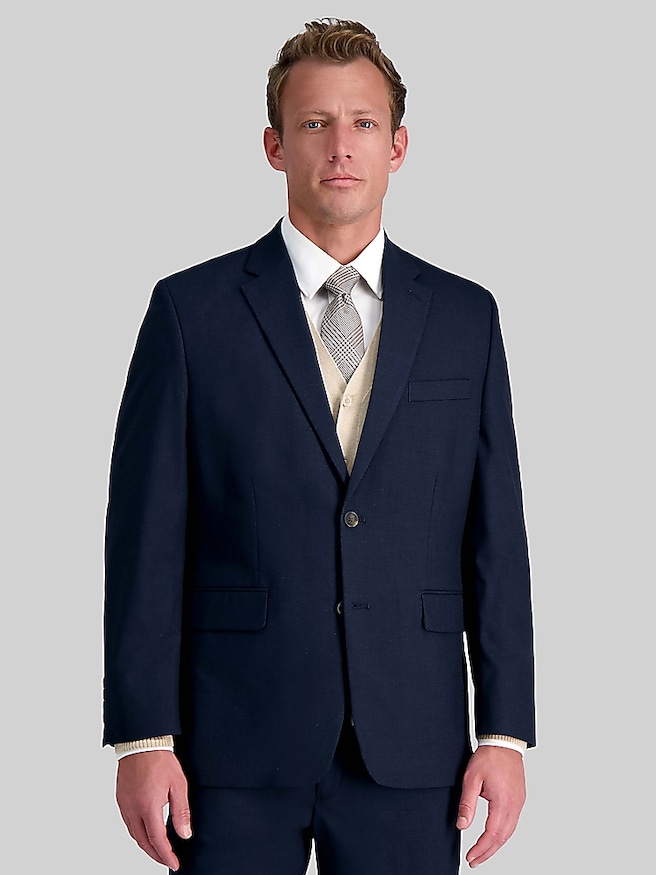
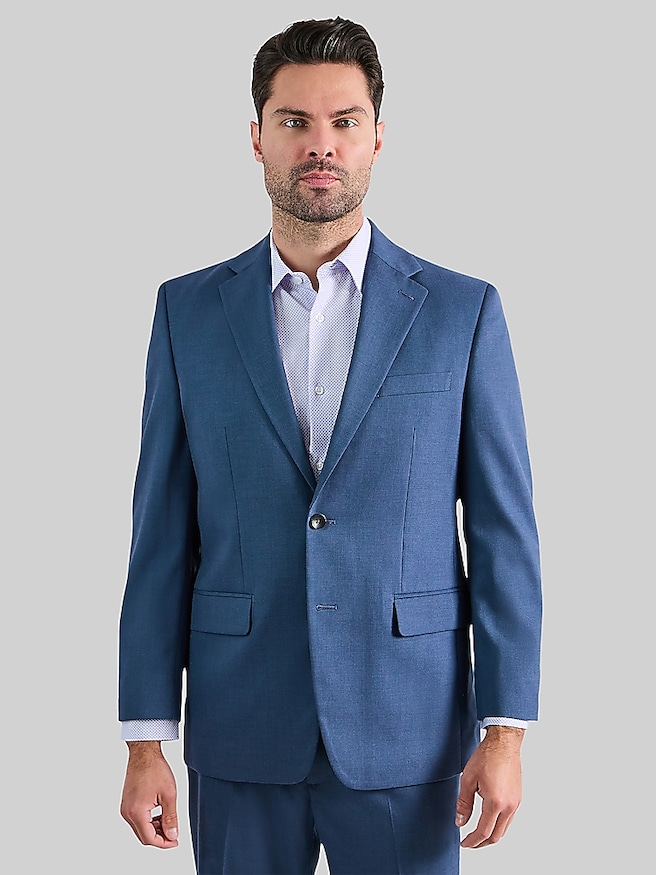
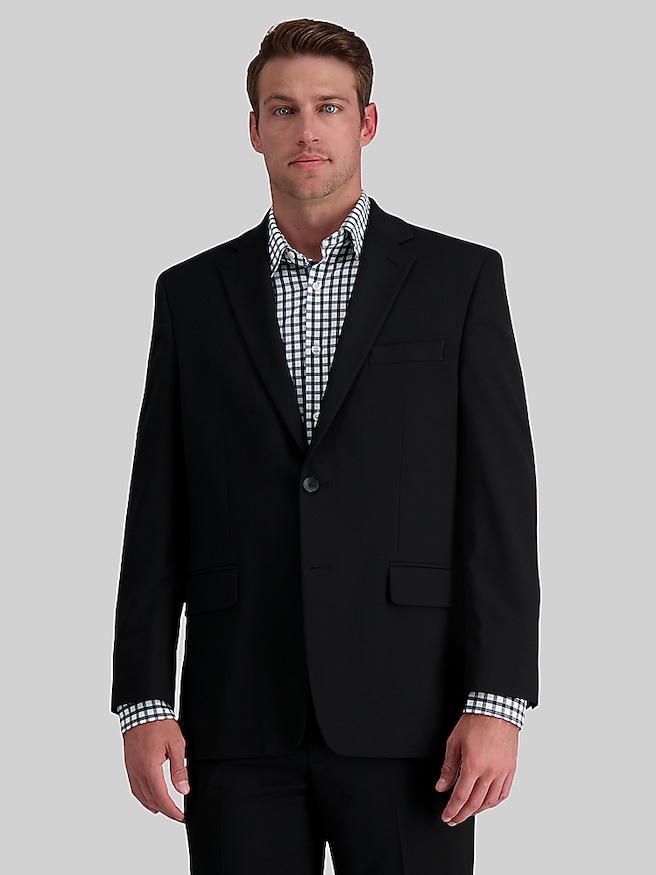
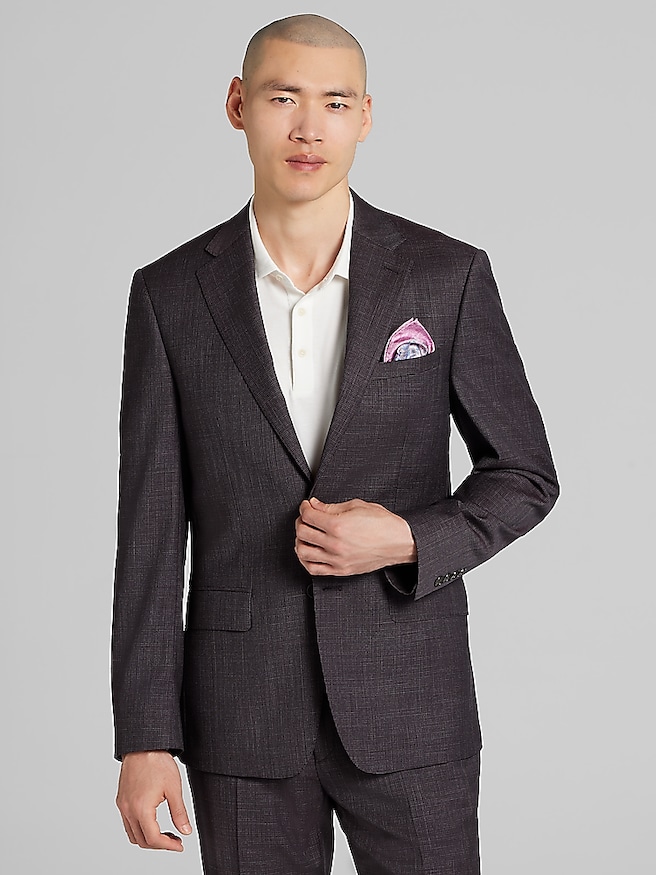
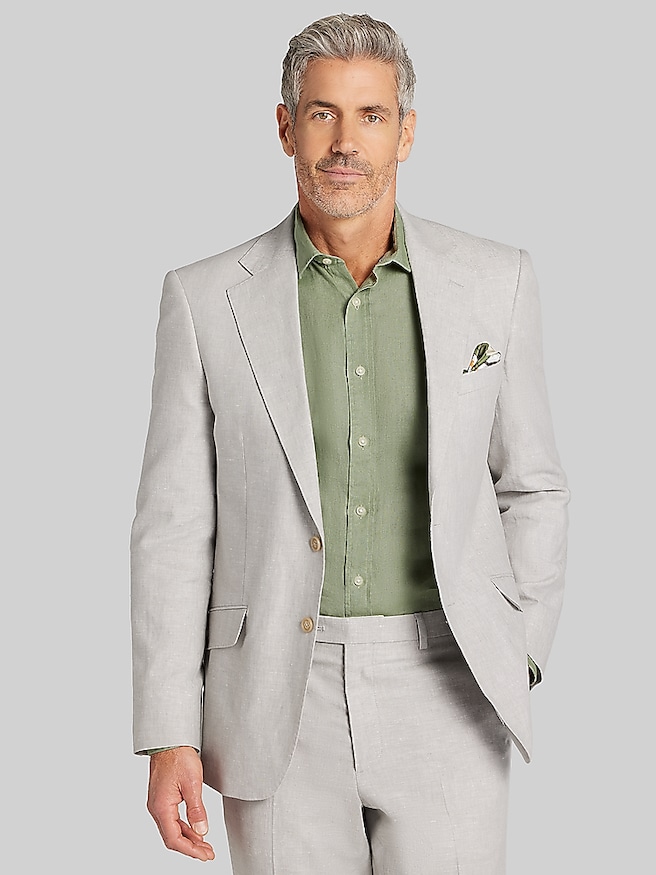
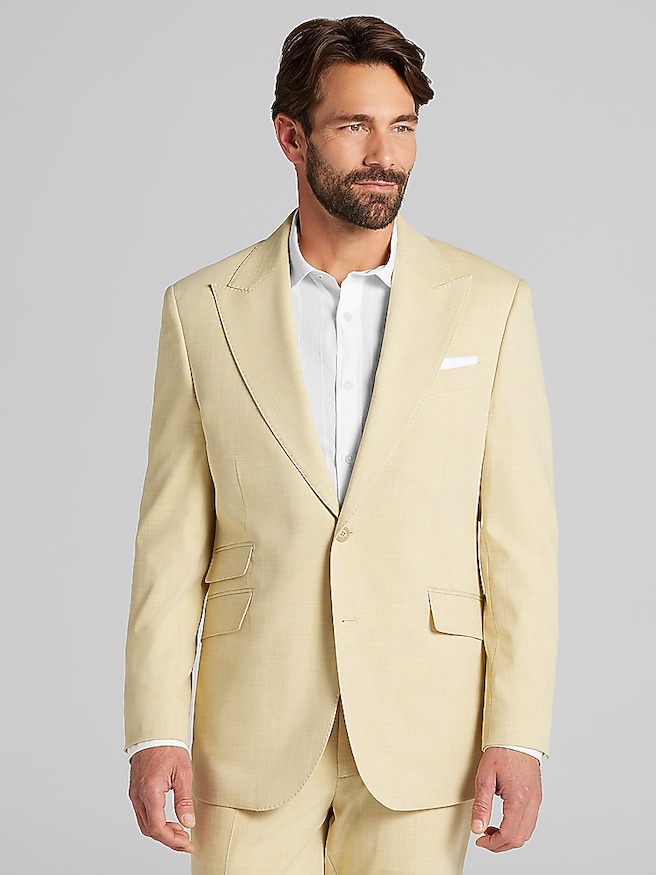
Men’s stretch fabric matching suits pair a coordinated jacket and trousers with fabric designed to provide give during movement, bringing flexibility to a traditionally tailored silhouette. The matching fabric, color, and pattern create a continuous look from shoulder to hem, while stretch can make everyday actions feel less restricted: reaching for a briefcase, settling into a car seat, or sitting through a lengthy presentation. That combination suits professionals who dress formally, wedding guests, graduates, and anyone who wants a polished appearance without an overly rigid feel. Stretch suiting can take several forms. Wool blended with elastane combines wool’s characteristic drape with added elasticity, while polyester, rayon, and spandex blends can offer a smooth surface and flexible feel. Elastane and spandex are names for the same elastic fiber; the terminology alone does not indicate a difference in quality. Mechanical stretch comes from yarn construction or the way fabric is woven rather than necessarily relying on an elastic fiber. The fiber label helps explain composition, but it does not tell the whole story of how a suit will feel. Fabric weight, weave, lining, and jacket construction also influence movement and drape. A small percentage of stretch fiber can provide noticeable give, yet a higher percentage does not automatically make a suit more comfortable or better tailored. Recovery—the fabric’s ability to return toward its original shape after stretching—matters just as much, especially around the knees, seat, and elbows. Some fabrics stretch primarily across their width, while others give in more than one direction. Those differences can affect comfort when walking or reaching, although stretch claims should be evaluated alongside the garment’s construction. A flexible outer fabric paired with a restrictive lining may still limit movement. The appeal of a well-balanced stretch suit is subtle: a clean jacket front, trousers that hang smoothly, and enough ease to move naturally without making the outfit look like activewear.
Fit gives men’s stretch matching suits their shape; flexibility supports that fit rather than replacing it. A jacket should sit neatly across the shoulders, with lapels that lie close to the chest and a collar that rests against the shirt without a noticeable gap. When the jacket is buttoned, pronounced pulling around the closure or horizontal lines across the back can signal that more room is needed. Stretch fabric may make a tight jacket possible to fasten, but it cannot correct shoulders that are too narrow or an unbalanced cut. Slim fits generally follow the body more closely, modern fits often offer a shaped profile with a little more ease, and classic fits typically allow additional room through the chest, waist, and legs. These names are not standardized, so the actual proportions matter more than the label. For a fuller chest or thighs, room in those areas helps preserve a smooth silhouette instead of forcing the fabric to remain under tension. Trousers should feel secure at the waist without digging in when seated, and the pockets should stay relatively flat. A comfortable rise and sufficient room through the seat can make a greater difference over a long day than extra stretch alone. The jacket and trousers should also feel proportionate together: a sharply tapered leg creates a different effect from a straighter cut, even when both use the same fabric. Matching suit separates can accommodate different jacket and trouser sizes where that format is offered, but pieces intended to form one suit should share the same fabric and color designation. Two fabrics described as navy may differ noticeably in shade, texture, or sheen. Alterations can refine sleeve length, trouser hems, and certain areas of shaping, though significant shoulder changes are more involved. A natural standing posture, followed by a few steps and a seated check, reveals whether the finished fit works beyond the fitting-room mirror.
The intended occasion helps determine which qualities matter most in a stretch fabric suit. For regular office wear, an understated color, restrained pattern, and balanced cut can move easily between a client meeting and dinner afterward. For a wedding or graduation, a matching jacket and trousers establish a dressed-up foundation that can be personalized with a shirt, tie, pocket square, and shoes. A crisp shirt and silk tie emphasize the tailored character of the suit, while an open collar creates a less formal look when the dress code permits. Stretch does not change the level of formality on its own; fabric finish, color, styling, and the event’s expectations remain important. Celebrations that invite a more expressive look may also call for the distinctive colors or patterns associated with Mens Party Suits. For business travel or an event involving several hours of sitting, ease through the waist and knees can be particularly welcome, but stretch should not be mistaken for guaranteed wrinkle resistance. Washability, stain resistance, and other performance properties are separate characteristics that require confirmation on the garment label. Care is equally important to long-term appearance. Follow the instructions for both pieces rather than assuming that a synthetic blend belongs in the washing machine or that every wool blend needs the same treatment. Excessive heat can affect elastic fibers and garment structure, so pressing and steaming should follow the stated care recommendations. Between wears, a broad, shaped hanger supports the jacket’s shoulders, while properly hung trousers are less likely to develop unwanted creases. Emptying pockets helps prevent distortion, and allowing the suit to rest between outings gives moisture time to dissipate. When professional cleaning is required, having the matching pieces treated together helps maintain a consistent appearance. Durable stretch suiting depends on sound construction, appropriate fit, and thoughtful care—not simply on how far the fabric extends. With those elements in balance, a matching suit can retain the composed look expected of tailoring while accommodating the ordinary movement of a full day.