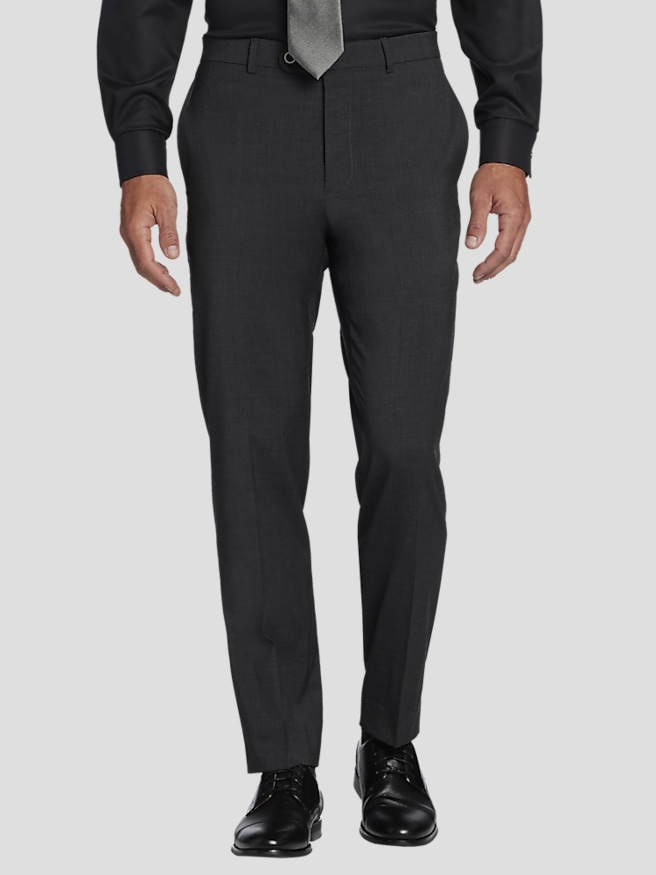
Textured wool pants are trousers made from wool or wool-blend fabric with visible or tactile surface detail, from the soft nap of flannel to the distinct weave of tweed or herringbone. That texture gives a familiar wardrobe staple more depth without requiring a bold color or a large pattern. A pair of charcoal trousers might look nearly solid across a conference table, then reveal a fine diagonal weave or flecks of lighter yarn up close. The effect can feel polished enough for a presentation and relaxed enough for dinner afterward, depending on the fabric, cut, and accompanying pieces. Texture can come from the yarn itself, the way the cloth is woven, or a finishing process that gently raises the surface fibers. Brushed wool generally has a softer, more matte appearance, while a pronounced twill creates visible diagonal lines. Herringbone forms a repeating zigzag, and a heathered finish combines tones for a softly varied color. These distinctions matter because two pairs in the same shade can have very different personalities: one understated and dressy, the other more substantial and suited to everyday separates. Wool is valued for its natural resilience, its ability to absorb moisture vapor, and the way well-made cloth drapes rather than clings. Fabric composition still deserves attention. A wool blend may include fibers intended to add stretch, strength, or another quality, but the blend percentage alone does not explain how the finished trousers will feel. Weave, weight, lining, and construction all contribute to comfort and movement. A smooth waistband and neatly finished seams can be just as noticeable over a full day as the fabric’s surface. For someone who prefers restrained colors but wants an outfit to feel considered, textured wool trousers add interest through material rather than decoration.
Fit determines whether that character looks deliberate or distracting. Textured wool pants should hang cleanly from the waist, with enough room through the seat and thighs to sit, walk, and climb stairs without pulling the fabric taut. Horizontal tension lines across the lap or pockets that flare outward can suggest that more room is needed; excess fabric folding beneath the seat can point to a cut that is too generous or needs adjustment. Slim silhouettes create a closer line through the leg, while straight and fuller cuts give the cloth more space to fall. Neither approach needs to look stiff or oversized when the proportions suit the wearer. The rise also changes the overall effect. A higher rise can work especially well with tucked shirts and jackets, while a lower rise may suit someone’s preferred waist position. Pleats provide room through the upper leg and can lie neatly when the waist and seat fit properly. Flat-front styles offer a simpler front, though they still need adequate ease for comfortable movement. At the hem, a slight break gives the fabric a small fold above the shoe, while little or no break creates a sharper line. Too much length can cause a substantial weave to bunch around the ankles and hide the shape of the trousers. Styling works best when the surrounding fabrics have a clear relationship to that texture. Gray wool pants with a white oxford shirt and dark leather loafers create an understated office outfit; a fine-gauge knit and clean leather sneakers can make similar trousers feel less formal. With a textured jacket, a quieter trouser weave keeps the combination from becoming visually crowded. For outfits centered on a matching jacket, Textured Suit Trousers belong to a more coordinated approach, where fabric, pattern, and shade need to match rather than merely complement one another. Standalone trousers allow more contrast, such as charcoal beneath a navy jacket or brown wool paired with a pale blue shirt.
The appeal of textured wool pants extends beyond a single dress code. They can suit someone building a dependable office wardrobe, a frequent traveler who values fabrics that recover well after wear, or a person who wants an alternative to chinos for dinners, performances, and celebrations. A subtle weave often moves easily between these settings, while a pronounced pattern makes more of a statement. As a gift, wool trousers are most practical when the recipient’s waist size, preferred rise, and usual leg shape are already familiar; inseam length and room for alterations deserve consideration, too. Long-term satisfaction also depends on care that respects the fabric. The care label should determine whether a pair requires professional cleaning or permits another method, since wool fabrics, blends, linings, and finishes do not all respond alike. Between cleanings, letting trousers air out and rest helps the fibers recover their shape. A soft clothing brush can lift surface dust, and prompt attention to a spill can keep residue from settling into the weave. Blotting rather than rubbing helps avoid spreading a mark or roughening the surface. Any use of steam or an iron should follow the care instructions, with special caution around raised textures that can flatten under heavy pressure. Hanging trousers neatly on an appropriate hanger reduces unnecessary folds, and avoiding an overfilled closet gives the cloth space to hang freely. Durability varies with yarn quality, weave, construction, fit, and wear habits, not simply how thick the fabric feels. Friction at the inner thighs, seat, and pocket edges can affect even substantial cloth, especially if the fit is tight or pockets carry bulky objects. Rotating pairs and addressing a loose seam early can help extend useful wear. With suitable proportions and thoughtful care, textured wool trousers offer a distinctive combination of surface interest, comfortable drape, and versatility that earns a place in a well-used wardrobe.