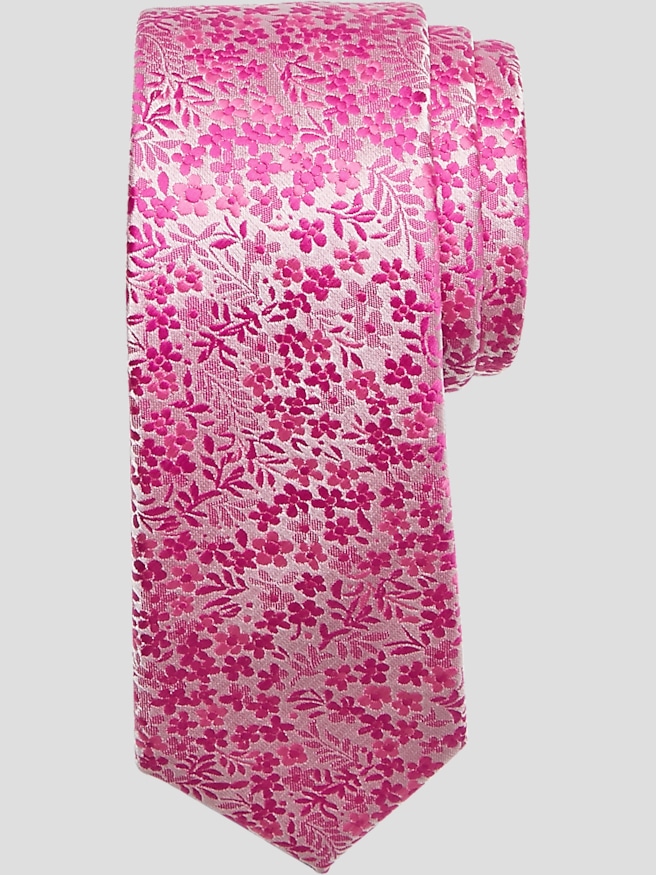
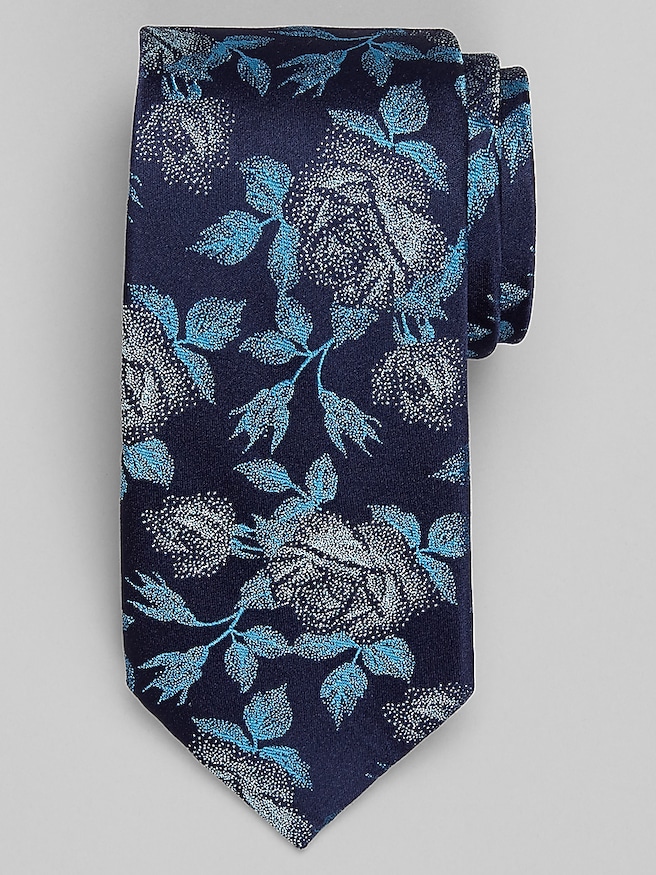
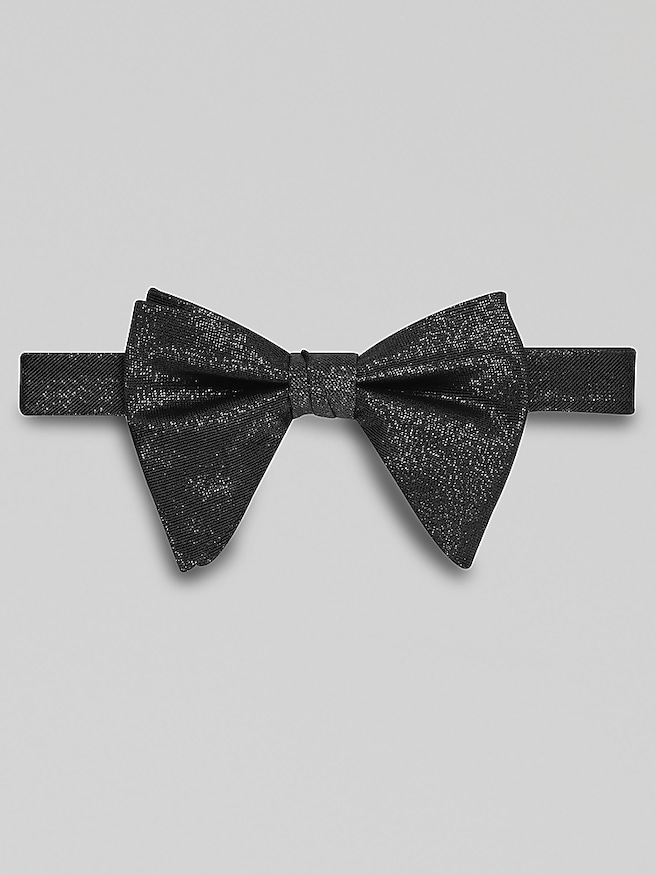
Teal ties for Valentine's Day bring a distinctive blue-green accent to an outfit without relying on the holiday's familiar red and pink palette. The color can feel expressive or understated depending on its depth, the fabric's finish, and the clothes around it. Deep teal sits comfortably against navy or charcoal tailoring, while a brighter shade adds a clear focal point to a white shirt and dark jacket. For a dinner reservation, a dark teal tie with a subtle woven texture can give a charcoal suit enough character without making the outfit feel themed. Against a pale blue shirt, teal creates a softer, closely related color combination; against white, its green undertones become more noticeable. The appeal of teal ties also extends to patterns, from small geometric repeats to florals and paisleys that add movement without needing overt holiday imagery. A restrained heart motif can make the occasion explicit, while a solid or tonal pattern keeps the look useful well beyond Valentine's Day. Pattern scale matters as much as the motif itself: a small repeat tends to read as texture from across a table, while a larger floral becomes a more prominent part of the outfit. With a patterned shirt, a solid tie or a pattern in a noticeably different scale usually creates a clearer combination than two equally busy designs. Burgundy accents can complement teal's cooler character, but a pocket square does not need to duplicate the tie. A white linen square offers a clean contrast, and a patterned square with a small teal detail can connect the pieces more subtly. For an evening concert, a special dinner, or a celebration that calls for a suit, the overall effect comes from balance: one expressive accessory, a well-fitting shirt, and tailoring that gives the color room to stand out. A navy blazer and gray trousers provide another setting for teal when a full suit would feel more formal than the occasion requires.
Fabric gives teal neckwear much of its personality, influencing how the color catches light, how the knot forms, and how formal the finished outfit feels. Silk can offer a fluid drape and a rich appearance, although its finish varies considerably: smooth satin weaves reflect light differently from matte or textured weaves. A lustrous teal tie can look especially vivid under evening lighting, while a less reflective surface keeps the same color quieter. Microfiber ties, often made from polyester, can provide a smooth finish and hold their shape well, though their care requirements still depend on the construction and label. Cotton generally has a more matte appearance that works comfortably with less formal tailoring. Wool and wool-blend ties bring visible texture, while knitted ties have a distinct surface and often a squared end, giving them a more relaxed character than a traditional pointed woven tie. These differences are useful when matching the accessory to the setting: a smooth tie complements a crisp dress shirt and refined suit fabric, while a textured tie can sit naturally against a more tactile jacket. Proportion is equally important. Tie width usually looks most balanced when it relates to the jacket's lapels and the wearer's frame rather than following a single rule. A narrow blade beside broad lapels can appear disconnected, just as a very wide tie can dominate a trim jacket. Length should allow the front tip to reach approximately the waistband after the knot is tied, with enough of the narrow blade remaining to sit neatly behind it. A four-in-hand knot gives a slightly asymmetric shape and works well with many standard collars. A half-Windsor produces a more symmetrical knot, while a fuller Windsor needs sufficient collar space and can become bulky in thicker fabric. The most convincing finish is comfortable rather than forced: the collar closes without strain, the knot sits close to it, and the tie hangs smoothly instead of twisting. A small dimple below the knot can add depth, but the fabric should not need aggressive tightening to achieve it.
A teal tie can also make a thoughtful Valentine's Day gift for a partner who enjoys dressing for dinner, wears tailoring to work, or appreciates accessories with more personality than a standard neutral. The most useful choice reflects how that person actually dresses. Someone whose wardrobe centers on navy suits and white shirts may get frequent use from a deep teal solid or discreet geometric pattern. Someone who favors textured jackets, open-weave fabrics, and less formal combinations may respond better to a matte or knitted finish. Existing ties can offer clues about preferred width, length, pattern scale, and sheen without requiring an exact duplicate. For a taller wearer, sufficient tie length matters more than an elaborate pattern; for someone who ties a substantial knot, extra length may also be helpful. Beyond the gift itself, good care helps preserve the accessory's shape and appearance. Untying the knot after each wear, rather than pulling the narrow end through a tightened knot, reduces unnecessary stress on the fabric and stitching. A tie should be dry before storage and kept without a knot, either hanging smoothly on a suitable rack or loosely rolled without sharp folds. Care labels take priority because silk, cotton, wool, and synthetic fabrics do not all respond safely to the same cleaning methods. A spill is best blotted gently with a clean cloth rather than rubbed, and improvised stain treatments can leave marks or disturb the finish, particularly on silk. When professional cleaning is appropriate, identifying the stain and checking that the cleaner handles neckwear can help protect the tie's construction. Heavy pressing can flatten texture and leave unwanted creases along the edges, so heat should never be treated as a universal fix. With considered handling, teal neckwear can remain part of a regular wardrobe rather than becoming an accessory reserved for one celebration. Its value for Valentine's Day lies in that combination of occasion and everyday usefulness: a memorable color for a meaningful evening, with enough versatility for the next invitation that calls for dressing well.