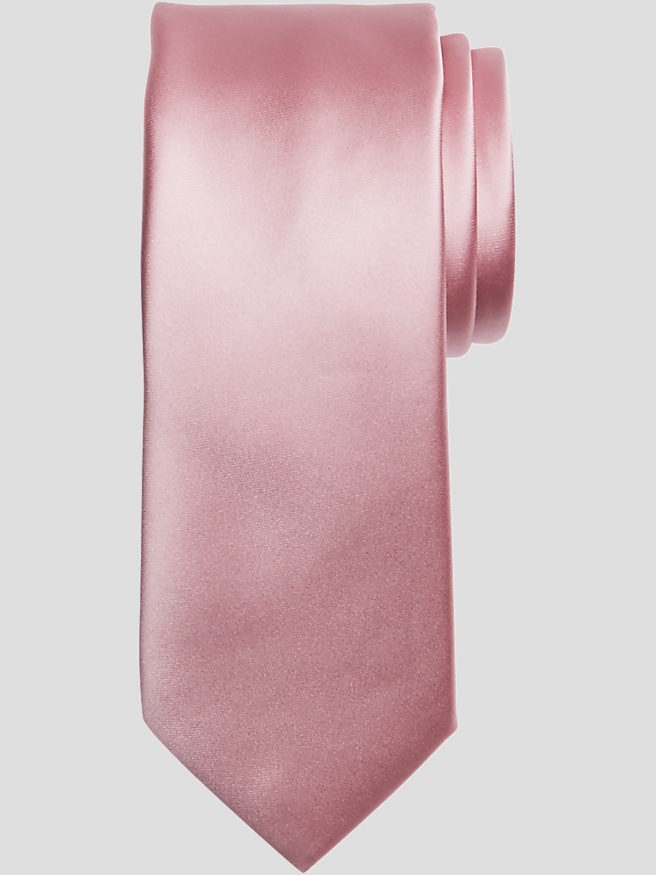
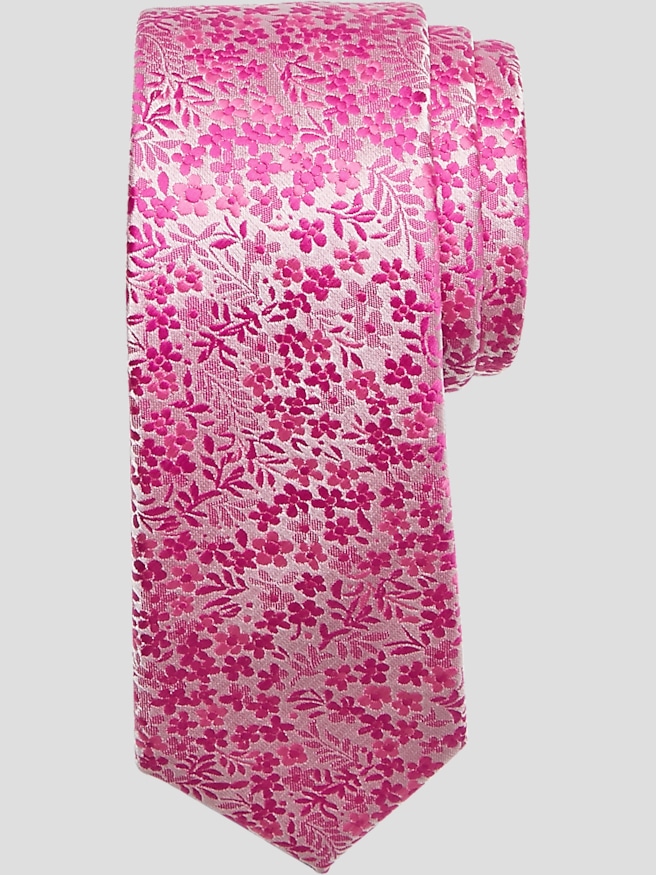
Pink ties for Valentine’s Day bring a romantic touch to tailored clothing without requiring an outfit built entirely around the holiday. Shades ranging from pale blush to dusty rose and vivid pink can suit a quiet dinner, a dressed-up celebration, or a workday that ends with evening plans. The shade, fabric, and pattern determine whether the effect feels understated or expressive. A light pink tie against a white shirt and navy suit creates a crisp contrast, while muted rose against charcoal has a softer, more reserved character. Brighter pink gives a dark suit a clear focal point, especially when the shirt and pocket square stay simple. Solid colors emphasize the fabric’s surface and the shape of the knot; small florals, fine dots, and tonal paisleys add detail that becomes more noticeable up close. Heart motifs offer a more explicit connection to Valentine’s Day, while subtle patterns can carry easily into weddings, anniversary dinners, and other celebrations. For an outfit that moves from the office to a restaurant, a restrained rose tie with a light blue shirt and dark tailoring feels festive without looking like a costume. A pink tie can also provide a thoughtful accent when coordinating with a partner’s clothing: sharing a similar level of formality or picking up one small color detail often looks more natural than an exact match. A white pocket square keeps the combination clean, while a patterned square with a trace of pink adds depth without duplicating the tie. For a deeper alternative within the same romantic palette, dark purple ties for Valentine’s Day offer a richer contrast with white shirts and gray tailoring. Pink remains versatile because it can read as delicate, cheerful, or confident depending on its intensity and surroundings. The most cohesive combinations let that color stand out rather than compete with several equally strong accents.
Fabric gives pink neckwear much of its character, affecting how the color catches light, how the knot forms, and how the tie hangs against a shirt. Silk often offers a fluid drape and a soft luster, although its appearance varies considerably with the weave. A smooth silk surface can make rose pink look luminous, while a textured weave breaks up reflected light for a quieter finish. Satin describes a weave rather than a fiber, so a satin tie may be made from silk or synthetic material; its smooth, reflective face generally has a dressier appearance. Polyester and microfiber fabrics can produce similarly polished effects, but their feel, drape, and care requirements depend on construction. A fine woven texture lends dimension to a solid pink tie without adding another pattern, making it useful beside a checked shirt or subtly patterned jacket. Knit ties typically have a more relaxed character and can work well with an unstructured blazer for a dinner that calls for polish rather than full formal dress. With any fabric, proportion matters as much as color. Tie width generally looks most balanced when it relates to the jacket’s lapels and the wearer’s frame, rather than following a narrow or wide silhouette in isolation. Length should allow the finished tip to reach approximately the waistband or the middle of the belt buckle while leaving enough fabric for a secure knot. Taller wearers or those with a larger neck may need additional length, particularly for a fuller knot. A four-in-hand produces a compact, slightly asymmetric shape that suits many everyday collars, while a half-Windsor adds structure and can fill a more open collar. Thick fabric builds volume quickly, so a smaller knot may sit more comfortably than a large one. A small dimple beneath the knot gives the fabric definition, and a collar that rests neatly around the knot keeps the finished look intentional. For most dinner plans, comfort comes from a secure knot that sits at the collar without pulling or bunching the shirt.
A pink tie can be a personal Valentine’s Day gift for a partner, spouse, fiancé, or someone who enjoys dressing well, particularly when the choice reflects clothing already in regular rotation. Someone who wears navy suits and white shirts may get frequent use from a muted pink solid or an understated geometric pattern. A wearer drawn to expressive accessories might appreciate a stronger pink or a floral design, while a person who rarely wears neckwear may find a restrained texture easier to incorporate into occasional dressed-up outfits. Thinking about familiar lapel widths, shirt collars, and preferred knots makes the gift more useful than choosing by color alone. Its appeal can extend beyond the occasion: blush and rose tones work for wedding guest attire, engagement celebrations, family portraits, and dinners where a jacket feels appropriate. Long-term appearance depends on both construction and handling. A tie should hang smoothly, with edges that lie flat and stitching that holds without visibly puckering the fabric. The inner lining contributes body and helps support the knot, but a heavier tie is not automatically a more durable one. Repeatedly pulling a tie loose by its narrow end can strain the fabric and seams; carefully reversing the knot after each wear helps reduce that stress. Letting the tie rest untied also gives creases a chance to relax. Woven ties can usually be stored hanging smoothly or loosely rolled, while knit styles are often better stored flat or gently rolled to limit stretching. Care labels should govern cleaning, since silk, synthetics, linings, and surface finishes may need different treatment. A splash from dinner is best blotted gently rather than rubbed, and delicate fabrics may require professional attention instead of a home stain treatment. Direct heat can flatten texture or leave shine, so pressing should never be assumed safe. With thoughtful care and a balanced outfit, pink neckwear offers more than a holiday reference: it adds color and personality while retaining the clean lines that make a shirt, tie, and jacket feel put together.