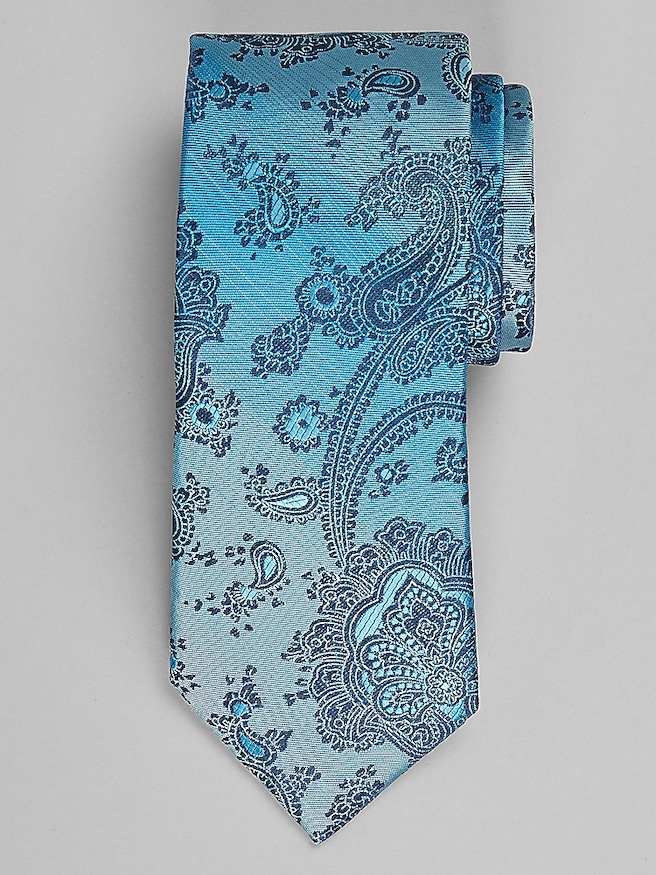
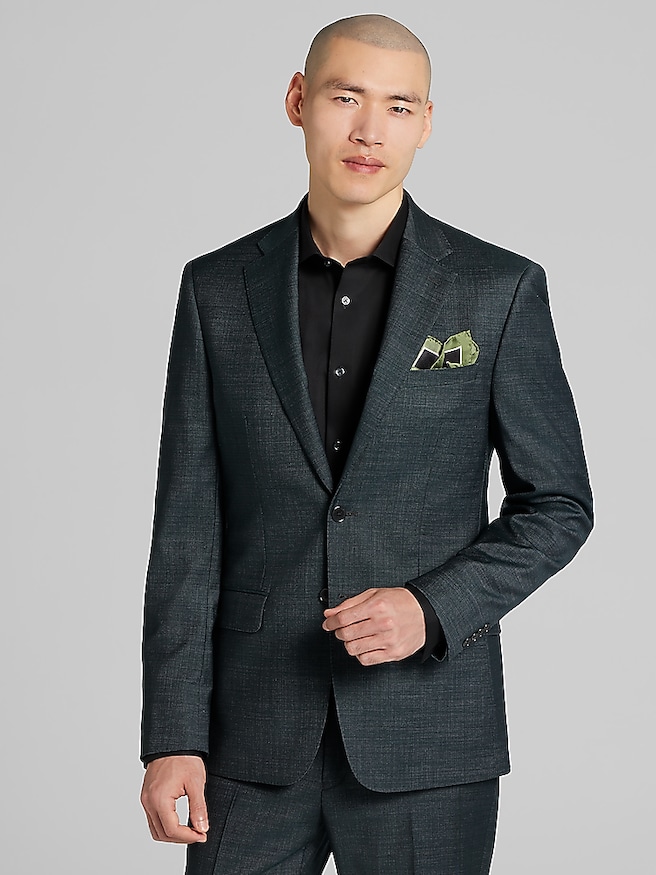
Teal ties bring a distinctive mix of blue and green to tailored clothing, adding color without the brightness of a primary blue or the earthiness of olive. The shade can feel polished and understated in a deep, inky finish or more expressive when the green undertone comes forward. Against a navy suit, teal creates a close color relationship with enough contrast to keep the tie visible; against charcoal, it becomes a clear focal point. Medium gray offers a softer backdrop, while tan and brown tailoring draw attention to teal’s cooler character. A white dress shirt gives the color its cleanest definition, making it a dependable foundation for weddings, business events, and celebratory dinners. Pale blue shirts create a more tonal effect, especially when the tie is visibly darker than the shirt. The distinction between the two matters: similar shades can blend together from a distance, while a noticeable difference in depth gives the collar and knot definition. Solid teal ties let color do most of the work, particularly alongside a checked jacket or striped shirt. Small dots, restrained geometric designs, and subtle woven patterns introduce detail without demanding a fully patterned outfit. Broader stripes or more pronounced motifs make a stronger impression and tend to look most balanced with quieter clothing. Pattern scale matters as much as color; a fine shirt stripe and a larger tie motif are easier to distinguish than two patterns of nearly identical size. Pocket squares need not repeat the tie exactly. A white square, a contrasting border, or a print with just a small touch of teal can connect the outfit while leaving each accessory its own role. For someone accustomed to navy or burgundy neckwear, teal offers a manageable change: familiar enough for a tailored wardrobe, but distinctive enough to make a simple suit and shirt combination feel considered.
Material and construction shape how a teal tie looks, knots, and wears over time. Silk often gives the color depth, with highlights that become more noticeable as the fabric moves. A smooth satin weave emphasizes that light-catching effect and creates a dressier impression, while a textured weave breaks up the surface and makes the same color appear more subdued. Matte finishes can be especially useful when the suit already has a slight sheen or the shirt has a crisp, smooth surface. Wool and wool-blend ties generally offer a softer, more tactile appearance that sits naturally with textured jackets, while knitted constructions bring visible texture and a less formal character. Polyester can provide consistent color and resilience, though the feel, drape, and care requirements depend on the individual fabric and construction. Fiber content alone does not determine quality; even stitching, a balanced shape, and an interlining that supports the fabric without making it overly stiff all contribute to a tie that hangs neatly. Width and length are equally important to the finished appearance. A tie usually looks most balanced when its width relates to the jacket lapels and the wearer’s frame rather than following an isolated trend. Narrower proportions create a leaner line, while a fuller blade has more visual presence with broader lapels. The tip should generally meet the waistband, with enough length remaining to secure the narrow end behind the blade. Taller wearers or those with a larger neck measurement may need additional length, especially with a knot that uses more fabric. A four-in-hand produces a relatively compact, slightly asymmetric knot; a half-Windsor creates a more centered shape with additional fullness. Thick fabric can make either knot larger than expected, so the space between the collar points matters. A small dimple beneath the knot adds depth to the teal fabric, while a knot seated comfortably at the collar keeps the whole outfit looking deliberate rather than strained.
For weddings, teal ties can establish a shared color story without requiring every participant to wear an identical outfit. Dark suits with teal neckwear create a cohesive group, while variations in texture or a discreet pattern can distinguish the groom from the groomsmen. The relationship between fabrics deserves attention, particularly when ties will sit beside other teal clothing or accessories. Two materials described with the same color name may have noticeably different blue or green undertones, and a glossy surface may appear lighter in photographs than a matte one. Alongside a teal wedding suit, a tie with a deeper tone or a contrasting texture can help define the shirt front instead of disappearing into the jacket. Outside wedding celebrations, teal works for graduation ceremonies, school dances, presentations, and dinners where a suit calls for a little personality. In a conservative professional setting, a dark teal tie with a restrained pattern keeps the color measured; for a more expressive occasion, a brighter shade can carry the outfit against a neutral suit. As a gift for a graduate, partner, or someone building a dress wardrobe, teal neckwear is easiest to personalize through fabric, pattern, and proportions that suit the recipient’s existing clothing. Someone who favors plain shirts may enjoy a patterned tie, while someone who wears checked tailoring may get more use from a solid or subtly textured design. Regular care helps preserve both appearance and shape. Fully loosening the knot after wear reduces persistent creasing and avoids pulling the narrow end through a tight knot. Hanging the tie or rolling it loosely, as appropriate for its construction, allows it to rest without sharp folds. Spills call for prompt, gentle blotting rather than rubbing, followed by the cleaning method on the care label. Protection from prolonged direct sunlight, snags, and unnecessary heat helps retain the color and surface, allowing a well-kept teal tie to remain a useful accent across many occasions.