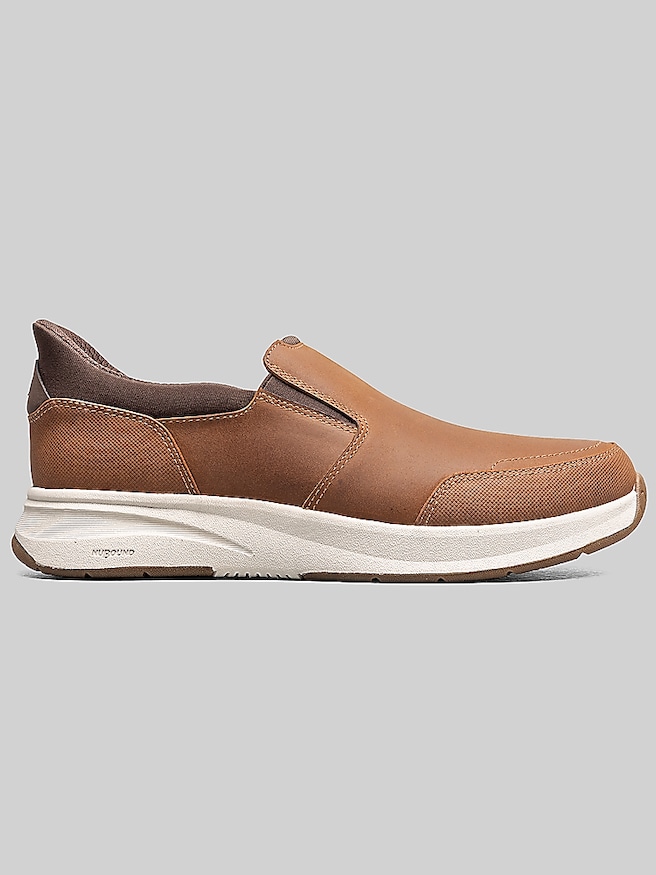
Tan work shoes bring a warm, versatile neutral to a professional wardrobe, with a range of styles suited to offices, customer-facing roles, and business-casual settings. The category can include lace-up oxfords, derbies, loafers, and other everyday silhouettes, but the color alone does not determine how formal or protective a shoe will be. A smooth leather upper, restrained stitching, and a slim profile generally create a dressier impression, while a rounded toe, visible seams, or a thicker sole can feel more relaxed. Tan shades also vary: pale sand has a softer appearance, golden tan adds warmth, and deeper caramel tones create a richer contrast against navy or charcoal clothing. With navy chinos and a tucked-in button-down, tan leather shoes can look polished without making the outfit feel overly formal. With gray trousers and a textured sport coat, a clean lace-up style provides a grounded finishing touch. Dark, unfaded denim can work in offices that permit it, particularly when the shoe has a simple shape and a well-kept finish. Matching a belt closely enough in tone helps the outfit feel considered, though the two pieces do not need to be identical. The most useful choice depends on the workplace: someone seated through meetings may favor a sleek silhouette, while someone moving between a reception desk, conference rooms, and client appointments may place greater emphasis on cushioning and dependable traction. Materials influence that balance as much as shape. Smooth leather often suits a more tailored outfit and can develop character with regular care. Suede has a soft, matte texture that pairs naturally with chinos and less structured clothing, while nubuck offers a similarly understated surface with its own maintenance needs. Tan work shoes are especially useful when the goal is a professional appearance that feels less severe than black footwear, provided the style fits the office dress code.
Comfort in tan work shoes comes from the relationship between fit, construction, and the demands of the day—not simply from how soft the footbed feels at first. A good fit leaves room for the toes to move without allowing the foot to slide forward, and the heel should feel secure rather than lifting noticeably with each step. Width matters across the ball of the foot, where pressure can become distracting during a long presentation or a walk between buildings. A shoe that pinches in that area should not be expected to become the correct size through wear. Leather may soften and conform somewhat, but it will not meaningfully increase the length of the shoe. Socks also affect fit, so the thickness normally worn to work belongs in the equation. Lace-up designs allow more adjustment across the instep, while loafers depend more heavily on a close match between the shoe’s shape and the foot. Underfoot, cushioning can make firm floors feel less harsh, but support and stability remain important, especially for roles that involve frequent standing. A flexible forefoot allows a natural stride; a secure heel and a sole that does not twist excessively can contribute to a steadier feel. Rubber outsoles often suit everyday commuting and movement through offices, while leather soles tend to give dress shoes a more traditional appearance and a distinct feel underfoot. Neither material guarantees traction on every surface. For workplaces with specific safety requirements, ordinary business-casual shoes are not a substitute for approved occupational footwear. Any required protective toe, slip-resistance testing, or electrical-hazard rating needs to be confirmed in the footwear specifications. A substantial sole or rugged appearance is not proof of protection. Durability likewise depends on more than visual weight: secure stitching, sound attachment between the upper and sole, a resilient lining, and reinforcement around high-friction areas all contribute to how well shoes handle repeated wear. For someone regularly on their feet, a balanced combination of these features often matters more than a particularly thick layer of padding.
Keeping tan work shoes looking professional involves preserving both their structure and their finish. Lighter leather can make scuffs, dust, and uneven polish more noticeable, so routine attention helps maintain the clean appearance that makes the color appealing. Smooth leather generally benefits from gentle cleaning and a conditioner appropriate to its finish, applied according to the care directions. A cream or polish should suit the leather type and intended shade; an overly dark treatment can alter the appearance of pale tan shoes. Suede and nubuck need products and brushes intended for their textured surfaces rather than standard leather polish. Testing a care product on a discreet area helps avoid an unexpected color change. Shoe trees can help leather shoes retain their shape between wears, and allowing each pair to air out gives interior moisture time to dissipate. Rotating footwear also reduces the strain of wearing the same pair every workday. A shoehorn protects the heel counter from being crushed, while replacing worn laces can refresh an otherwise well-maintained lace-up style. Attention to the outsole matters, too: a heel worn unevenly or tread that has become smooth can affect how the shoe feels and performs. These details are relevant whether the shoes accompany a daily commute, a first day in a new role, or regular appointments with clients. Tan footwear can also make a thoughtful gift for a graduate beginning an office job or someone refining a business-casual wardrobe, although size, width, preferred silhouette, and workplace expectations are more useful starting points than color alone. Beyond office hours, Tan Comfortable Shoes can bring a similarly polished feel to dinners, social plans, and everyday outfits. The appeal is straightforward: a versatile shade, a shape that works with familiar trousers, and construction suited to the way the shoes will actually be worn. When those elements align, tan work shoes become an easy part of getting dressed rather than a detail that needs constant reconsideration.