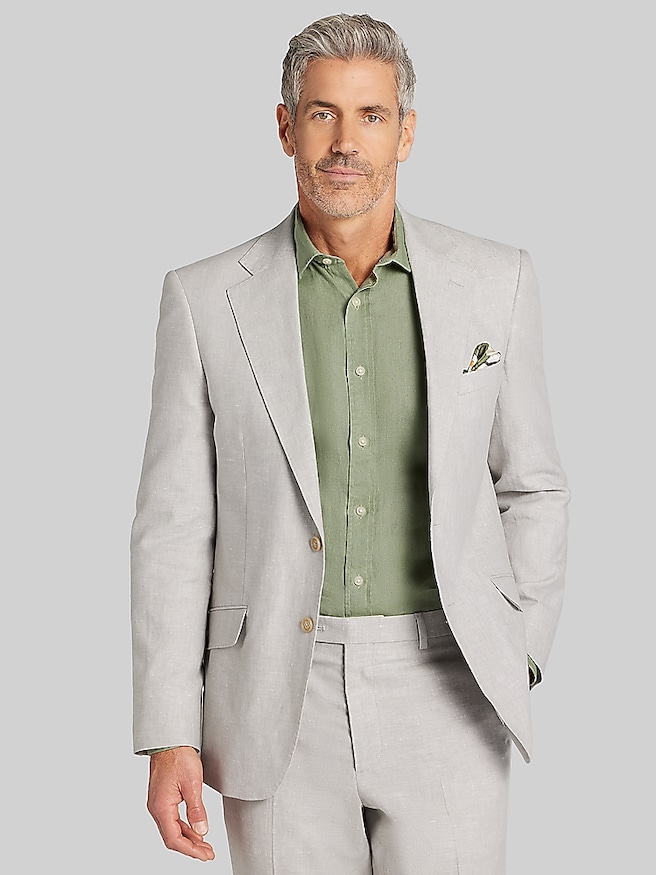
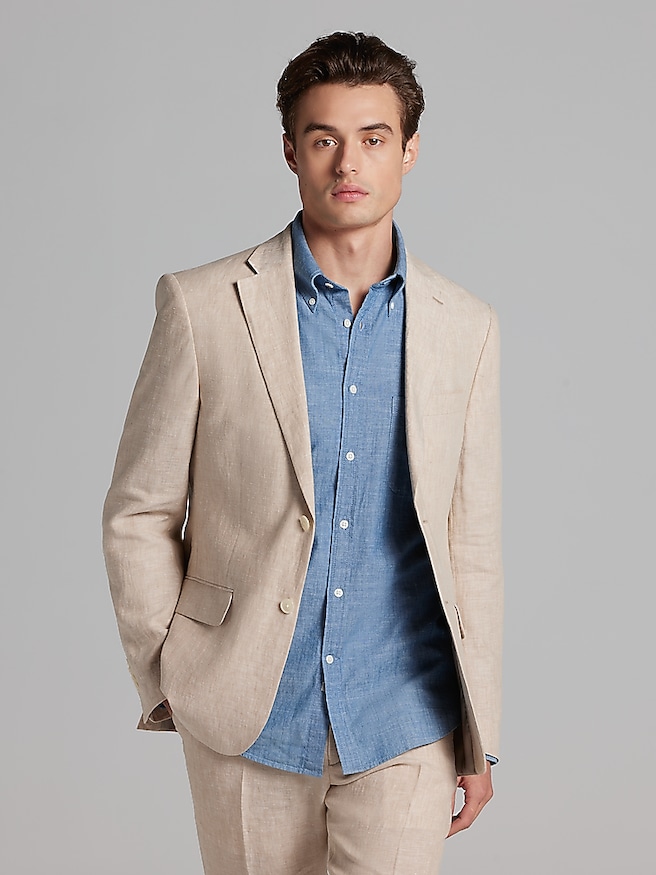
Tan suits for men bring a softer neutral into tailored dressing without giving up the clean lines that make a suit feel polished. The color spans a useful range, from pale sand and light beige to deeper khaki tones with golden or muted brown undertones. Those differences matter when putting an outfit together: a lighter tan creates a distinct contrast with a navy tie, while a deeper shade can sit comfortably alongside cream, burgundy, olive, or chocolate brown. A crisp white shirt keeps the combination straightforward and sharp, especially for presentations, celebratory dinners, and events where a coordinated appearance matters. Light blue adds another familiar option, offering enough contrast to distinguish the shirt from the jacket without making the outfit feel busy. Tan also gives subtle textures room to stand out. A woven tie, a neatly folded pocket square, or a shirt with a restrained pattern can add interest while leaving the suit as the foundation. Brown leather shoes often complement the color naturally; the depth and finish of the leather help determine whether the overall impression is more relaxed or more formal. A smooth, darker brown lace-up has a different effect from a softly textured loafer, even with the same jacket and trousers. For workplace settings, tan suits fit most naturally where business attire allows lighter neutrals, rather than environments that consistently call for dark, conservative tailoring. At weddings, they can suit a groom, wedding-party member, or guest when the invitation and venue support that level of formality. The Tan Suit For Wedding collection provides an occasion-focused setting for this color, with the event’s dress code remaining the deciding factor. A tan suit is not a substitute for a tuxedo at a black-tie celebration. Its appeal lies in looking dressed with intention while feeling less visually weighty than a dark suit, whether the occasion involves a ceremony, a family photograph, or dinner at a restaurant where a jacket feels right.
The way a tan suit wears depends as much on its fabric and construction as on its shade. Wool can provide a smooth drape and useful resilience, helping a jacket and trousers recover from the creasing that comes with sitting, standing, and moving through a full event. Wool blends vary according to their fiber content, so the composition label is more informative than the broad category alone. Cotton often gives tailoring a more matte appearance and a slightly firmer feel, while linen introduces visible texture and characteristic creasing that contributes to a relaxed finish. Blended fabrics can balance these qualities, and a small amount of stretch may improve ease of movement, though stretch should never compensate for a suit that is too tight. The fabric’s weight, weave, and lining also influence how structured the garment feels and how comfortably it moves. A softly constructed jacket creates a different silhouette from one with a more defined chest and shoulder, even when both are the same color. Fit brings all of those details together. Jacket shoulders should follow the wearer’s shoulder line without extending noticeably beyond it or pulling inward. When the jacket is buttoned while standing, the front should lie smoothly rather than forming pronounced tension lines around the closure. Lapels should rest against the chest, and the collar should sit close to the shirt collar without a persistent gap. Sleeve length should allow a modest glimpse of shirt cuff, while jacket length needs to balance the torso and seat rather than simply follow a trend. Trousers should remain comfortable when seated, with enough room through the hips and thighs for natural movement. A clean trouser break can sharpen the outline, but the right hem depends on the cut and the shoes worn with it. Slim, modern, and classic fit descriptions are useful starting points, not universal measurements. For a reliable assessment, trying the suit with the intended shirt and shoes makes it easier to see how the full outfit works before considering alterations.
Durability in a tan suit comes from thoughtful construction, appropriate fit, and consistent care rather than from color alone. Even stitching, smoothly finished seams, secure buttons, and a lining that sits without twisting are practical details to notice. Areas that take repeated strain, including pocket openings and trouser closures, deserve particular attention. A suit that allows comfortable movement places less stress on its seams than one that pulls every time the wearer sits down or reaches forward. Because lighter fabric can make marks more noticeable, small habits help preserve a clean appearance: keeping pens capped, avoiding overfilled pockets, and checking seats before sitting can prevent unnecessary stains or distortion. Care should always follow the garment’s label, especially when a suit combines multiple fibers or includes a structured jacket. After wear, hanging the jacket on a broad, shaped hanger supports the shoulders, while trousers benefit from hanging neatly without being crowded against other garments. Letting the fabric rest between wears can help it recover its shape. A clothing brush may remove surface dust from suitable fabrics, and any steaming should respect the care instructions and avoid excessive moisture around structured areas. Spills call for prompt, careful attention rather than vigorous rubbing, which can spread a mark or affect the fabric’s surface. Professional cleaning is appropriate when directed by the label or when stains require it, but unnecessary cleaning can add wear. Store the suit clean and dry in a breathable garment bag, with enough space to protect its shape. These details matter whether the suit is reserved for milestone occasions or becomes part of a regular rotation. For someone building a tailored wardrobe, tan offers another direction beyond familiar dark neutrals, with room to change the look through shirts, ties, and footwear. As a gift for a graduate, partner, or family member preparing for important events, a suit is most successful when the wearer’s measurements, fit preferences, and likely dress codes are understood, with alterations considered part of achieving a finished result.