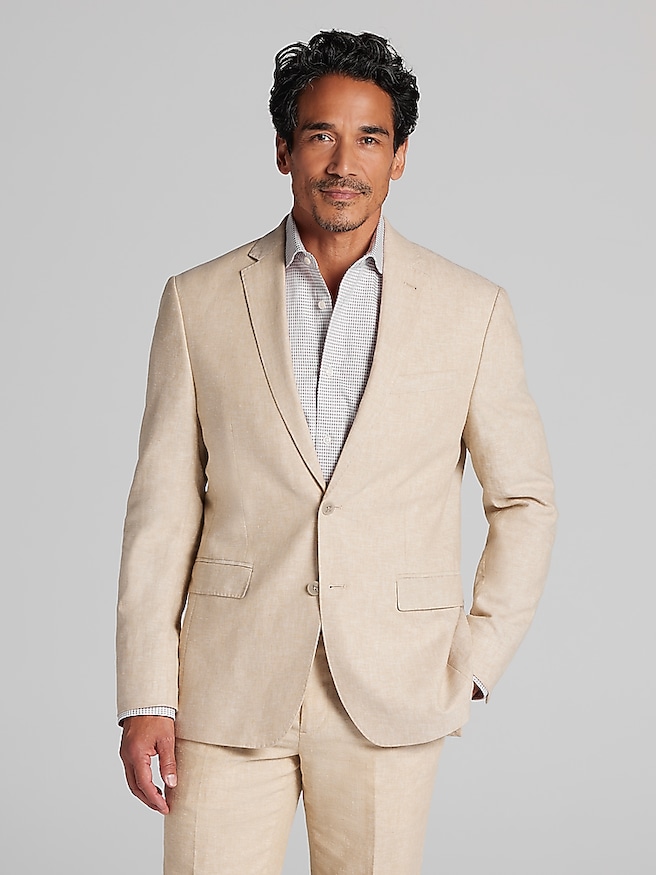
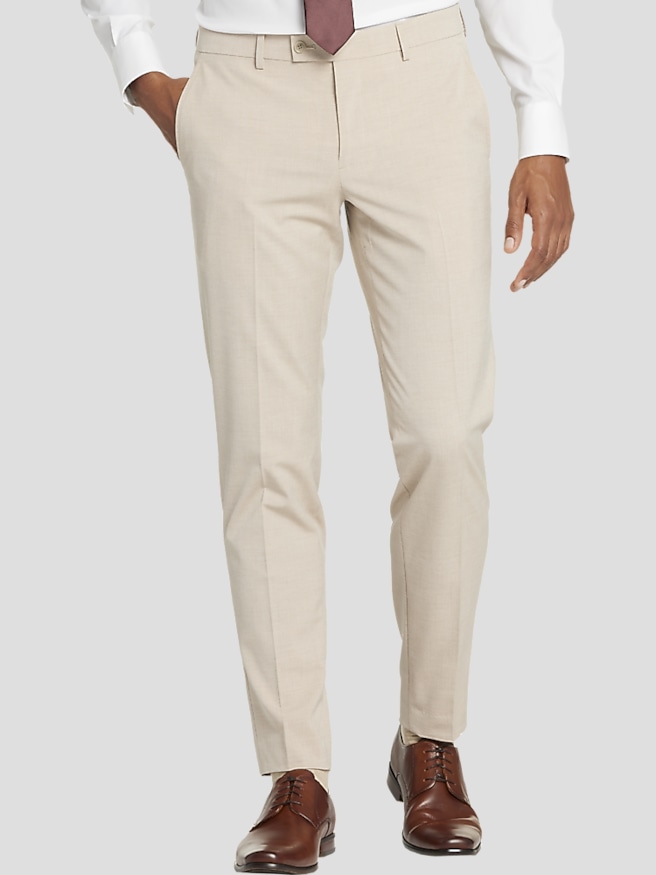
A tan suit for a wedding offers a light neutral alternative to navy or charcoal, with a polished look that works for grooms, groomsmen, and guests when the dress code allows it. Its character depends on the shade, fabric, and finishing details: pale beige feels understated, sandy tan brings more visible color, and deeper camel tones create a richer impression. These distinctions matter when coordinating a wedding party or working with a palette of ivory, sage, dusty blue, or burgundy. A crisp white dress shirt creates clear contrast against tan tailoring, while a pale blue shirt softens the combination without making it feel unfinished. An ivory shirt can complement certain wedding palettes, although its undertone should be considered alongside the suit and other ceremony attire. Brown leather shoes are a natural pairing, with medium brown creating a softer transition and dark brown adding definition. A coordinating belt, when the trousers have belt loops, helps the outfit look intentional without requiring every leather accessory to match exactly. Tan tailoring fits comfortably into many garden, courtyard, restaurant, and destination wedding settings, but the invitation remains more important than the venue alone. A tan suit does not replace a tuxedo when black tie is requested, and darker tailoring may be more appropriate for an event specifying formal attire. For a groom, a waistcoat or distinctive tie can create separation from the wedding party while preserving a shared color story. For a guest, a restrained shirt-and-tie combination keeps the outfit celebratory without competing with the couple’s chosen look. Matte fabrics usually make the color easier to coordinate, while a noticeable sheen gives the suit a dressier character. Because tan can appear more yellow, gray, or pink under various lighting conditions, evaluating the jacket and trousers together helps establish whether the shade complements the rest of the outfit. The result should feel cohesive in person as well as in ceremony portraits and group photographs.
Fabric and construction shape how a tan wedding suit looks through the ceremony, dinner, and time on the dance floor. Wool is valued for its drape, breathability, and ability to recover from ordinary creasing, making it a versatile choice for an outfit intended for repeated use. Wool blends can balance those qualities with other characteristics, such as added stretch or a smoother surface, depending on their fiber content and construction. Linen has a distinctive texture and develops visible creases with wear; that relaxed appearance can suit a less formal celebration, but it is part of the fabric’s character rather than a flaw. Cotton offers a comparatively matte finish and a structured, sometimes more casual impression. Blended fabrics may moderate the pronounced texture of linen or the firmer feel of cotton, although the label provides a more reliable picture than appearance alone. Lining, weave, and fabric weight also affect comfort and movement. A softly constructed jacket can feel less rigid, while a more structured chest and shoulder create a defined silhouette. Neither approach compensates for poor fit. The shoulder seam should sit near the natural shoulder edge, the collar should rest against the shirt collar, and the lapels should lie smoothly when the jacket is buttoned. Pulling across the fastening or excess fabric through the back can interrupt the clean lines that make a neutral suit look sharp. Trousers need enough room through the seat and thighs for sitting through dinner without strain, with a waistband that stays comfortably in place. A slight break at the shoe creates a traditional finish, while little or no break gives the trousers a cleaner, more streamlined line. Jacket length, sleeve length, and trouser rise should work together rather than follow separate trends. When alterations are needed, wearing the intended dress shirt and shoes at a fitting makes sleeve exposure and trouser length easier to judge. Sitting, walking, and reaching forward also reveal fit issues that a still pose in front of a mirror may miss.
The finishing pieces give a tan suit its wedding-day personality without requiring an elaborate combination. A navy tie adds contrast, a muted green tie complements the suit’s earthy character, and a burgundy tie creates a deeper focal point. Small-scale patterns can add interest when the shirt is solid; combining several strong patterns tends to distract from the tailoring. A pocket square works best as a complement rather than an exact duplicate of the tie, with a simple white fold offering a particularly restrained finish. For coordinated wedding parties, using the same intended tan shade is important because small differences between jackets and trousers become more noticeable when several people stand together. Consistent shirts and ties can unify the group while allowing each person’s suit to be fitted individually. The same care applies after the celebration. Following the garment’s care label, brushing away surface dust, and hanging the jacket on a broad, shaped hanger help preserve its appearance. Trousers hung neatly along their crease are less likely to develop unwanted folds, and allowing the suit to air before storage helps keep it fresh between wears. Any steaming should follow the fabric’s care requirements, with particular caution around structured areas and linings. Stains deserve prompt attention, but rubbing a spill can spread it or damage the surface; professional assessment is often preferable for a visible mark on a light-colored suit. Cleaning only as needed, rather than automatically after every brief wear, can help limit unnecessary wear on the fabric. Beyond the wedding, tan tailoring can serve at rehearsal dinners, anniversary celebrations, and other occasions that call for a suit without a highly formal dress code. Related Suit To A Wedding looks offer additional context for matching tailoring to the occasion. A well-proportioned fit, a fabric suited to the event’s level of formality, and thoughtful care give a tan wedding suit lasting usefulness beyond a single set of photographs.