A tan suit for a groom brings an easy, polished warmth to the wedding day, balancing traditional tailoring with a relaxed sense of style. Shades can range from pale sand and light beige to richer camel and warm khaki, so the right choice depends on the setting, wedding colors, and the overall mood you want in photographs. Lighter tan suits feel especially natural outdoors, where they complement gardens, vineyards, sandy landscapes, and sunlit terraces without competing with the scenery. Deeper tan shades offer more contrast and can feel equally appropriate for an indoor celebration or a ceremony held during the cooler months. For a groom who wants to look distinct from the wedding party while still feeling coordinated, tan creates a memorable foundation without the formality of black or the sharper contrast of dark navy. It also photographs beautifully against white flowers, greenery, wood details, and soft neutral décor. When comparing options, pay close attention to the suit’s fabric, construction, and fit. Wool and wool blends offer a smooth drape, dependable structure, and comfortable versatility across changing conditions, while linen and linen blends bring breathable texture and a naturally relaxed appearance for warm-weather ceremonies. A lightweight construction can be a welcome choice for outdoor vows, but a lined or slightly more substantial fabric may feel better suited to indoor receptions and cooler days. The jacket should lie flat across the shoulders, close neatly without pulling at the button, and cover the seat of the trousers. Trousers should break cleanly over the shoe, with enough room to move comfortably from the ceremony to the dance floor. A well-fitted tan suit can be purchased for continued wear after the wedding or rented when the goal is a coordinated look for a single celebration. Rental options are particularly practical when a groom and his attendants need a consistent color, matching accessories, and a streamlined process for returning formalwear after the event.
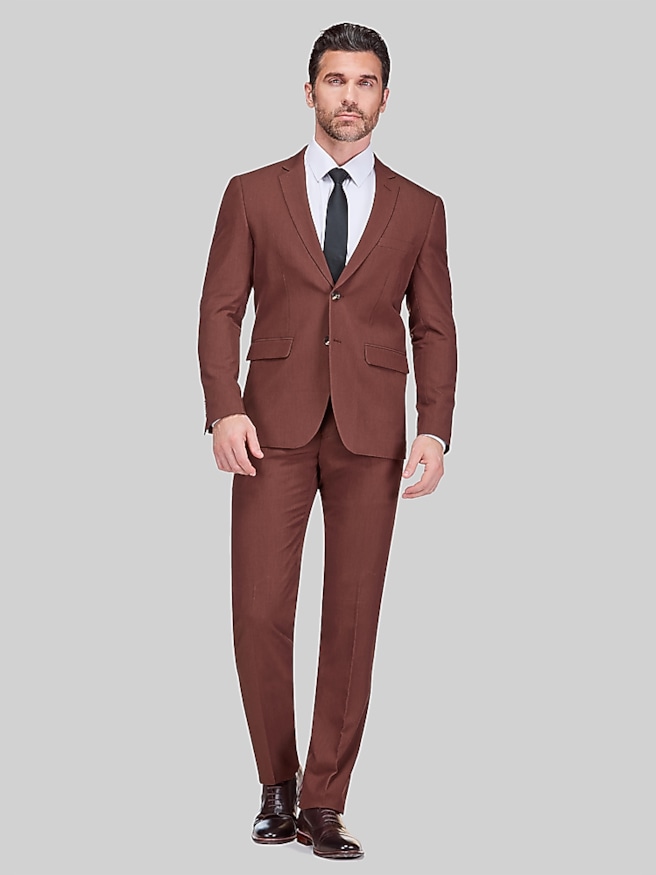
Styling a tan wedding suit is largely about creating balance. A crisp white dress shirt gives the cleanest contrast and keeps the groom’s look timeless, while an ivory or soft cream shirt creates a gentler, more tonal effect that works well with warm wedding palettes. A tie adds polish and helps connect the groom’s outfit to the ceremony design. Sage green, dusty blue, muted rose, rust, and soft gray can all complement tan without overwhelming it, especially when those colors appear in the bridesmaid dresses, floral arrangements, or paper details. For a more relaxed ceremony, an open collar can create a beach-inspired or garden-party feel, provided the venue and dress code support a less formal finish. A vest can add dimension to a three-piece look and provide another layer of visual structure, while a pocket square offers a simple way to introduce a small accent color or pattern. Brown, cognac, and tan leather shoes are natural partners for this suit color, with loafers lending a modern ease and lace-up dress shoes bringing a more traditional finish. A matching or closely coordinated belt, watch strap, and shoe color will make the outfit feel intentional. Accessories should reflect the formality of the day rather than compete for attention; a textured tie, understated cuff links, or a classic watch can provide personality while keeping the focus on the groom. If the wedding party will wear different shades of tan, confirm the color relationship in advance, since beige, camel, khaki, and sand can appear noticeably different in natural and indoor lighting. Groomsmen do not have to wear identical accessories, but repeating one detail—such as a tie color, pocket square, or leather tone—helps the group look connected in photographs. A groom who prefers a darker, earthier direction can also explore a Brown Suit For Groom for a richer alternative that preserves the same warm, approachable character.
The best tan suit for a groom is one that feels comfortable through every part of the celebration, from greeting guests before the ceremony to standing beneath bright lights during speeches and moving easily through the reception. Consider the practical details of the venue before settling on a shade and fabric. Outdoor celebrations may call for breathable materials, a comfortable shirt, and shoes that can handle grass, stone, or uneven ground, while indoor events may allow for a more structured suit and heavier accessories. If the ceremony and reception take place in different spaces, layering can make the outfit more adaptable: a vest or lightweight jacket adds polish for formal moments, while removing the jacket later creates a more relaxed look without losing the coordinated appearance. During the cooler months, tan pairs naturally with textured details such as a wool tie, knit pocket square, darker leather shoes, or a subtle patterned shirt, allowing the warm color to feel seasonally appropriate rather than limited to summer. Fit appointments, accurate measurements, and enough time for alterations are important whether the suit is being purchased or rented. Sleeve and trouser length adjustments can transform an otherwise ordinary outfit, and trying on the full combination of shirt, shoes, and accessories helps reveal how the final look will move and photograph. Couples may also choose tan formalwear for engagement portraits, rehearsal dinners, destination ceremonies, or anniversary celebrations, making a well-made suit useful beyond the wedding day. It can be dressed down later with a fine-gauge knit, a casual button-down, or separate trousers, extending its place in a working wardrobe. For a groom, the appeal is both visual and practical: tan offers a distinctive wedding-day look, works with a broad range of color palettes, and brings a warm, confident presence to the photographs that will be revisited for years.