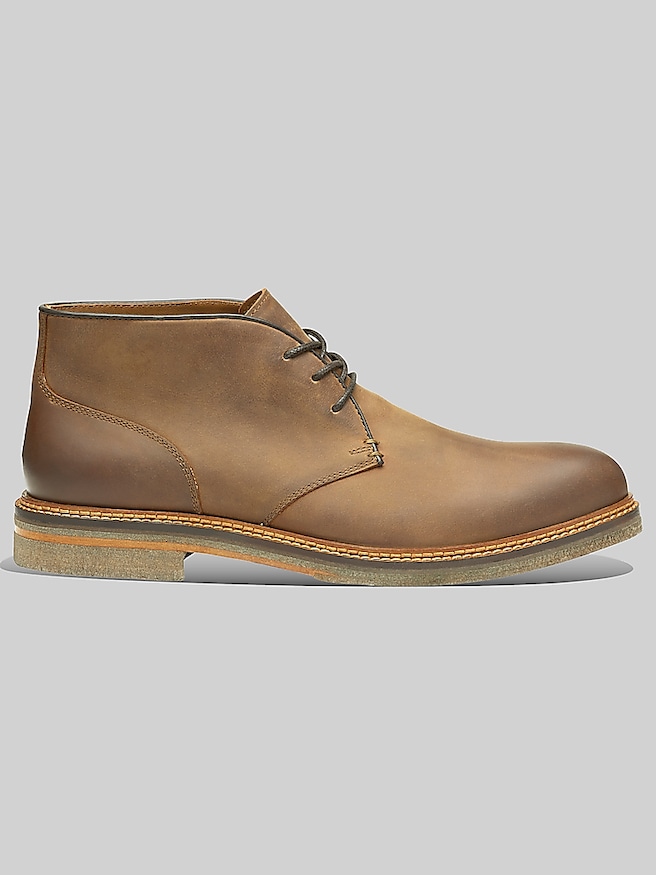
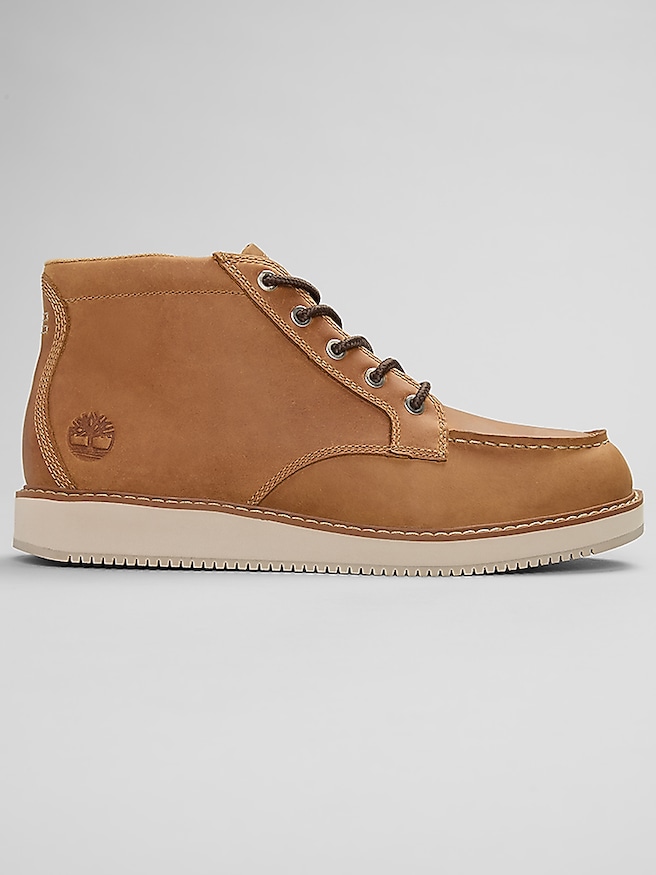
Tan leather chukka boots bring together the easy character of casual footwear and the clean lines of a dressier shoe. Typically cut near the ankle with open lacing and two or three pairs of eyelets, chukkas have a straightforward shape that works with denim, chinos, and many business-casual outfits. Tan leather adds warmth without the darker, more formal appearance of black, while its lighter color makes details such as grain, stitching, and subtle creasing more noticeable. Shades can range from pale honey to deeper golden brown, with each creating a slightly different contrast against navy trousers, gray pants, or dark indigo jeans. Smooth leather generally gives the silhouette a more polished appearance; suede, which has a soft, textured nap, creates a more relaxed effect. For an office with a flexible dress code, smooth tan leather chukka boots can complement flat-front chinos, a tucked-in button-down shirt, and an unstructured sport coat. For dinner or a casual gathering, the same shape feels at home with straight-leg denim and a knit polo. The balance comes partly from the boot’s modest height: it adds substance below the trouser hem without extending far up the leg. A rounded toe tends to emphasize everyday versatility, while a more tapered profile can look sharper beside tailored pants. Tan chukkas are generally better suited to these relaxed and business-casual settings than to occasions requiring traditional formal footwear. Trouser length also influences the finished look. A hem that rests lightly near the top of the boot keeps the outline visible, while excessive fabric bunching can obscure its proportions. With cuffed denim, a small, neat turn-up can frame the ankle without making the outfit feel overly styled. Their appeal is not tied to one age group or a single way of dressing; the same understated silhouette can suit a college graduate building a work wardrobe or an experienced professional looking for a comfortable alternative to lace-up dress shoes.
Materials and construction shape how tan leather chukka boots feel as much as how they look. Full-grain leather retains the hide’s natural surface, including small variations that can become part of its character with wear. Top-grain leather has a surface that may be refined for a more uniform finish, though overall quality also depends on the hide, tanning, construction, and finishing. Neither label alone describes the complete boot. Leather thickness, the flexibility of the upper, and the placement of seams all influence how readily a pair moves with the foot. A leather lining can provide a smooth interior, while textile linings and cushioned footbeds offer other approaches to comfort. Cushioning may soften the step, but it should not substitute for a secure, well-proportioned fit. Toes need room to rest naturally without pressing against the front or sides, and the widest part of the foot should sit comfortably within the widest part of the boot. The laces should hold the instep securely without needing to be pulled excessively tight. Noticeable pinching, numbness, or repeated heel rubbing suggests a fit issue rather than something to accept as part of breaking in leather. Trying boots with the socks intended for regular wear gives a more useful sense of their fit, especially when moving between thinner dress socks and thicker casual pairs. Outsole construction matters for daily routines, too. Rubber soles can offer flexibility and grip, with performance depending on the compound and tread pattern. Crepe soles have a distinctive casual look and a yielding feel, though they can collect dirt and show wear differently from other rubber designs. Leather soles create another underfoot experience and a more traditional appearance. For someone whose day includes a commute, time at a desk, and an evening out, the useful combination is balanced weight, comfortable flex through the forefoot, and a heel that feels stable. A substantial-looking sole is not automatically more supportive, just as a soft upper is not a guarantee of long-term comfort.
The versatility of Mens Tan Chukka Boots is supported by thoughtful care and realistic expectations about leather. Tan surfaces tend to reveal scuffs, darkened areas, and product buildup more readily than very dark finishes, making a gentle approach especially worthwhile. On smooth leather, a soft brush or clean cloth can remove surface dust before it settles around seams and eyelets. An appropriate leather cleaner can address residue, while a compatible conditioner, used sparingly, may help keep the material supple. Testing any treatment on a discreet area matters because some formulas deepen tan tones or change the sheen. Polish should also match the leather type and desired finish; a heavily pigmented cream can alter a light shade rather than simply refresh it. Suede requires its own care products and a suitable brush, not the creams intended for smooth leather. When an interior becomes damp from wear, allowing it to dry naturally away from direct heat helps protect the upper and lining. Rotating footwear gives each pair time to air out, and properly sized shoe trees can help maintain shape between wears. Over time, natural creasing and slight color variation may give leather a more individual appearance, although deep cracking, separating components, or worn-through soles are signs of damage rather than desirable character. Durability depends on the entire construction and the demands placed on it, not simply the leather description. Some stitched constructions may permit resoling, but repair options depend on how the boot is made and should be confirmed rather than assumed. These practical details also make chukkas a thoughtful gift for someone who appreciates useful wardrobe staples. A graduation, birthday, or career milestone can be an appropriate occasion, particularly when the recipient regularly wears denim or chinos. Knowing the person’s usual size, width, preferred toe shape, and everyday dress habits helps make the choice more personal. A well-fitting tan leather chukka offers an understated finishing touch: enough texture and structure to make simple clothing feel considered, without requiring an elaborate outfit around it.