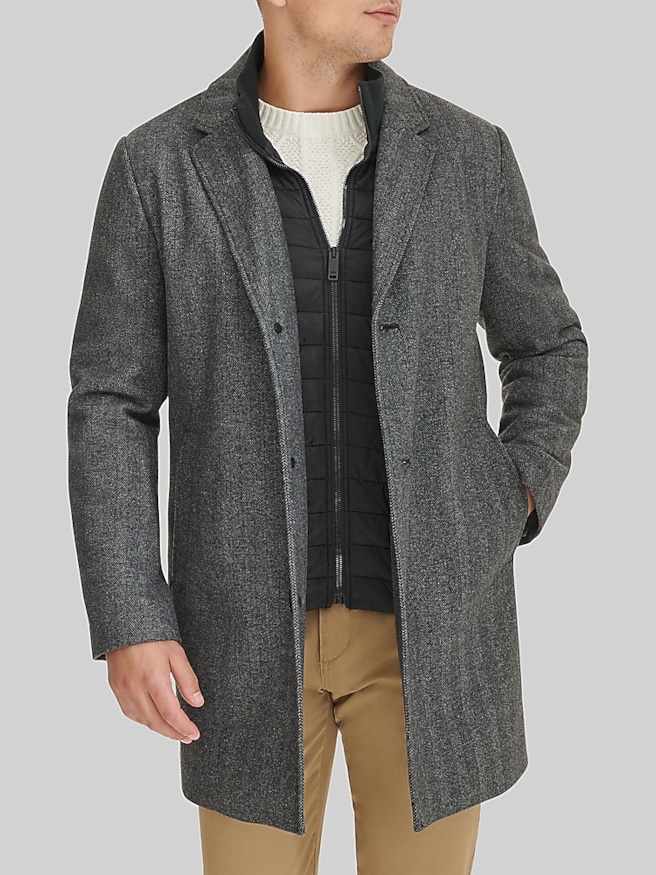
Tan dress coats are tailored outer layers that bring a warm, neutral color to suits, dress trousers, and other polished outfits. Typically shaped with lapels, a button front, and a structured silhouette, they offer a more refined finish than casual jackets while leaving room for clothing underneath. Tan shades range from pale sand and beige to deeper camel tones, with subtle variations that become especially noticeable beside navy, charcoal, or black. A lighter shade creates a crisp contrast over a dark business suit; a richer camel shade adds warmth to gray flannel trousers or a cream sweater. For men who move between office days, evening gatherings, and special occasions, that versatility makes a tan dress coat a useful part of a cool-weather wardrobe. Its role is both practical and visual: it supplies an extra layer outdoors while keeping the lines of a tailored outfit intact. A single-breasted front generally has a clean, understated appearance, while a double-breasted front creates more overlap and a stronger presence across the chest. Notch lapels tend to look restrained, and peak lapels add a sharper accent. Length also changes the effect. A coat that ends around mid-thigh can feel less cumbersome during a commute, while a knee-length silhouette offers more coverage and a traditional overcoat profile. When worn over a suit or sport coat, the outer layer should cover the jacket hem rather than leave it visible below. These proportions matter when stepping into a client meeting, arriving at a wedding reception, or walking from the parking lot to a restaurant. Tan works especially well with brown leather footwear and accessories, though black shoes can look equally deliberate when they connect with darker trousers or a dark knit. A navy scarf provides contrast without competing with the coat, while an oatmeal or chocolate scarf keeps the overall palette soft and cohesive. The result can feel dressed up without depending on bright color or elaborate detailing.
Fabric, construction, and fit determine how a tan dress coat feels beyond its appearance. Wool is a traditional choice for tailored outerwear because it offers insulation, takes shaping well, and can develop a pleasing drape. Wool blends may incorporate fibers that influence weight, texture, abrasion resistance, or ease of care, so fiber percentages and the garment’s care label deserve attention. Cashmere-containing fabrics can add softness, but a softer surface is not automatically the strongest choice for repeated friction from backpack straps or shoulder bags. Smooth cloth looks sleek over business clothing, while a brushed or subtly textured surface gives the neutral color greater depth. Warmth depends on fabric weight, weave, lining, and construction as well as fiber content; a lightweight wool coat and a substantial winter overcoat will not provide the same protection. A lining helps the coat slide over jacket sleeves and sweaters, reducing the tugging that can make layering uncomfortable. Well-secured buttons, tidy seams, supported pocket openings, and a neatly finished hem are useful details to examine for regular wear. Fit should be assessed over the clothing the coat will actually accompany. Over a suit jacket, the shoulders should sit cleanly without pronounced overhang, and the upper sleeves should allow movement without looking inflated. With the front fastened, the lapels should lie smoothly rather than pull outward, and the chest should not show tight horizontal creases. Reaching forward, sitting down, and bending the elbows reveal restrictions that standing still can miss. Coat sleeves usually extend beyond the jacket sleeves beneath them, helping protect the full outfit from cool air. A slimmer silhouette can look sharp over light layers, while a roomier cut accommodates heavier tailoring or knitwear more comfortably. Sizing up automatically can disrupt the shoulders and overall balance, so the intended cut matters as much as the size label. For someone who spends much of the day driving or riding a train, a back vent and manageable hem length can make sitting and walking noticeably easier.
A tan dress coat earns its place through repeated use, from a quiet weekday commute to a dinner where the outer layer makes the first impression. Over navy tailoring and a white shirt, it looks composed and familiar; over charcoal trousers and a fine-gauge turtleneck, it feels less formal without becoming casual. The same neutral shade can complement muted checks, textured scarves, and dark denim when the occasion allows a relaxed outfit. Those drawn to a cooler palette or a more visibly patterned surface may also appreciate Grey Tweed Coats, which offer another way to add texture to tailored cold-weather clothing. For tan outerwear, keeping the surface clean helps preserve the color’s clarity, especially around cuffs, collars, and pocket edges where contact is frequent. Care should follow the sewn-in label rather than a general assumption about the fabric. Many structured wool coats call for professional dry cleaning, while other constructions may have separate requirements. Between cleanings, a garment brush suitable for the fabric can lift loose dust and lint; gentle handling is particularly important on soft or raised surfaces. After exposure to light moisture, let the coat air-dry away from direct heat before placing it in a closet. Ordinary dress-coat cloth should not be assumed waterproof, and an umbrella provides useful protection during steady rain. A broad, supportive hanger helps maintain the shoulder shape, while enough closet space prevents the lapels and sleeves from being crushed. Emptying pockets after wear reduces unnecessary strain, and alternating outerwear when practical allows time for airing. Attend to a loose button before it detaches, and have damaged seams assessed before the opening spreads. As a gift, a tan dress coat can suit someone building a professional wardrobe, marking a career milestone, or replacing an outer layer that no longer fits well. Accurate measurements and knowledge of the recipient’s usual layers are more valuable than guessing from shirt size alone. A successful choice balances a flattering shade, comfortable movement, useful coverage, and a fabric suited to the wearer’s climate and routine.