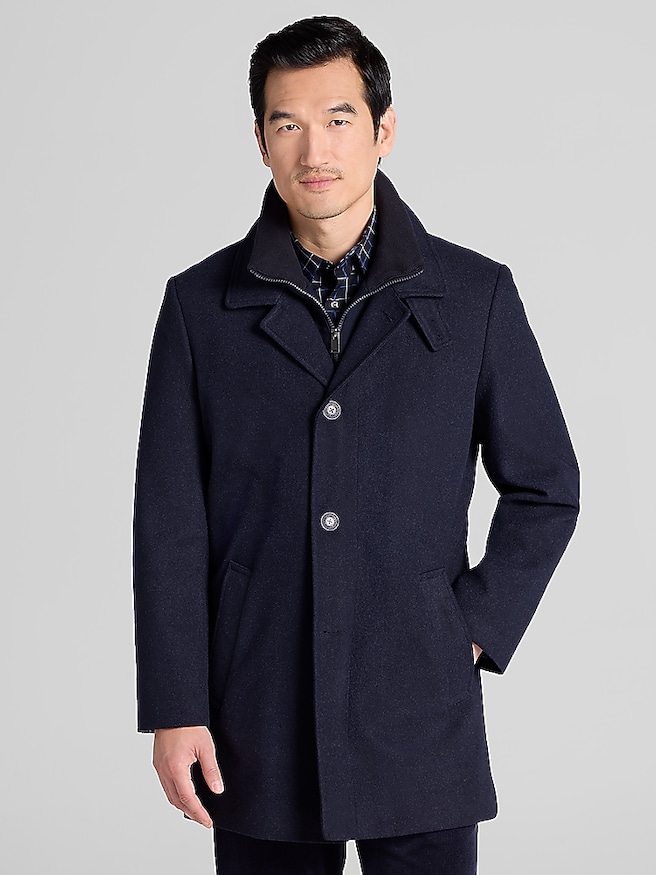
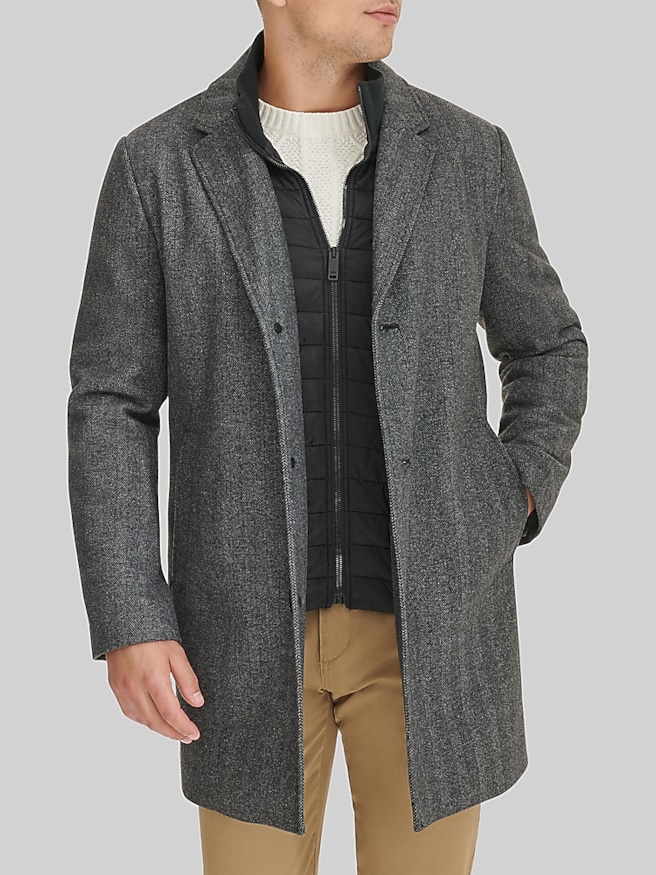
Gray tweed coats combine a textured woven fabric with the structure of tailored outerwear. Traditionally made from wool, tweed is also woven from fiber blends, and its character comes from the yarns, weave, and subtle variations in color. A gray tweed coat may have a fine salt-and-pepper appearance, a distinct herringbone pattern, or a restrained check that becomes more noticeable up close. From across a room, the effect can be quiet and understated; at arm’s length, individual threads give the fabric depth. That balance makes gray tweed easy to wear with both tailored clothing and more relaxed pieces. Charcoal has a dark, grounded look beside navy trousers or black leather shoes, while a medium gray can create a softer contrast with indigo denim, brown leather, and cream knitwear. Among Men's Grey Coats, tweed offers a distinctive alternative to fabrics with a smooth, uniform surface. Its texture adds visual interest without depending on a bright color or an oversized pattern. Fabric composition matters as much as appearance: wool contributes natural resilience and body, while other fibers can influence softness, weight, and how the cloth holds its shape. A higher wool percentage alone does not establish overall quality. The density of the weave, consistency of the seams, quality of the lining, and construction around the collar and pockets also deserve attention. Some tweeds feel substantial and firm, creating a defined silhouette; others have a softer hand and a more fluid drape. Neither approach is inherently better, but each changes how the coat feels over a suit jacket or sweater. A lining can help the coat slide over sleeves and cover interior seams, while thoughtful construction supports its shape through repeated wear. Tweed’s textured appearance may make minor surface wear less conspicuous, though durability still depends on the fabric and how the coat is handled.
The appeal of a gray tweed coat extends from the morning commute to a dinner reservation, with fit determining how comfortably it moves between those settings. A coat worn over tailoring needs enough room through the shoulders, upper arms, and chest to accommodate a jacket without compressing it. The shoulder line should sit cleanly, the collar should rest close to the neck, and the front should close without pulling into pronounced horizontal creases. Trying the coat over the type of clothing it will usually accompany gives a more useful sense of fit than trying it over a thin shirt alone. Reaching forward, sitting down, and bending the elbows can reveal tightness that is easy to miss while standing still. Sleeves need to accommodate the layers underneath without swallowing the hands, and the body should skim rather than cling. A closer cut can create a neat profile over fine-gauge knitwear, while a roomier shape allows more freedom over structured tailoring. Length changes the overall impression, too. A longer hem creates an elongated line and covers more of a suit jacket; a shorter coat can feel less cumbersome when moving between a desk, a car seat, and a restaurant booth. Single-breasted designs generally offer a straightforward front, while double-breasted styles bring more overlap and a stronger visual presence. Lapel width, button placement, and pocket shape further influence whether the coat feels understated or assertive. For an office day, a medium-gray herringbone coat over navy tailoring creates depth without competing with a patterned tie. Over a dark crewneck, straight-leg jeans, and leather boots, the same kind of texture feels relaxed but deliberate. For a wedding guest or an evening at the theater, a clean silhouette and restrained accessories help keep the outfit polished. Larger checks tend to draw more attention, so simpler trousers and knitwear give the pattern room to stand out. The most useful combination is one that suits the wearer’s routine rather than requiring an entirely new wardrobe.
Regular care helps preserve the texture, shape, and finish that make tweed appealing. The care label is the starting point because fiber content, lining, and internal construction can require separate treatment considerations. Professional dry cleaning is common for structured wool outerwear, but the recommended method should always govern. Between cleanings, a soft garment brush can lift loose dust and lint with gentle strokes; vigorous scrubbing can disturb the surface. Letting the coat air after wear and hanging it on a broad, supportive hanger helps maintain the shoulder shape. Empty pockets before hanging so keys, a phone, or a wallet do not leave the fabric stretched or distorted. Small spills call for prompt, careful attention: blotting rather than rubbing reduces the risk of working a mark deeper into the weave, and persistent stains are best assessed by a qualified cleaner. An iron pressed directly onto tweed can flatten its texture or leave shine, so pressing and steaming should follow the garment’s care requirements. Occasional surface pilling can occur where sleeves or bags rub against the body; any removal method should be gentle and suitable for the cloth. For extended storage, a clean, fully dry coat belongs in a breathable garment bag with enough space to avoid crushing the lapels. These habits are especially worthwhile for a coat intended to become a regular part of a work wardrobe or a dependable finishing layer for social occasions. Gray tweed can also make a thoughtful gift for someone who enjoys tailored clothing, textured fabrics, or understated patterns. Knowing the recipient’s coat size is helpful, but preferred length, usual layering, and comfort through the shoulders matter just as much. A person who wears suits several days a week may value a longer cut with room for a jacket, while someone who favors knitwear may prefer a less structured shape. With the right proportions and appropriate care, a gray tweed coat can settle naturally into an established wardrobe, adding texture without overwhelming the clothes beneath it.