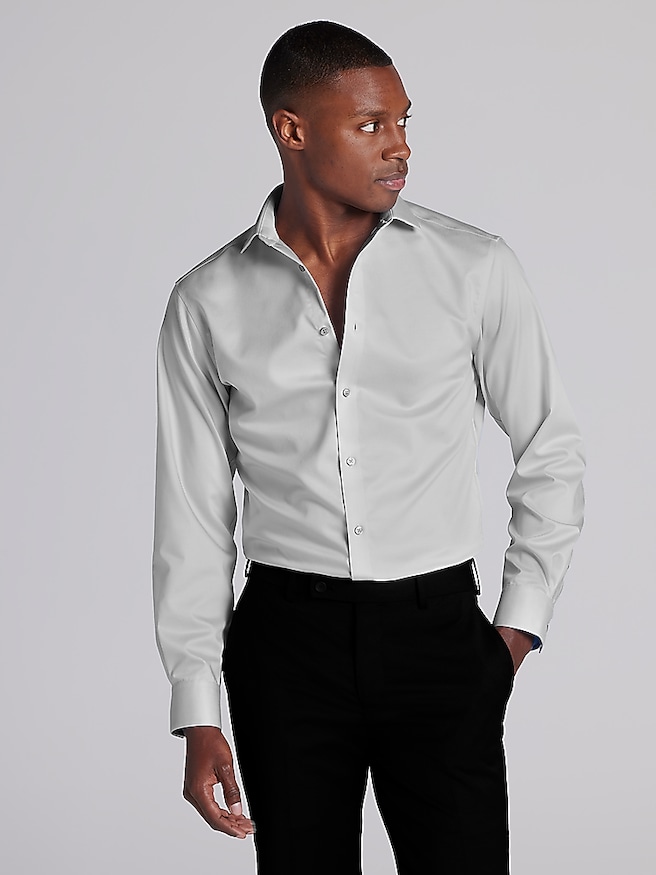
Tall men's shirts are designed with additional body and sleeve length to help create a balanced fit on a longer frame. That extra length serves a practical purpose: a tucked shirt stays more securely inside the waistband, cuffs reach the wrist, and an untucked hem provides coverage without requiring an oversized chest or shoulder. Tall sizing is not the same as simply sizing up. A larger standard shirt may add room through the torso while still falling short at the sleeves, leaving excess fabric around the middle without solving the length issue. Height is a useful starting point, but torso length, arm length, shoulder width, and preferred fit all influence how a shirt sits. Two men of the same height may need distinct proportions, especially when one has a longer torso and the other has longer arms. A well-proportioned shoulder seam generally rests near the outer edge of the shoulder rather than dropping down the upper arm. Long sleeves should reach the wrist with enough ease for bending the elbow, typing, or reaching across a table without pulling the cuff far up the forearm. For dress shirts worn with a tie, the collar should close comfortably without pressing into the neck. Through the chest and waist, the fabric should lie smoothly rather than strain between buttons or gather in large folds beneath a jacket. Slim, tailored, and more relaxed cuts describe the shape of the shirt, while tall sizing addresses its proportions; the two considerations work together rather than replace each other. Body measurements compared with a size chart are more useful than height alone, since sizing terms and finished dimensions can vary. Hem shape matters, too. Longer curved tails suit a tucked presentation, while shirts intended to remain untucked need a length that looks deliberate. These details make tall shirts useful for men who want a clean silhouette and comfortable movement without constantly adjusting a cuff or tucking the back hem into place.
Fabric gives tall men's shirts much of their character, from the smooth finish of a dress shirt to the more textured surface of an everyday button-up. Cotton is a familiar choice for its softness and breathability, though the weave affects how it feels and drapes. Poplin typically has a smooth, closely woven surface that works well beneath a suit jacket, while twill has a subtle diagonal texture and often a more substantial feel. Oxford cloth brings a visible woven texture that suits a less formal outfit, especially with chinos or denim. Linen has a distinctive texture and a naturally relaxed appearance, including creases that are part of its character. Blends containing synthetic fibers can change a shirt's wrinkle resistance, drying behavior, or durability, while a small amount of stretch may make reaching and sitting more comfortable. Stretch does not compensate for a shirt that is too short or too tight, however; sound proportions still matter. Fabric weight also affects how a longer shirt hangs. A lighter cloth may drape close to the body, while a more substantial weave can hold its shape with greater definition. Care is especially important when sleeve and torso length are central to the fit. Cotton and linen can shrink, and excessive dryer heat may reduce the length that made a tall size comfortable in the first place. The garment's care label should determine washing, drying, and ironing methods rather than assumptions based on appearance. Prompt removal after washing or drying can help reduce deep wrinkles, while pressing a collar, placket, and cuffs restores a crisp outline when the fabric permits it. Secure buttons, even seams, and neatly finished buttonholes are useful construction details, particularly on shirts worn frequently for work. Cuffs and collars experience repeated friction, so treating marks according to the care instructions and avoiding unnecessary abrasion can help preserve their appearance. Enough room across the upper back also reduces strain on seams during ordinary movement.
The appeal of tall men's shirts extends across office routines, celebrations, travel, and everyday plans. A long day that moves from a desk to a presentation and then dinner calls for a shirt that remains comfortable both seated and standing. For a suit-and-tie setting, a smooth shirt front, a properly fitted collar, and sleeves that sit neatly beneath the jacket create a composed appearance. White and light blue are versatile foundations, while restrained stripes or small checks add interest without dominating the outfit. Collar shape can influence the overall effect, too: a spread collar leaves space for a fuller tie knot, while a button-down collar often lends a more relaxed finish. For occasions that do not call for a tie, Men's Tall Button Up Shirts bring the same attention to length into outfits built around chinos, tailored trousers, or jeans. A shirt worn open over a simple undershirt needs enough room to hang freely, while one worn beneath a sweater benefits from a smooth fit through the torso and sleeves. Tucked styling creates a defined waistline, particularly with trousers that sit securely at the intended rise. Untucked styling depends more visibly on hem length, so extra coverage should still look proportionate rather than extend so far that it overwhelms the outfit. Pattern size is a matter of personal preference, not a rule dictated by height; the most convincing choice is one that works with the rest of the clothing and feels natural to wear. Tall shirts can also make thoughtful gifts for someone who regularly finds standard sleeves too short, especially when the recipient's measurements and preferred cut are known. A familiar collar shape, an easy-to-coordinate color, and care requirements that fit the recipient's routine make the choice more personal. Across formal and casual settings, the lasting benefit is straightforward: enough length where it is needed, with a shape that allows the wearer to move comfortably and look put together.