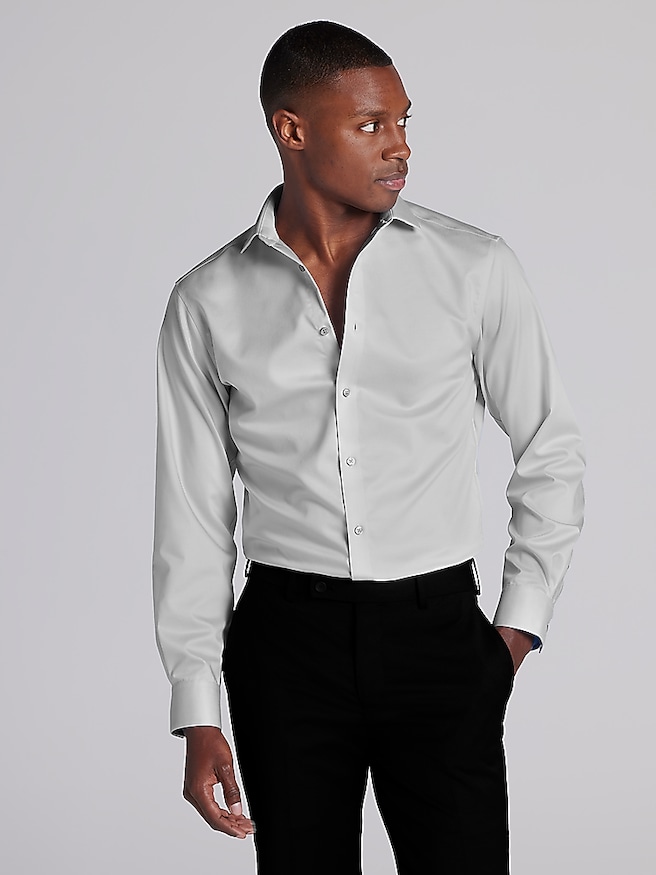
Men’s tall dress shirts bring the proportions of a dress shirt into better balance for a longer frame, with attention to the places where a standard-length shirt can fall short. Depending on the cut, that may mean a longer body, longer sleeves, or adjustments that help the shirt sit comfortably through the shoulders and torso. The benefit is especially noticeable in everyday movement: reaching across a conference table, lifting an arm to adjust a jacket, or sitting through a long presentation without the hem pulling loose. A shirt should have enough length to tuck securely into dress pants without leaving a bulky fold of fabric around the waist. Sleeve length matters just as much. Cuffs should reach the wrist with the arms relaxed and allow comfortable movement when the elbows bend, rather than climbing noticeably up the forearms. Under a suit jacket, a small amount of shirt cuff can provide a clean finish without extending too far beyond the jacket sleeve. Tall sizing is about proportion, not simply adding room everywhere. A taller man with a lean build may prefer a closer cut through the chest and waist, while someone with a broader frame may appreciate more ease across the back and midsection. The shoulder seams should sit near the natural shoulder line, and the front placket should lie smoothly rather than pull between the buttons. A comfortably fastened collar leaves room for movement without looking loose beneath a tie. Neck and sleeve measurements, along with the stated fit, help distinguish shirts that look similar but wear quite differently. For builds that need both additional length and more room through the torso, Big and Tall Dress Shirts provides a related category to consider. The right proportions create a cleaner line from collar to hem, whether the shirt is worn with a full suit, dress pants, or a sport coat. They also reduce the small distractions of a workday, such as repeatedly pulling down a hem or adjusting sleeves that never quite settle at the wrist.
Fabric gives a tall dress shirt much of its character, affecting how it feels against the skin, how neatly it drapes, and how it responds to repeated wear. Cotton is a familiar choice for its breathability and comfortable feel, while cotton blends can combine that softness with added resilience or easier maintenance. Fabrics containing stretch may offer more flexibility through the shoulders and elbows, particularly when the shirt has a trim silhouette. The amount and placement of that stretch vary, so fabric composition is worth considering alongside the fit description. Weave also changes the appearance. Poplin generally has a smooth, crisp surface that works well beneath a suit, while twill often shows a subtle diagonal texture and a softer drape. Oxford-style weaves bring more visible texture, making them useful for offices and occasions where the dress code allows a less formal finish. Fabric weight and opacity affect how a shirt looks on the body; a lightweight white shirt may reveal an undershirt more readily than a denser weave. White and light blue offer a straightforward foundation for tailored clothing, while restrained stripes and small checks add detail without dominating an outfit. A pattern should sit comfortably alongside the scale of a tie or jacket pattern, allowing each element to remain distinct. Collar shape contributes to the same balance. A spread collar leaves space for a fuller tie knot, a point collar creates a more narrowly framed neckline, and a button-down collar keeps its tips secured for a relaxed, orderly appearance. Cuffs add another practical distinction: button cuffs are simple to fasten and adjust, while French cuffs accommodate cufflinks for a more dressed-up finish. Across these details, thoughtful construction supports both appearance and durability. Even stitching, securely attached buttons, and smoothly finished seams help a shirt withstand regular use. A collar that holds its shape and cuffs that lie flat keep the overall look composed, even when the jacket comes off for an afternoon at a desk.
Tall dress shirts serve a range of occasions, from a routine office day to a job interview, wedding, graduation, or evening celebration. A crisp shirt under a dark suit can suit a formal meeting, while a lightly patterned shirt with tailored pants may feel more natural in a business-casual setting. For someone who spends much of the day seated, comfort through the abdomen and back matters as much as the standing silhouette. For someone who frequently presents, travels, or moves between meetings, secure sleeve length and a dependable tuck can make the shirt easier to wear without constant adjustment. An undershirt can provide an additional layer between the skin and dress shirt, but its neckline and color should remain unobtrusive beneath the outer fabric. Tall dress shirts can also be a useful gift for a graduate beginning a professional wardrobe, a partner who wears tailored clothing regularly, or a family member preparing for a milestone occasion. A known neck size, sleeve length, and preferred fit make the choice more personal than relying on height alone; the size label in a well-fitting shirt can be a helpful reference. Care is part of keeping those proportions and finishes intact. The garment’s care label should determine washing temperature, drying method, and whether ironing or professional cleaning is appropriate. Excessive heat can affect shrinkage, stretch fibers, and the appearance of collars and cuffs, so a gentler approach may help preserve the original fit when the instructions allow it. Prompt attention to marks around the neckline and wrists helps prevent everyday buildup from becoming harder to remove. Hanging a shirt neatly after laundering can reduce creasing, and careful pressing along the collar, placket, and cuffs restores the areas most visible beneath a jacket. Easy-care or wrinkle-resistant finishes may reduce maintenance, but they do not necessarily eliminate it. Rotating shirts between wears allows time for cleaning and gives each garment a break from repeated friction. With suitable care and well-matched proportions, a tall dress shirt remains a dependable part of a wardrobe built around comfortable, polished dressing.