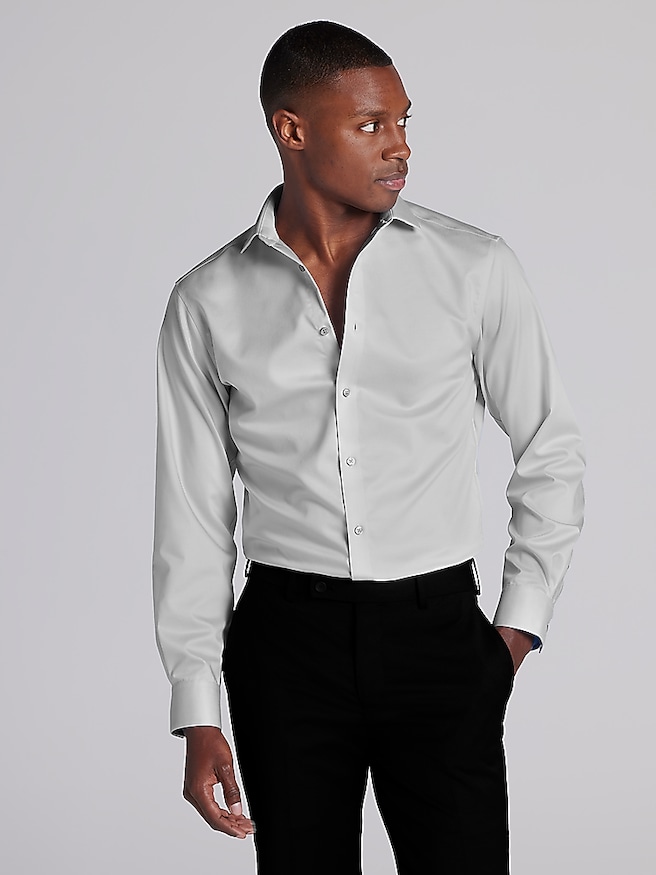
Big and tall dress shirts are designed for larger builds, taller frames, or both, with proportions that account for more than the number on a collar label. Big sizing generally provides additional room through the chest, waist, and shoulders, while tall sizing emphasizes longer sleeves and a longer body. Those needs do not always go together: a broad-shouldered man may need more room without extra length, while a tall man with a lean build may need longer proportions without a loose torso. Neck size, sleeve length, chest measurements, and shirt length help distinguish a comfortable fit from a shirt that merely buttons. Numeric neck-and-sleeve sizing and letter sizing describe fit differently, so the measurements in a size chart are more useful than assuming that the same size will fit identically across every cut. A well-fitting collar closes comfortably without pressing into the neck, and the front lies flat rather than pulling into small gaps between buttons. Shoulder seams should sit near the edge of the shoulders, with enough ease through the upper back for reaching across a desk or putting on a jacket. Sleeves should reach the wrist without covering the hand, and cuffs should close securely while leaving comfortable space for movement or a watch. Under a suit jacket, a small amount of shirt cuff showing creates a neat finish. Body length matters just as much, especially for someone who spends the day moving between a desk, meetings, and time on their feet. A longer shirt tail helps keep the shirt tucked when sitting or reaching, while excess fabric around the waist can bunch beneath trousers. Traditional fits generally offer more ease through the torso; more tailored cuts reduce some of that extra fabric without needing to feel tight. The best proportions leave room to move while keeping the collar, shoulders, sleeves, and waist in alignment. For men accustomed to choosing a larger shirt just to gain sleeve length, that distinction can make a noticeable difference in how neatly the shirt sits beneath a jacket.
Fabric influences how a big and tall dress shirt feels against the skin, holds its shape, and handles repeated wear. Cotton is a common choice because of its soft feel and ability to absorb moisture, though the weave and finishing treatment also affect comfort and appearance. Smooth poplin has a clean surface that works well with suits and fine-patterned ties, while twill has a subtle diagonal texture and often drapes with a slightly fuller feel. Oxford cloth uses a basket-style weave that gives it more visible texture, making it a familiar option for less formal office settings and combinations with chinos or a sport coat. Cotton blends can offer different balances of softness, shape retention, and ease of care, depending on the fibers and their proportions. Fabric with added stretch can provide useful give across the shoulders and elbows when driving, typing, or lifting an arm, but stretch does not replace adequate room in the cut. A shirt that is too small may still pull at the buttons even when the fabric has some flexibility. Wrinkle-resistant and non-iron finishes can reduce the work involved in maintaining a crisp appearance, although their performance depends on the fabric, construction, and laundering routine. Care instructions remain important: some shirts tolerate machine washing and tumble drying, while others call for gentler handling or a different drying method. Excessive heat can cause shrinkage or affect stretch fibers, and leaving a shirt compressed in a dryer or laundry basket can create creases even in an easy-care fabric. Prompt hanging and any pressing permitted by the care label help maintain a smooth collar, front, and cuffs. Durability also comes from details such as even stitching, secure buttons, and well-finished seams. Collars and cuffs receive frequent friction and contact with skin, so timely cleaning helps prevent buildup in those areas. Rotating shirts between wears gives each one time for cleaning and care, helping a working wardrobe stay presentable without relying on the same shirt every day.
Color, pattern, collar shape, and cuff style give big and tall dress shirts their character and help connect them to the occasion. A white dress shirt creates a crisp contrast with a dark suit and leaves plenty of room for a patterned tie or textured jacket. Light blue offers similar versatility with a softer contrast, pairing naturally with navy, gray, and many earth-toned trousers. Stripes and checks introduce detail without necessarily making an outfit feel busy; their scale matters when they sit beside a jacket pattern or tie. A fine stripe can read almost like a solid from across a conference table, while a larger check becomes a more noticeable part of the outfit. For additional visual interest, big and tall printed dress shirts bring pattern into combinations that otherwise rely on solid trousers and jackets. A point collar creates a relatively narrow frame around a tie, while a spread collar leaves more room for a fuller knot. Button-down collars hold their points in place and often suit business-casual outfits, particularly when a tie is not part of the look. Button cuffs are straightforward for everyday dressing; French cuffs accommodate cuff links and can add a dressier finish when the occasion calls for it. These distinctions matter for work presentations, interviews, weddings, graduation celebrations, and dinners where a more polished outfit feels appropriate. A dress shirt can also work without a jacket when its fit is clean and its collar retains its shape. For gift giving, known neck and sleeve measurements are more dependable than a guess based on height alone, and an established preference for solids, patterns, or easy-care fabrics adds another useful point of reference. Whether worn several days a week or reserved for important events, a big and tall dress shirt earns its place through comfortable proportions, fabric suited to the wearer’s routine, and details that work with the rest of the wardrobe.