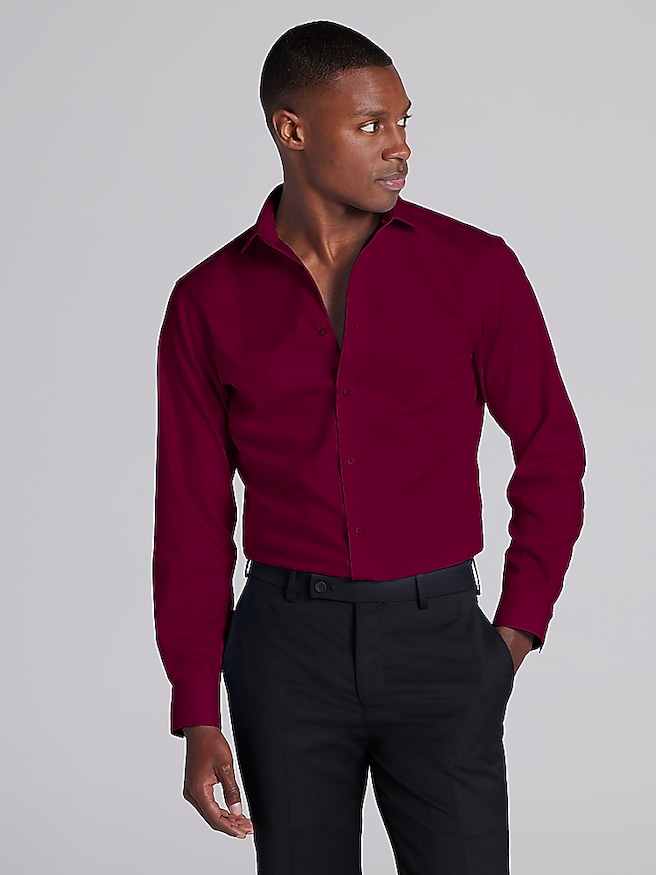
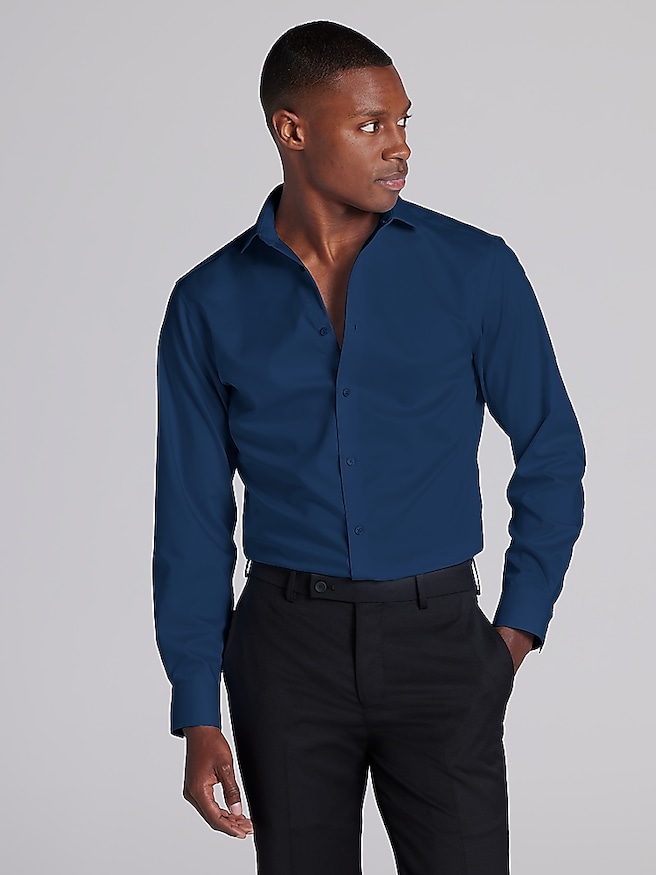
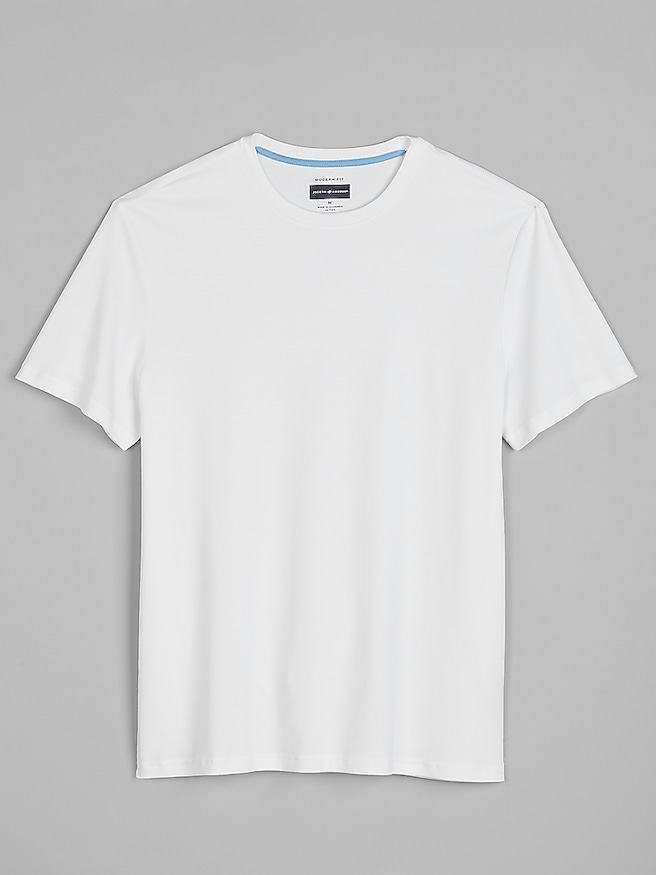
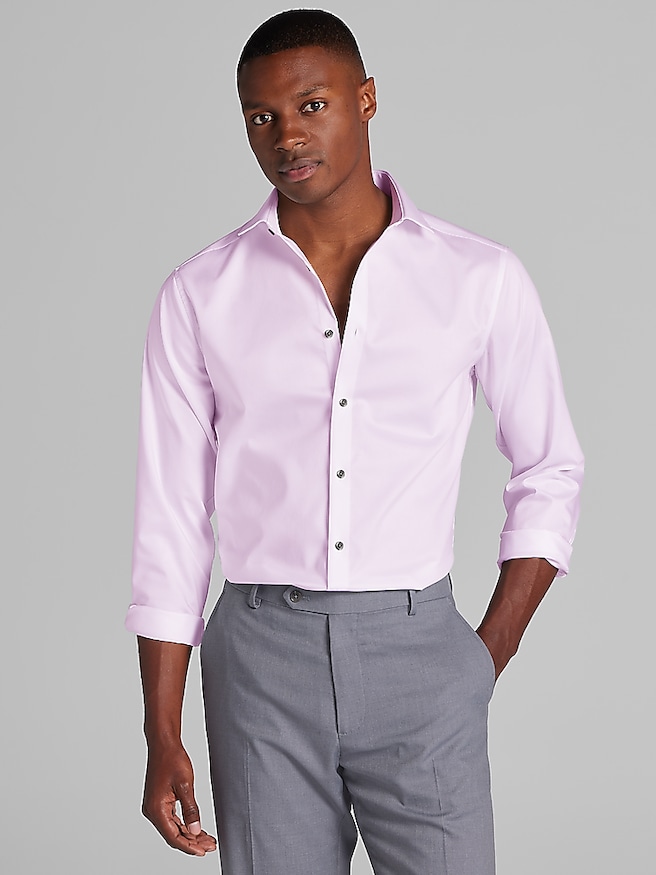
Big and tall shirts are designed around proportions that standard shirt sizing may not accommodate, including a fuller chest, broader shoulders, a longer torso, or greater sleeve length. Big sizes generally provide additional room through the chest, waist, and body, while tall sizes typically add body and sleeve length to a corresponding size. A tall fit is not necessarily a wider fit, and a big fit is not automatically longer in every measurement. That distinction matters when a shirt fits comfortably across the shoulders but pulls out of a waistband, or when the sleeves reach the wrists but the body carries too much excess fabric. Size labels such as LT and XLT commonly mean large tall and extra-large tall; XLT generally increases body room compared with LT, although exact dimensions vary by maker and cut. Measurements and the applicable size chart are more useful than the label alone. For dress shirts, neck circumference and sleeve length are especially important, while chest, waist, and body length help establish the fit of casual button-front shirts, polos, and T-shirts. A well-proportioned shirt gives the wearer room to sit, reach across a desk, and bend an elbow without strained buttons or a collar that presses into the neck. On a conventional set-in sleeve, the shoulder seam should sit near the point where the shoulder meets the arm rather than falling noticeably down the upper arm. The front should lie smoothly when buttoned, with enough ease through the middle to avoid pulling while seated. These details make big and tall shirts useful for taller men, men with broader builds, and anyone whose measurements call for more length or room than a standard cut provides. They also explain why simply choosing a larger standard size can leave the collar loose and the shoulders drooping without resolving a short hem or sleeve.
Fabric gives each shirt much of its character, from the clean surface of a dress shirt worn beneath a suit to the textured knit of a polo paired with chinos. Cotton is valued for its softness, breathability, and absorbency, making it a familiar choice for everyday wear. The fabric’s construction matters as much as its fiber content: cotton poplin generally has a smooth, fine surface, Oxford cloth has a more visible basket-weave texture, and cotton jersey has the flexible feel associated with T-shirts. For a closer focus on that fiber, big and tall cotton shirts bring the same proportion considerations to a category known for comfortable everyday fabrics. Cotton blends can offer a different balance of softness, wrinkle resistance, and drying performance, depending on the fibers and finishing involved. A small amount of elastane may add stretch that makes reaching or sitting more comfortable, but stretch cannot compensate for a shirt that is too narrow through the chest or too short in the body. Fabric weight also affects how a shirt hangs. A more substantial knit may provide greater coverage and a steadier drape, while a lighter woven fabric can feel less bulky beneath a jacket. Durability depends on construction and care as well as material: even stitching, firmly attached buttons, and neatly finished seams are useful details to examine. Areas that experience repeated movement, including underarms, cuffs, and side seams, benefit from sound construction rather than unnecessary tightness. Following the care label helps preserve both the fabric and the proportions that made the shirt fit well initially. Excessive dryer heat can contribute to shrinkage in some fabrics, including cotton, and a preshrunk label does not mean further shrinkage is impossible. Using the recommended wash settings, removing shirts promptly after drying, and ironing only as directed can help keep collars, plackets, and hems looking neat. For a tall shirt in particular, maintaining body and sleeve length is part of maintaining its usefulness.
The right shirt shape also depends on how it will be worn. Big and tall dress shirts intended to stay tucked need enough length to remain comfortably inside the waistband when the wearer sits down or raises an arm. Casual shirts designed for untucked wear generally have a shorter, more deliberate hem, giving the outfit a finished appearance without an expanse of fabric below the pockets. A tall wearer may still need an untucked style with added torso length; choosing a standard shirt solely because it has a shorter hem can leave too little coverage. Beneath a suit or sport coat, a smooth-fitting shirt reduces bunching at the waist and excess fabric inside the sleeves. A collar that holds its shape frames the face neatly, whether worn open or with a tie, and cuffs should close comfortably without slipping far over the hands. For an office presentation, a solid or subtly patterned button-front shirt keeps the overall look composed without competing with a jacket. For dinner, a family gathering, or a workplace with a relaxed dress code, an untucked woven shirt or a well-proportioned polo can look polished with chinos or dark denim. T-shirts serve a different purpose, working as straightforward everyday tops or low-bulk layers when the neckline, shoulder width, and hem length suit the wearer. Color and pattern can make these categories easier to rotate: solids pair readily with patterned trousers or jackets, while stripes, checks, and textured fabrics add interest to simpler outfits. Personal preference matters more than rigid rules about which patterns a larger or taller person should wear. Comfort, balanced proportions, and an intended level of formality provide a more practical foundation. Shirts can also make thoughtful gifts for someone who regularly struggles with short sleeves or a restrictive chest, provided the giver knows the recipient’s measurements and preferred fit. Comparing the dimensions of a shirt that already fits well is often more dependable than guessing from height alone. Whether the shirt is worn through a full workday or saved for a special dinner, a successful fit looks natural and allows movement without constant adjustment.