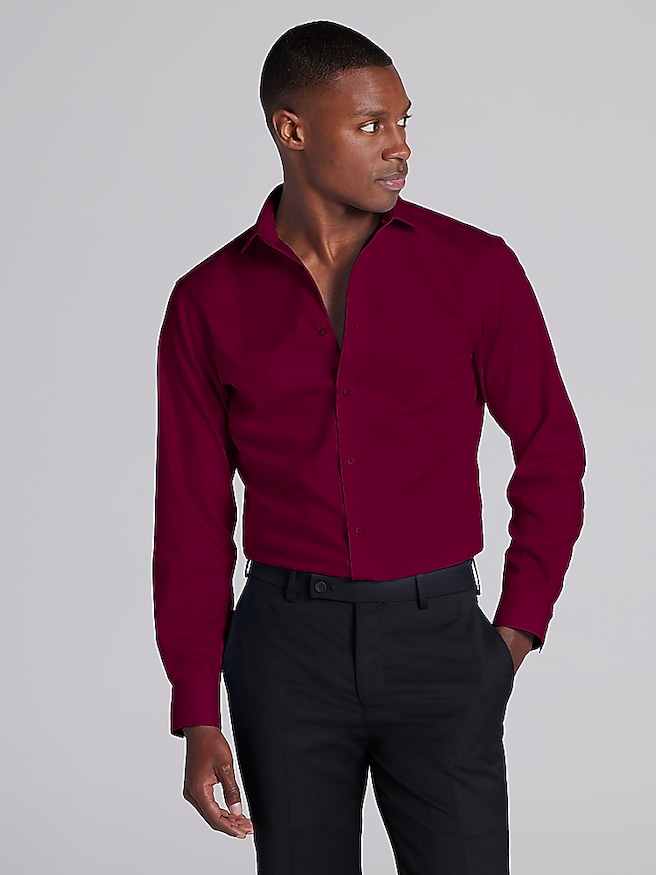
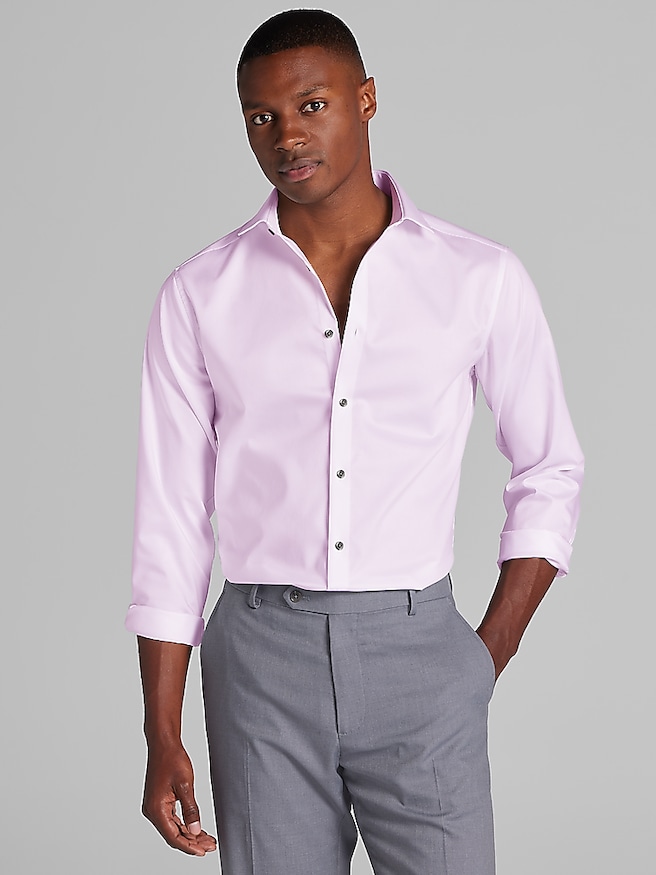
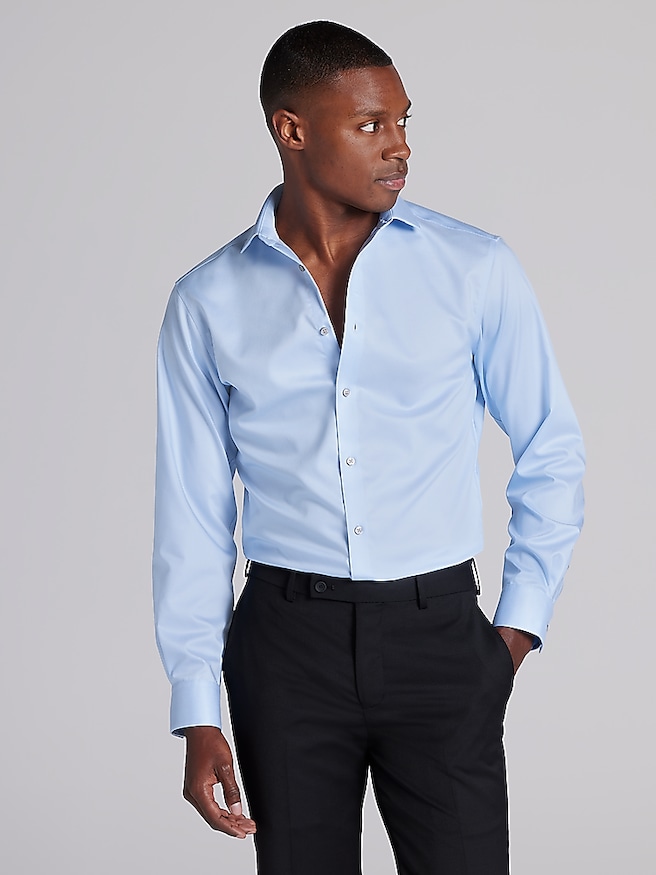
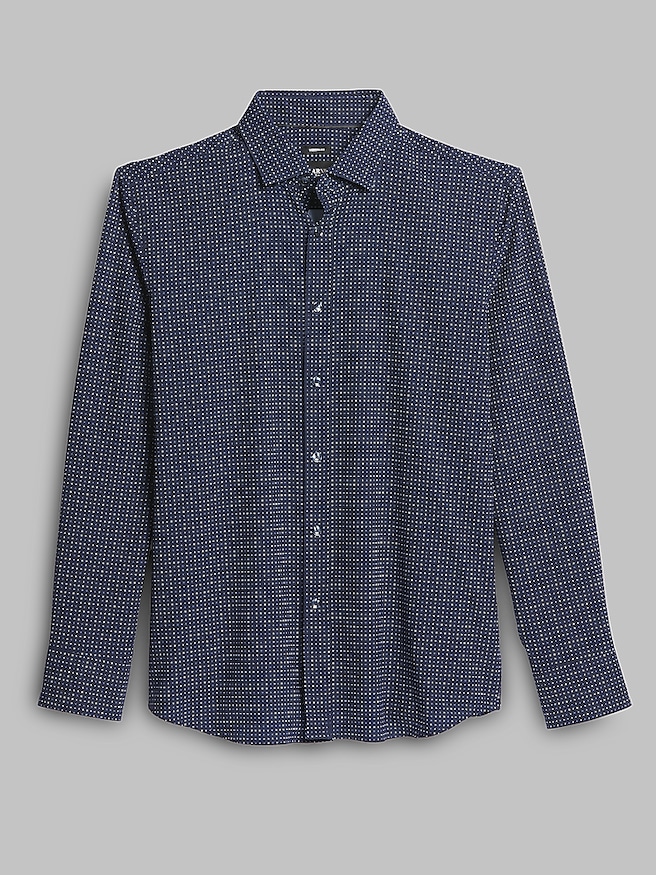
Big and tall printed dress shirts bring personality to a dressed-up wardrobe without giving up the structure of a proper collar, a button front, and neatly finished cuffs. A small geometric repeat can add interest beneath a suit jacket, while a more expressive print can give a shirt worn with dress pants a distinct point of view. The foundation, though, is fit. Big and tall sizing addresses proportions that a standard shirt may not accommodate, including chest room, torso length, sleeve length, and neck measurements. A big fit generally provides additional room through the body, while a tall fit generally adds length; some builds benefit from both. Those distinctions matter when a shirt needs to look composed through a full workday, a wedding reception, or an evening out. Shoulder seams should sit near the natural shoulder line, and the chest should have enough ease for reaching across a table without pulling the button placket open. Through the midsection, the fabric should fall smoothly rather than cling or gather in large folds beneath a jacket. Length deserves equal attention: a shirt that looks fine while standing can come untucked when sitting, bending, or raising an arm. Sleeves should reach the wrist comfortably, with cuffs that close neatly and do not slide far over the hand. The collar also needs to work with the intended outfit. When worn with a tie, it should button comfortably and frame the knot without straining at the neck. Worn open, it should still sit cleanly beneath a blazer. Buying a larger standard size simply to gain length can create excess fabric at the shoulders and waist, so proportion matters more than the size label alone. A well-proportioned printed dress shirt gives the pattern a smooth surface, keeps the front looking tidy, and allows comfortable movement whether the day involves a presentation, a restaurant reservation, or several hours seated at a celebration.
Print scale and color have a strong influence on how a dress shirt reads in an outfit. Closely spaced dots, miniature motifs, and fine geometric designs often look almost solid from across a room, revealing their detail in conversation. That makes them useful for professional settings where a shirt can have character while remaining understated. Larger motifs and stronger contrasts draw more attention and can become the focal point of an outfit, especially when the jacket and pants are kept simple. A navy print on a light background, for example, can connect naturally with navy trousers or a charcoal suit without requiring every color to match exactly. Repeating one color from the shirt elsewhere in the outfit usually creates enough visual continuity. A solid tie is often an easy companion to a printed shirt because it gives the eye a place to rest. When pairing patterns, a clear difference in scale helps keep the combination from looking crowded; a fine shirt print and a broader tie pattern have more separation than two equally dense designs. Collar shape also changes the impression. A spread collar can frame a fuller tie knot, while a narrower point collar creates a more vertical line. The best choice depends on the shirt’s construction, the jacket opening, and personal preference rather than a single rule for every build. For an office presentation, a subtle print tucked into tailored pants offers detail without distracting from the occasion. For dinner or a reception where patterned shirting fits the dress code, a more noticeable design can work well with an open collar and a clean, structured jacket. More formal dress codes may call for a solid shirt instead. Within a wardrobe of Big And Tall Shirts, printed dress styles offer a useful middle ground between a plain business shirt and a more relaxed statement piece, with the final effect shaped by the print, the collar, and the way the shirt is worn.
Fabric and construction determine how that appearance holds up beyond the first wear. Cotton can offer a soft hand and breathable comfort, while cotton blends may balance that feel with easier wrinkle management, depending on their composition and finish. Fabrics containing stretch can provide additional give when reaching, sitting, or moving through a busy day, but stretch does not replace the need for adequate room through the chest and torso. A smooth, finely woven surface can make a print look crisp, while a fabric with more texture gives the same general type of pattern a softer visual effect. The weight and opacity of the cloth matter, too, especially with light backgrounds; an undershirt should not compete with the print or create a distracting outline. Durable construction shows up in secure buttons, clean seams, and a placket that lies flat. Collars and cuffs take frequent handling, so their shape and finish deserve attention alongside the main fabric. Care requirements vary, and the garment’s label is the best reference for washing, drying, ironing, or professional cleaning. Following those directions helps protect both the fabric and the printed surface. Prompt attention to a spot at the cuff or collar is generally easier than letting it settle through repeated wear, while excessive heat can be hard on some fibers, finishes, and stretch components. If ironing is permitted, the recommended setting matters, particularly where the print is applied to the surface. Hanging a clean shirt with the collar supported can help limit creasing between wears. For frequent use, rotating shirts gives each one time for proper cleaning and keeps a single favorite from taking all the wear. Printed dress shirts can also make thoughtful gifts for someone starting a new role, marking a professional milestone, or refreshing a familiar dress wardrobe. Known neck and sleeve measurements, along with a sense of whether the recipient prefers quiet patterns or bolder designs, make the choice more personal. The strongest addition is a shirt that feels comfortable, fits its intended occasions, and brings a recognizable touch of personality to getting dressed.