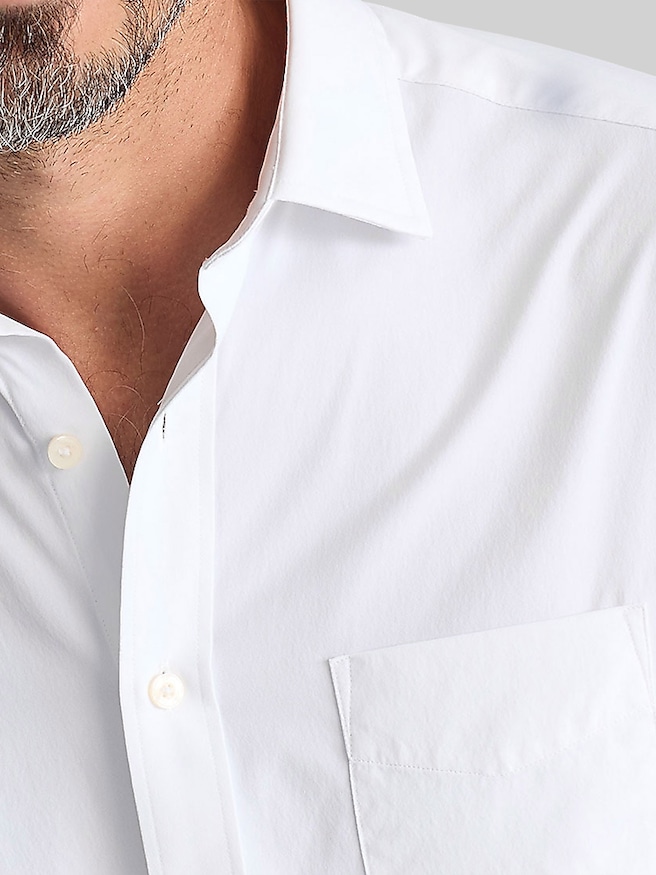
Men's tall button-up shirts are designed to give taller frames the length and coverage that standard sizing may not provide, with proportions that typically include a longer body and longer sleeves. That extra length matters in ordinary moments: reaching for a file without pulling a tucked shirt loose, sitting through a meeting without the back hem creeping upward, or extending an arm without exposing too much wrist. Tall sizing is not the same as sizing up. A larger standard shirt can add unnecessary room around the chest and waist while still falling short through the sleeves or torso. A tall fit addresses length, while descriptions such as slim, tailored, or classic generally describe how closely the shirt follows the body. Those fit names vary by maker, so measurements are more useful than the label alone. Shoulder seams should sit near the natural shoulder edge, and the front should button smoothly without pulling across the chest or leaving excessive fabric at the waist. Sleeves should allow comfortable movement through the elbows, with cuffs resting around the wrist when the arms are relaxed. For a shirt worn with a tie, the collar needs enough room to fasten comfortably without a conspicuous gap. Body length also depends on how the shirt will be worn. A dress shirt needs enough fabric to stay tucked through a full day, while an untucked casual shirt should finish at a balanced point rather than hanging excessively low. Tall sizing can suit someone with a long torso, long arms, or both; height alone does not tell the whole story. Within the broader range of Men's Button Up Shirts, tall proportions help narrow the search toward a cleaner fit without relying on extra width. Neck, chest, sleeve, and body measurements, compared with the relevant size chart, offer a practical starting point, especially when the shirt needs to fit comfortably beneath a jacket.
Fabric gives a tall button-up shirt much of its character, from the way it drapes along a longer torso to how it feels after several hours of wear. Cotton is a familiar choice for its softness and breathability, though the weave makes a noticeable difference. Poplin generally has a smooth, relatively crisp surface that works well with tailored trousers and a jacket. Oxford cloth has a more visible texture and a substantial feel, making it a natural match for chinos, denim, and less formal office settings. Twill has a subtle diagonal weave and often drapes softly, with a surface that can help make everyday creasing less noticeable. Linen offers a distinctively textured appearance and a relaxed finish; its natural wrinkles are part of the fabric's character rather than a sign of poor fit. Blended fabrics can combine cotton's familiar feel with properties such as stretch, easier care, or improved wrinkle resistance, depending on their composition and finish. A small amount of stretch may add comfort across the upper back when driving or reaching, but it should complement an appropriate fit rather than compensate for a shirt that is too tight. Construction matters just as much as fabric content. Even stitching, neatly finished seams, secure buttons, and reinforced stress points can help a shirt stand up to repeated wear. Collar and cuff structure also influence whether the finished look feels crisp or relaxed. Care requirements deserve attention before a shirt becomes part of a regular rotation. The care label determines whether machine washing, professional cleaning, ironing, or another method is appropriate. Excessive heat can cause shrinkage or affect stretch fibers, making careful drying especially important when sleeve and body length are essential to the fit. Promptly removing a washable shirt from the dryer, when permitted by its care instructions, and smoothing it onto a hanger can reduce deep creases. Leaving room between shirts in the closet also helps preserve their shape and keeps collars from being crushed.
The most useful men's tall button-up shirts suit the places they will actually be worn, whether that means a workplace with a dress code, a client lunch, a family celebration, or an evening out. A smooth solid shirt creates a quiet foundation under a suit, allowing the jacket and tie to define the overall look. Fine stripes and restrained checks add detail without necessarily making an outfit feel busy, while larger patterns tend to read as more casual. For business-casual dressing, a well-proportioned shirt with chinos or tailored trousers can look complete without a tie, particularly when the collar sits neatly and the hem stays tucked. Under a sport coat, the sleeves should remain comfortable through the upper arms, without excess fabric bunching inside the jacket. For a more relaxed setting, a shirt intended to be worn untucked can pair naturally with straight-leg denim or casual trousers, provided its length suits that styling. A curved dress-shirt hem that extends too far down the thigh may look unfinished outside the waistband, even when the chest and shoulders fit well. Collar details offer another useful distinction: button-up refers to the front fastening, while button-down describes a collar whose points fasten to the shirt. A button-down collar often brings a relaxed, tidy character to an outfit; other collar shapes can work especially well with a tie, depending on their spread and structure. These details are useful when choosing a gift for a tall recipient, too. A familiar collar style, preferred fit, and measurements from a shirt that already fits well are stronger clues than height alone. Someone who wears a tie daily may value a different collar and fabric finish than someone who favors open-neck shirts with denim. Across those uses, good proportions let the shirt support the outfit without drawing attention to sleeves that fall short, shoulders that droop, or a hem that refuses to stay in place. The result is comfortable, considered dressing built around the wearer's frame and routine.