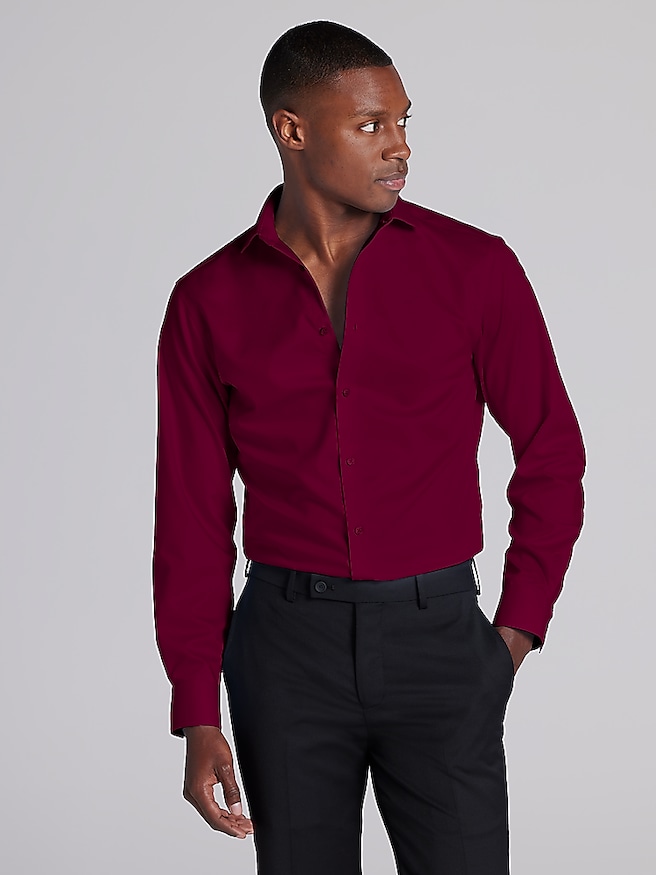
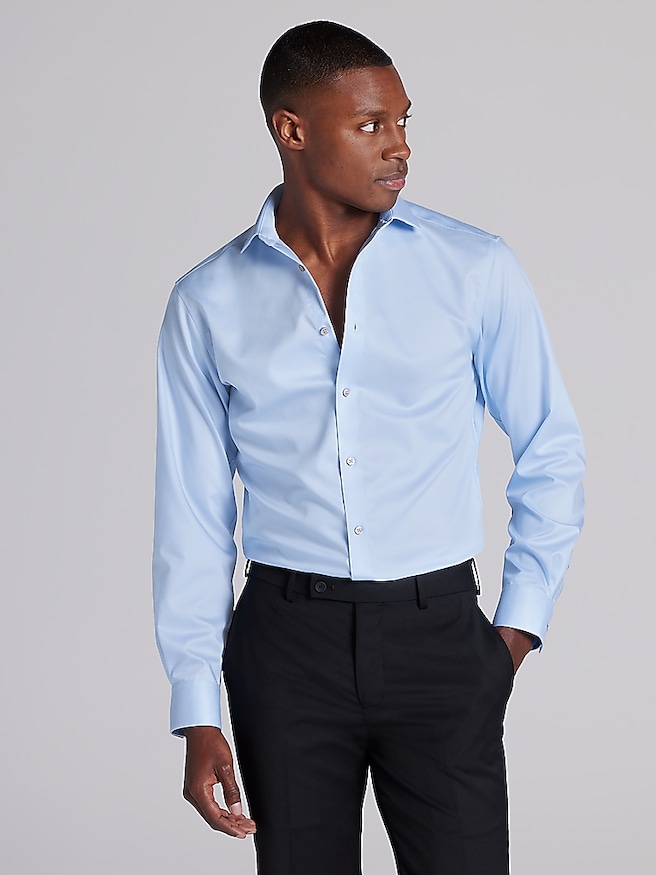
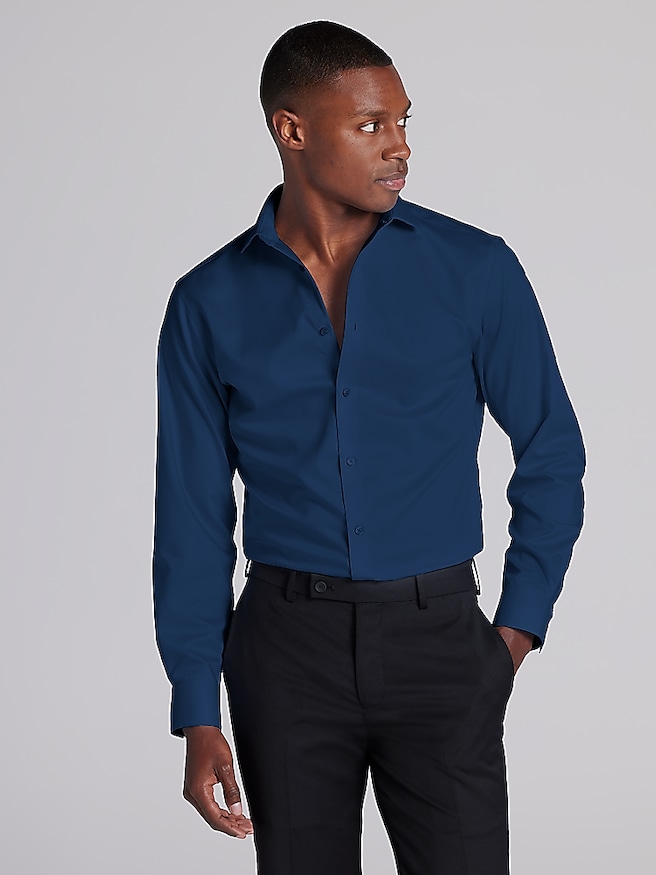
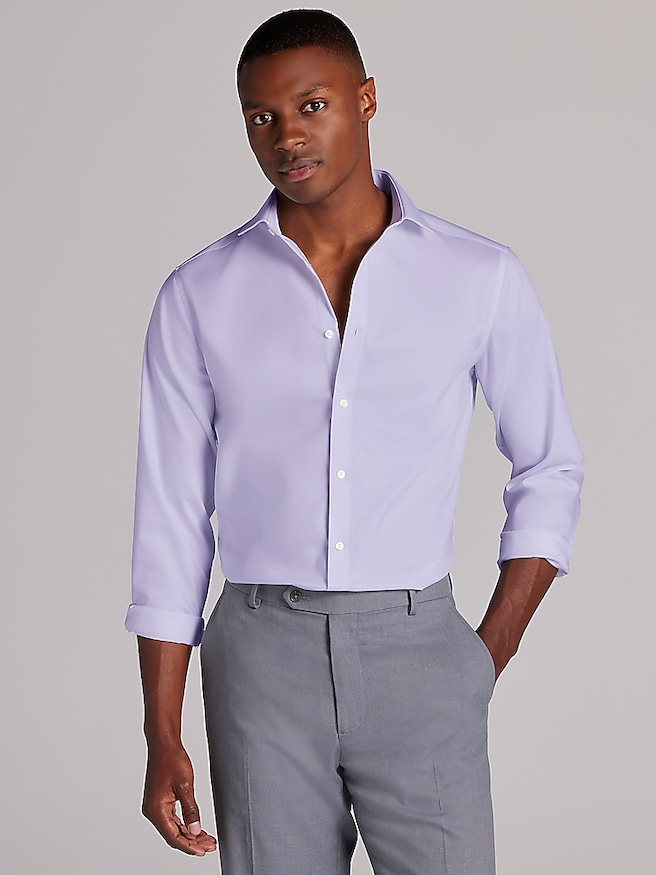
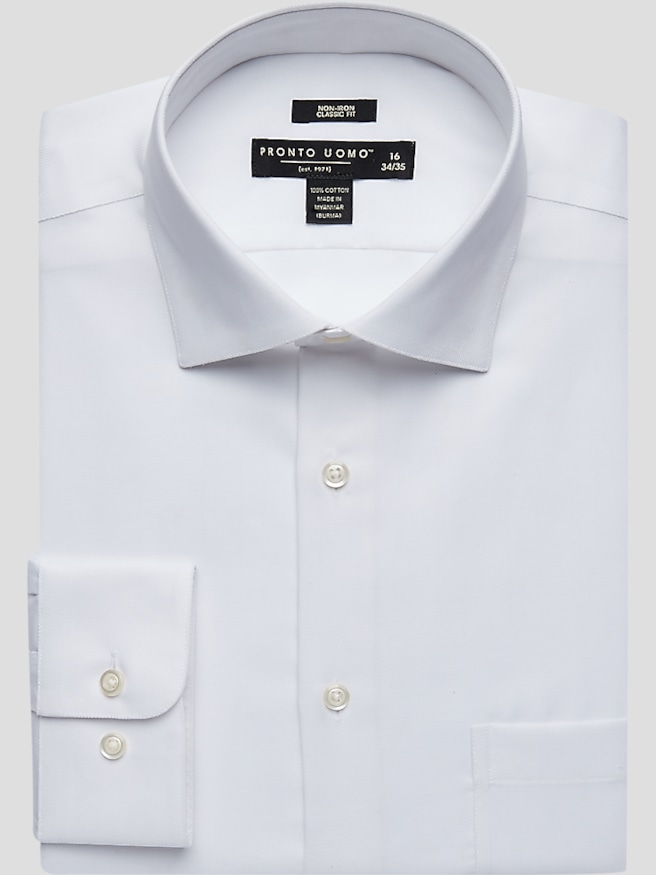
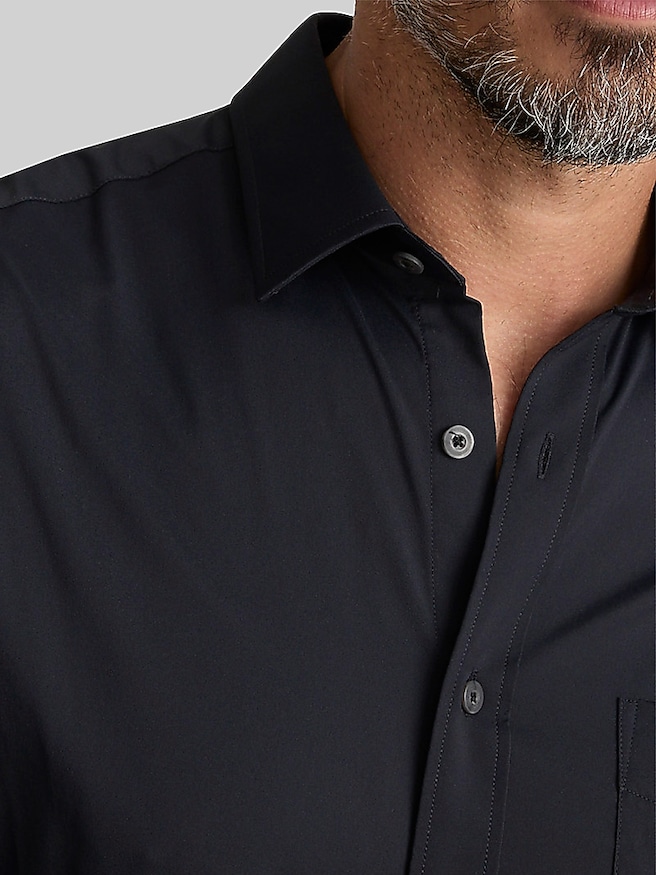
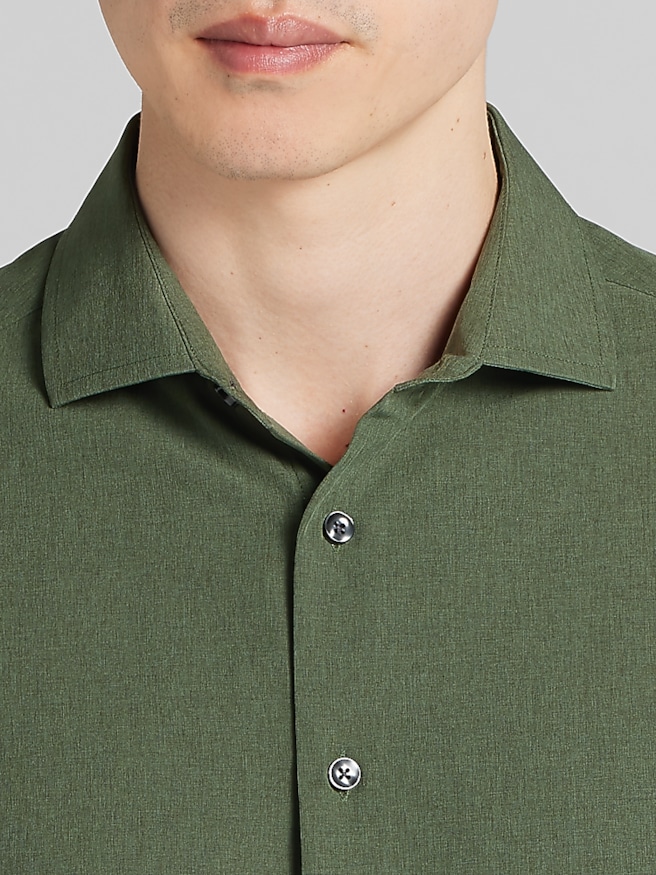
Men’s button-up shirts bring a clean, finished look to everyday dressing, whether worn with chinos at the office, tucked into dress pants for dinner, or layered over a T-shirt on a cool afternoon. A button-up shirt has a front opening secured with buttons; a button-down shirt is a type of button-up with small buttons that fasten the collar points to the shirt. That distinction describes the collar construction, not a separate category of formality. Button-down collars often have a relaxed, collegiate character, while point and spread collars can look sharper with tailoring, depending on the fabric and design. The material does much of the work in setting a shirt’s character. Cotton is valued for its breathable feel, and its weave influences everything from surface texture to how the shirt hangs. Oxford cloth has a basket-weave texture with enough substance for frequent wear and a slightly casual finish that works well beneath a sweater. Poplin is generally smoother and lighter, making it useful when a crisp appearance matters without adding much bulk under a jacket. Twill has a subtle diagonal weave and often a supple drape, with a little more visual depth than a flat, smooth fabric. Brushed cotton and flannel bring a soft surface and welcome warmth during the cooler months, particularly for casual outfits with denim or corduroy. Linen and linen blends offer an airy feel and visible texture, with natural creasing that suits relaxed settings. Blends containing synthetic fibers may support shape retention or quicker drying, while a small amount of elastane can add stretch. Those qualities vary by construction, so fabric content and care information are more useful than broad performance claims. Color and pattern matter, too: white and pale blue create a quiet foundation for patterned ties or textured jackets, while checks, stripes, and deeper solid shades give a shirt enough presence to wear on its own. A fine stripe can feel restrained beneath a blazer; a larger plaid usually makes more sense with casual layers and sturdy footwear.
Fit determines whether that fabric looks comfortable and intentional through a full day of wear. A well-fitting men’s button-up shirt should sit smoothly across the shoulders, with shoulder seams close to the natural shoulder edge and enough room across the chest to move without pulling the button placket open. Slim fits generally follow the torso more closely, while classic or relaxed fits provide additional room through the chest and waist; the exact measurements vary, so the fit name alone does not tell the whole story. The useful test is ordinary movement: reaching for a bag, sitting at a desk, or bending an elbow should not leave the back feeling tight or the front buttons under strain. For a shirt worn with a tie, the collar should close comfortably without pinching. Long sleeves should reach roughly to the wrist with arms at rest, and cuffs should stay in place rather than slip far over the hands. Under a tailored jacket, a narrow band of shirt cuff creates a neat transition at the wrist. Hem length also affects intended use. Longer, curved shirttails help a shirt stay tucked during meetings or a seated dinner, while shorter hems designed for untucked wear keep casual proportions balanced. An untucked shirt generally looks most natural when it does not extend far down the thighs or hide nearly all of the pants beneath the fly. Long-sleeve button-up shirts are especially adaptable as temperatures shift, moving from a standalone layer indoors to a base beneath knitwear or outerwear. A smooth shirt fits neatly under a fine-gauge crewneck, while a more substantial Oxford can hold its shape beneath a casual jacket. Short sleeves create a lighter, less formal option for warm indoor settings or mild afternoons. For another casual interpretation, men’s button-up polo shirts combine a button-front look with the easygoing character associated with polo styling. Across these silhouettes, matching the shirt’s texture and proportions to the rest of an outfit usually matters more than adding extra accessories.
Care and construction help determine how a button-up shirt holds up beyond its first few wears. Even stitching, neatly finished seams, secure buttons, and cleanly sewn buttonholes are useful signs to examine, especially around cuffs and the collar, where repeated movement and contact create wear. Heavier fabric is not automatically better: a lightweight shirt can be well made, and a dense fabric may be less comfortable for someone who spends most of the day in a heated office. Durability comes from the combination of suitable material, sound construction, a fit that avoids constant strain, and appropriate care. The garment’s care label should set the routine, since cotton, linen blends, stretch fabrics, and treated materials can require distinct washing and drying methods. When machine washing is permitted, separating colors and treating collar or cuff marks promptly can help preserve a clean finish. Avoiding excessive dryer heat, when consistent with the label, can limit shrinkage and help protect stretch fibers. Removing a shirt promptly after drying and placing it on a hanger reduces the time wrinkles have to settle in. Ironing or steaming at a fabric-appropriate setting restores a smoother appearance, though wrinkle-resistant finishes should not be mistaken for a promise that pressing will never be needed. A crisp collar and tidy placket often make the biggest visible difference when the shirt is worn without a jacket. Practical details also make these shirts thoughtful gifts for someone starting an office role, building a wardrobe after graduation, or simply enjoying a more polished everyday look. A familiar collar size, sleeve length, and preferred fit provide a stronger starting point than guessing from a general size alone. Consider how the recipient actually dresses: soft checks may suit weekend lunches and casual gatherings, while understated solids can move easily between work and evening plans. For personal wear, the same principle holds. The most useful button-up shirts feel appropriate for the places they will go, leave room for natural movement, and offer a level of upkeep that fits comfortably into an ordinary week.