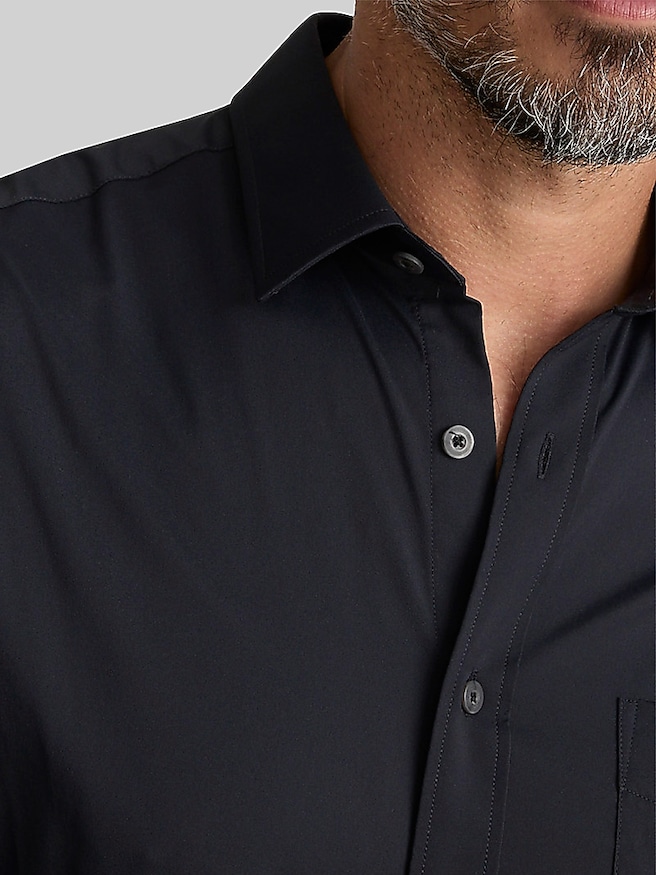
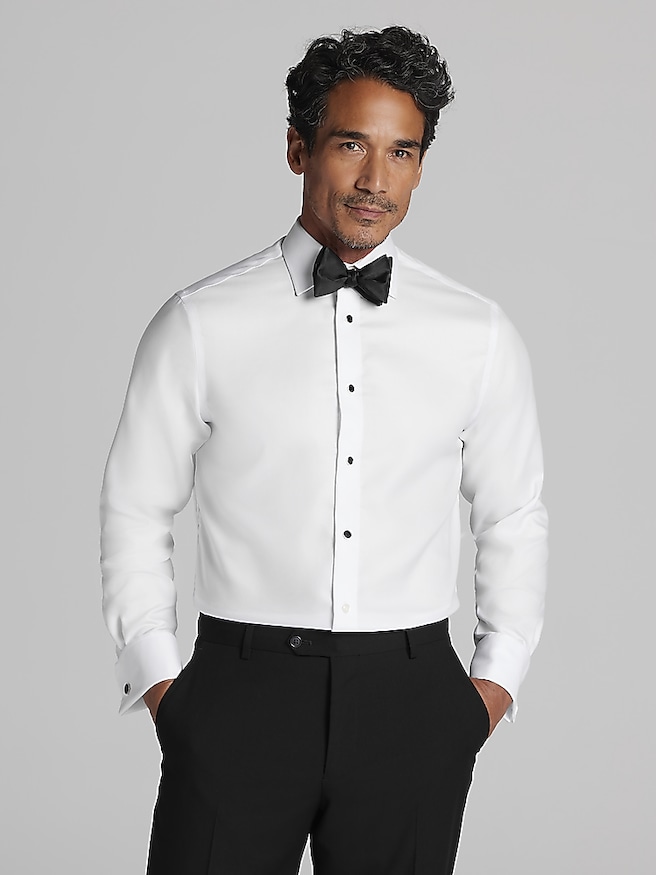
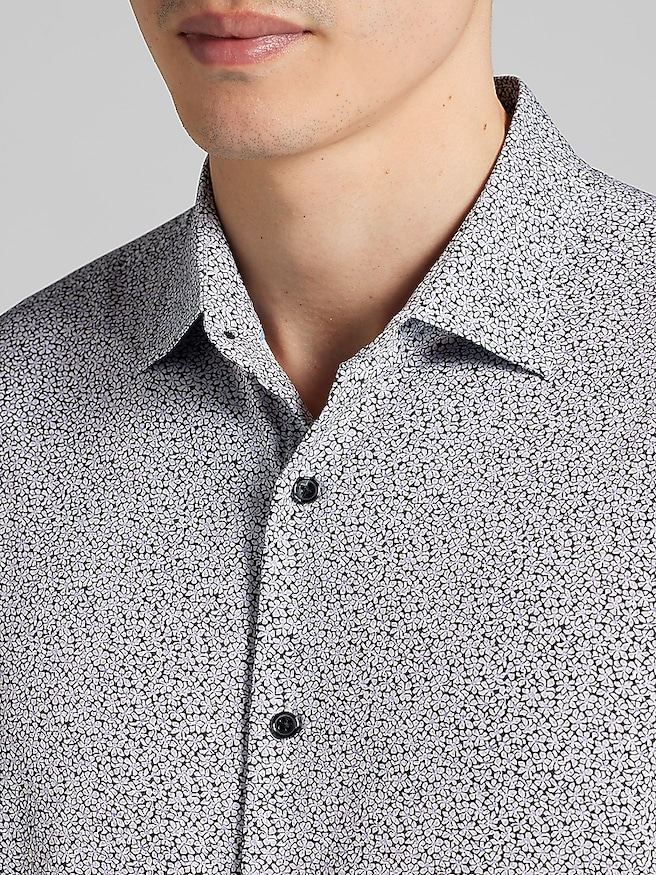
Men’s long-sleeve button-up shirts bring structure to everyday outfits without limiting them to a single dress code. A clean collar, a full button front, and sleeves that finish neatly at the wrist create a polished foundation for workdays, dinners, celebrations, and time spent with friends. Their character comes from the details: smooth fabric and a crisp collar feel more formal, while a textured weave, softer construction, or understated check gives an outfit a more relaxed appearance. A white or light blue shirt can sit comfortably beneath a navy suit, with enough contrast to keep the collar and cuffs distinct. A subtle stripe adds interest under a solid jacket, while a small-scale pattern can bring personality to chinos without dominating the outfit. For an office presentation followed by dinner, a neatly tucked shirt works with tailored trousers and leather shoes, with or without a tie. For a casual gathering, an untucked style with an appropriately shorter hem pairs naturally with dark denim and simple footwear. Longer shirttails generally belong tucked in, where their extra length helps the shirt stay in place throughout a day of sitting, standing, and reaching. Within a wardrobe of Men's Button Up Shirts, long-sleeve styles offer especially useful options for adjusting the level of formality. Sleeves worn down with fastened cuffs create a finished look; neatly rolled sleeves make the same shirt feel more easygoing when the setting allows. The collar also influences how the shirt works with other clothing. A spread collar leaves room for a fuller tie knot, while a point collar creates a narrower frame. A button-down collar has points that fasten to the shirt, a detail that distinguishes it from the broader button-up category and often complements a less formal outfit. These choices make the category relevant to professionals, students entering the workplace, wedding guests, and anyone who prefers a composed look that still feels natural.
Fabric and fit determine much of the experience of wearing a long-sleeve shirt, from its feel against the skin to the way it sits beneath a jacket. Cotton is valued for its softness and breathability, although its texture and wrinkle behavior vary with the weave and finishing. A smooth poplin can present a clean surface suited to tailored outfits, while Oxford cloth has a more noticeable texture that works well with chinos and denim. Twill has a diagonal weave and often a fluid drape, giving the fabric visual depth without requiring a bold pattern. Cotton blends may add easier care or greater shape retention, depending on their composition, while fabrics with a small amount of stretch can provide added freedom of movement. The fiber label tells part of the story; fabric weight, weave, and construction also influence comfort and durability. A substantial cloth is not automatically the best choice for every use, particularly when the shirt needs to sit smoothly under a fitted jacket. The most useful fit follows the body without pulling across it. Shoulder seams should sit near the natural shoulder edge, and the button front should lie flat rather than open between buttons when seated. A close fit can create a streamlined silhouette, but it still needs enough room through the chest, back, and upper arms for ordinary movement. A roomier fit offers more ease without needing to look oversized. Sleeve length deserves equal attention: cuffs should reach the wrist with arms relaxed, and the sleeves should not pull sharply upward when reaching across a desk or holding a steering wheel. A collar intended for a tie needs comfortable space around the neck when fastened. Cuffs should close securely without pinching, with room for a watch when needed. Consistent stitching, securely attached buttons, tidy seams, and well-finished buttonholes are useful construction details to consider, especially for shirts worn repeatedly. Together, these features help distinguish a shirt that merely looks right on a hanger from one that feels right through a full day.
Long-sleeve button-up shirts also reward a thoughtful care routine, particularly when they are part of a regular work or occasion wardrobe. The care label should guide washing, drying, ironing, and any professional cleaning, since similar-looking fabrics can have distinct requirements. Sorting by color, addressing marks promptly with a fabric-appropriate treatment, and avoiding an overloaded washer can help preserve the shirt’s appearance. Excessive dryer exposure can contribute to shrinkage or wear in some fabrics, so the recommended drying method matters as much as the wash cycle. Hanging a shirt promptly after laundering helps maintain its shape and can reduce the amount of pressing needed. When ironing is permitted, attention to the collar, button placket, and cuffs gives the shirt a noticeably sharper finish; these are the areas most visible beneath a jacket. Pressing at the temperature specified for the fabric is important for blends as well as cotton. Easy-care or wrinkle-resistant finishes may reduce upkeep, but they do not make every shirt maintenance-free. Leaving space between shirts on hangers keeps collars from being crushed and makes it easier to see colors and patterns when getting dressed. For travel, folding along the shirt’s natural lines and unpacking soon after arrival can limit deep creases before a meeting or celebration. Shirts can also make practical gifts for a father, partner, graduate, or someone beginning a new role, provided neck size, sleeve length, preferred fit, and everyday dress habits are understood. A person who wears a tie most days may appreciate a structured collar and a quiet pattern, while someone with a casual workplace may get more use from softer fabrics and an understated check. The strongest wardrobe choices reflect actual routines: how often a shirt will be worn, what trousers and jackets it needs to complement, and how much care fits into the week. A comfortable fit, suitable fabric, and considered finishing details give a long-sleeve button-up shirt lasting usefulness well beyond a single occasion.