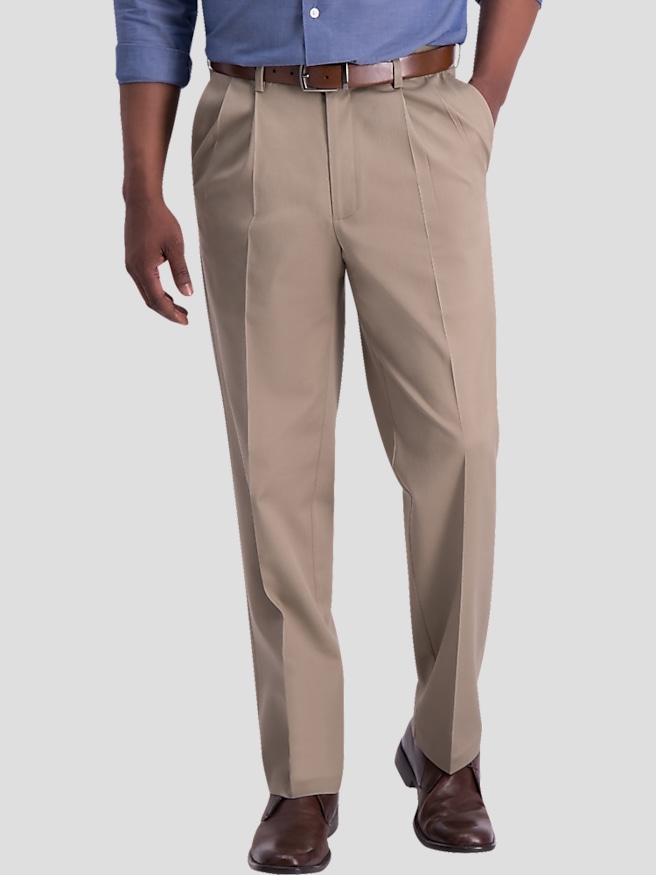
Tailored white pants bring a clean, deliberate look to men’s outfits, with a defined waist, a balanced leg shape, and a hem that sits neatly over the shoe. Their appeal comes from the combination of a bright neutral color and a structured silhouette: they can feel polished with a sport coat or more relaxed with a knit polo without losing their sharp outline. Unlike close-fitting pants that depend on a narrow cut alone, a tailored silhouette relies on proportion through the seat, thigh, knee, and ankle. The best fit follows the body while leaving enough room to sit, walk, and use the pockets comfortably. White also makes details easier to see, so smooth pocket openings, a flat waistband, and an even drape have a noticeable effect on the finished outfit. For a business-casual office that welcomes lighter-colored trousers, a blue button-down and brown loafers create a straightforward combination. For a restaurant dinner or an anniversary celebration, a dark jacket adds definition, while a fine-gauge knit keeps the overall look less formal than a full suit. White trousers can also work for engagement parties, gallery openings, and other social occasions where thoughtful dressing matters, provided they suit the stated dress code. At a wedding, the couple’s preferences and any requested attire should take priority, particularly when white is reserved for part of the celebration. These pants are useful for anyone who wants an alternative to dark dress trousers without relying on a bold pattern. Their neutral base supports everything from navy and charcoal to olive, tan, and soft blue. A tonal outfit built around white, cream, and stone can be equally effective; slightly different shades and textures give the combination depth rather than making every piece look identical. The result can be understated or distinctive, depending on the shirt, shoes, and jacket, while the pants remain a simple foundation.
Fabric determines how tailored white pants hang, how much structure they retain, and how easily they fit into a regular clothing-care routine. Cotton twill often has enough body to support a clean leg line, with a subtle diagonal texture that makes it feel less formal than smooth suiting cloth. Linen has a more textured surface and develops visible creasing with wear, which suits outfits intended to look polished without appearing rigid. Wool can offer fluid drape and natural resilience, though its weight, weave, and care requirements vary considerably. Blends may combine these characteristics, and a small amount of stretch can make bending and sitting more comfortable without replacing the need for a proper fit. With white fabric, opacity deserves particular attention. A dense weave or suitable lining can help limit show-through, but neither fabric thickness nor lining alone guarantees full coverage. Checking the pants in bright light, both standing and seated, gives a clearer sense of whether pocket bags, seams, or underlayers are visible. Smooth underlayers close to the wearer’s skin tone generally draw less attention beneath white than a contrasting color or a pronounced seam. Construction matters, too: secure stitching, tidy seam finishes, and well-supported pocket openings help trousers withstand repeated wear. At the waist, the pants should stay in position without a belt having to pull excess fabric into folds. Through the front and seat, persistent horizontal pulling or pockets that flare open can indicate that more room is needed. A slim leg offers a closer outline, while a straight or fuller leg allows more space and a different balance with a jacket. Neither is inherently more tailored; the distinction is how intentionally the shape fits. Rise affects comfort and proportion, especially with a tucked-in shirt. Hem length finishes that relationship: little or no break creates a crisp edge, while a slight break provides a more traditional line. Trying the pants with the intended shoes helps establish the right length before alterations.
Styling tailored white pants is often most successful when the surrounding pieces have a clear relationship in color, texture, and formality. A navy blazer provides strong contrast, while a tan jacket produces a softer combination; neither requires a patterned shirt to make the outfit interesting. Texture can do that work through a textured knit, a woven belt, or suede footwear. Brown loafers make an easy connection between dressed-up and relaxed pieces, and streamlined leather sneakers can suit casual settings when the trouser shape and hem stay tidy. Black shoes create a stronger visual anchor and tend to look more intentional when another dark element, such as a shirt or jacket, appears above the waist. A belt close in tone to the shoes offers continuity, although trousers designed with side adjusters may not need one. For occasions that call for another neutral option, Tailored Khaki Pants offer an earthy color that works with many of the same shirts and jackets. White needs a little more attention to marks and discoloration, but an appropriate care routine helps preserve its appearance. The care label should determine whether trousers are washed or professionally cleaned, along with the recommended temperature and drying method. Treat spills promptly by blotting rather than rubbing, and use only a treatment suitable for the fabric. Chlorine bleach is not appropriate for every white garment and can damage certain fibers or finishes, so it should never be assumed safe based on color alone. Keeping whites separate from fabrics that transfer dye helps protect their brightness, while avoiding an overloaded wash allows better cleaning and rinsing when machine washing is permitted. Pressing at the recommended setting, with a clean iron and a pressing cloth when appropriate, helps restore the crease without leaving unwanted shine. Hanging trousers neatly after wear limits unnecessary folds, and keeping hems clear of the ground reduces abrasion and grime. With balanced proportions, fabric suited to the occasion, and consistent care, tailored white pants can serve as a dependable part of a wardrobe built around clean lines and versatile combinations.