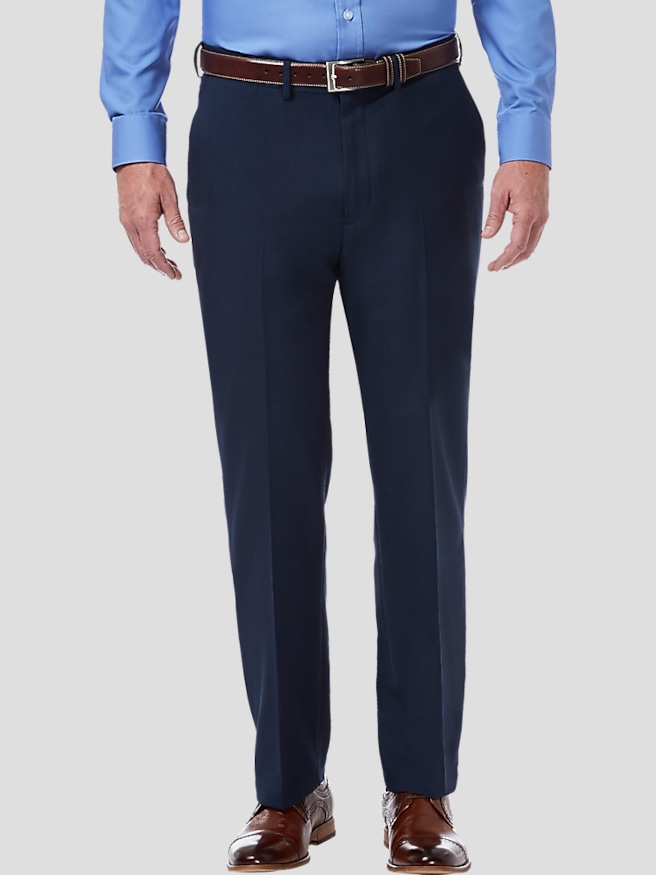
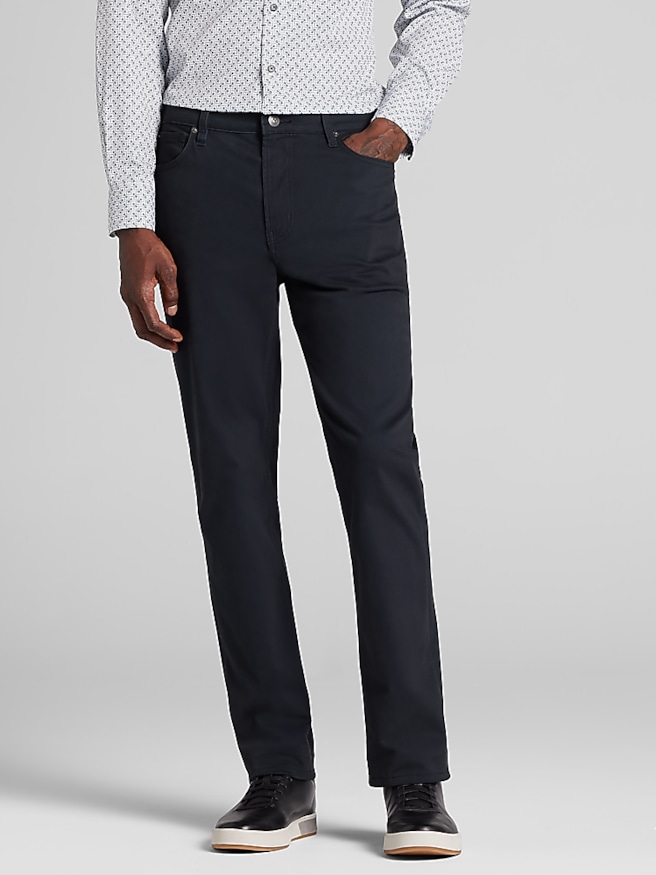
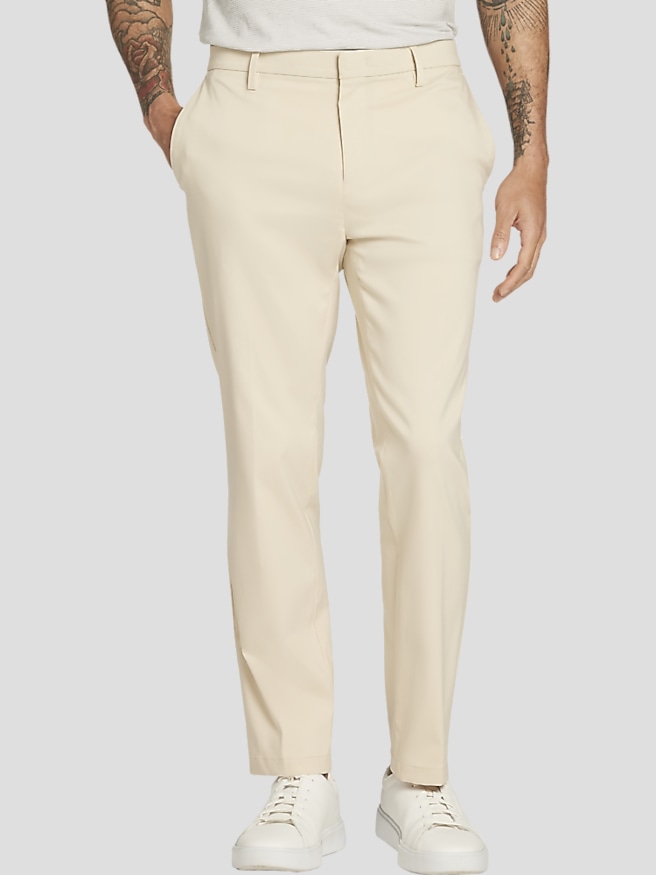
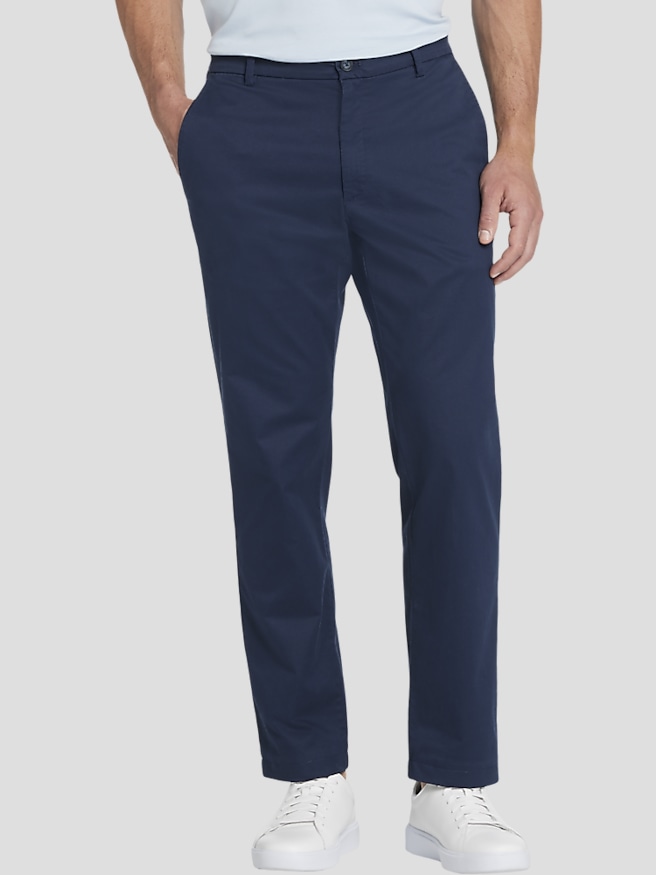
Tailored khaki pants bring a clean, defined shape to one of the most versatile neutrals in a wardrobe. Khaki describes the color, typically ranging from pale sand to deeper tan, while tailored describes a considered silhouette through the waist, seat, and leg. The result sits comfortably between denim and dress trousers: polished enough for many business-casual offices, yet easy to wear to dinner, a family gathering, or a weekend lunch. A tailored appearance does not necessarily mean custom construction or a close-fitting cut. It comes from balanced proportions, a smooth waistband, and fabric that follows the body without pulling. Within the broader category of tailored pants, khaki offers a particularly useful foundation because it pairs naturally with navy, white, charcoal, olive, and burgundy. A white button-down and brown leather loafers create a straightforward office outfit; a navy polo and clean sneakers give the same neutral color a more relaxed character. Adding a textured blazer brings definition without requiring a matching suit. Flat-front khakis have an uncluttered appearance that works well with tucked shirts, while pleated versions introduce depth at the waist and can provide additional room through the upper leg, depending on their construction. Neither detail determines how formal the entire outfit will feel. Fabric finish, leg shape, footwear, and the shirt worn with the pants all contribute. A pressed crease and smooth leather shoes make khakis look sharper, while an uncreased leg and a knit shirt keep the impression casual. For office professionals, teachers, or anyone moving between desk time and face-to-face conversations, that flexibility has practical value. Khaki trousers can also serve as a thoughtful gift for someone starting a new job or rebuilding a daily wardrobe, especially when their preferred measurements and fit are already known. Their appeal lies less in making a statement than in making familiar clothing combinations feel intentional, with enough structure to look put together without the formality of a full suit.
Fabric determines much of how tailored khaki pants feel during a full day of wear. Cotton twill is a familiar choice, recognizable by its subtle diagonal weave and substantial hand. It offers a balance of softness and structure, though its weight and finishing influence whether the pants drape crisply or feel more relaxed. Cotton blended with a small amount of elastane or spandex can add give when sitting, bending, or climbing stairs. Stretch is useful for movement, but it should support a good fit rather than compensate for a waistband or thigh that is too tight. Blends that include polyester may improve shape retention and wrinkle resistance, depending on the fabric and finish. Performance features such as moisture management, easy-care treatments, or enhanced stretch are specific to individual constructions and should be confirmed in the garment details rather than assumed from the word khaki. The same distinction applies to wrinkle-resistant and non-iron descriptions: these finishes can reduce upkeep, but laundering and drying instructions still matter. Fit is equally important to comfort and appearance. Slim cuts generally sit closer through the thigh and narrow toward the ankle; straight cuts maintain a more consistent line down the leg. Athletic proportions typically provide added space through the seat and thigh with a more defined lower leg, while roomier cuts allow additional ease. These terms vary across makers, so measurements and the actual garment shape are more useful than the label alone. A well-proportioned pair rests securely at the waist without needing a tightly cinched belt. Pockets should lie relatively flat, the fly should remain smooth, and the seat should allow sitting without strain. Rise affects where the waistband sits and how a tucked shirt looks above it. Length completes the silhouette: a slight break creates a soft fold over the shoe, while little or no break produces a cleaner finish. The most successful hem length also accounts for the shoes worn most often, since a substantial loafer and a low-profile sneaker meet the trouser leg differently.
The smaller construction details of tailored khakis become noticeable with repeated wear. Secure buttons, neatly finished seams, reinforced pocket openings, and a zipper that moves smoothly all contribute to everyday reliability. Pocket placement affects appearance as well as convenience: rear welt pockets tend to create a streamlined finish, while bulky contents can interrupt the line of even a carefully fitted pair. A phone, thick wallet, and key ring carried together may pull at the fabric, so a lighter pocket load helps preserve the intended drape. Belt loops should accommodate the belt being worn without bunching, and a neatly finished waistband should remain comfortable beneath a tucked shirt. Durability depends on more than fabric thickness. The quality of the weave, the strength of the seams, friction at the seat and inner thighs, and regular care all influence how trousers hold up. Following the care label is the best starting point, since some fabrics tolerate machine washing while others require professional cleaning. For washable khakis, separating colors, using the recommended water temperature, and avoiding unnecessary heat can help protect the fabric and finish. Promptly removing pants from the dryer, when tumble drying is permitted, can limit set-in wrinkles. Hanging them neatly after wear helps maintain their shape, and pressing at the recommended setting can restore a crisp crease when that suits the design. Stains deserve prompt attention with a treatment appropriate for the material; aggressive scrubbing can alter the appearance of the surface. Occasional tailoring can refine the length or waist, although the amount of possible adjustment depends on seam allowances and construction. Beyond maintenance, the lasting usefulness of khaki pants comes from matching their character to the occasion. They fit naturally into business-casual presentations, restaurant dinners, and gatherings where denim feels too informal, but they are not a substitute for formal attire when an invitation specifies it. With a comfortable rise, an appropriate leg shape, and a fabric suited to everyday movement, tailored khakis offer a dependable middle ground between dressed-up and relaxed.