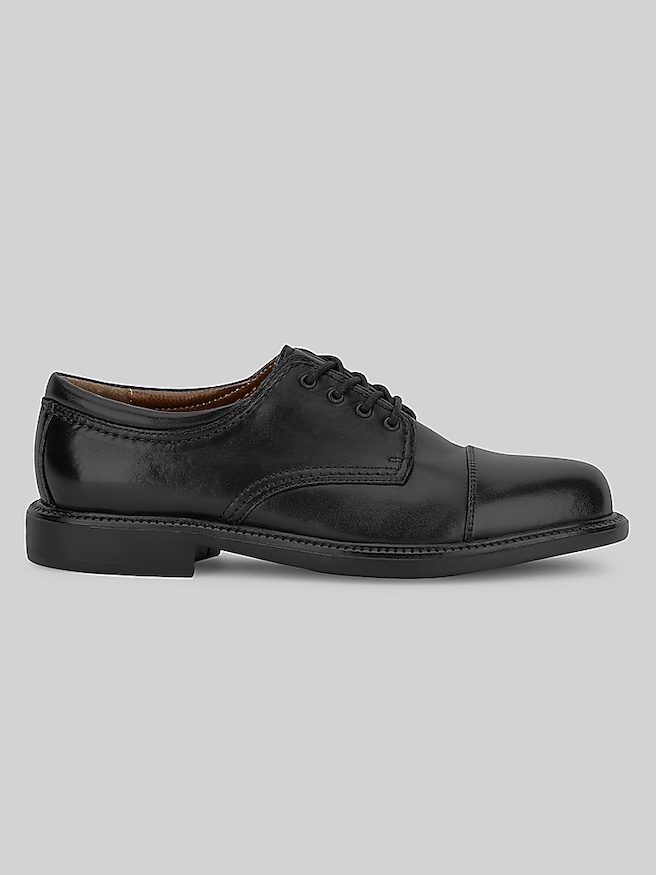
Supportive black work shoes combine cushioning, a stable fit, and underfoot structure to help make extended periods of standing and walking more comfortable. Depending on the design, that support may come from a contoured footbed, a cushioned midsole, a secure heel, or an outsole built for dependable traction. These features serve different purposes: cushioning softens the feel of each step, arch support helps distribute pressure, and a stable base helps the foot feel settled rather than unsteady. For someone moving between a reception desk and meeting rooms, working a dining room floor, or spending hours assisting customers, the right balance matters more than a thick sole alone. A shoe that feels plush for a few minutes may not provide the structure needed throughout a full shift, while an overly rigid design can feel restrictive during frequent walking. Black keeps the overall look versatile, pairing naturally with charcoal trousers, navy chinos, matching uniform pants, and tailored business clothing. Smooth uppers and understated stitching tend to suit more formal environments, while a rounded toe and a substantial sole can create a practical, approachable appearance for everyday work. Lace-up designs allow adjustments across the top of the foot, which can be useful when balancing a secure heel with enough space through the forefoot. Slip-on styles offer a streamlined profile, but their shape needs to hold the foot comfortably without relying on tightness at the toes. For workplaces that allow athletic-inspired footwear, Comfortable Black Work Sneakers provide a related option with a more casual silhouette. The best match depends on both the dress code and the work itself: standing at a counter, walking long corridors, and stepping repeatedly between hard floor surfaces place different demands on footwear. A polished appearance has greater everyday value when it comes with room to move naturally, a heel that stays in place, and support that feels consistent from the first appointment to the final task.
Materials and construction shape how supportive black work shoes feel, wear, and respond to regular use. Leather uppers can provide structure and gradually conform to the foot, although the amount of give depends on the leather, lining, and overall design. Smooth leather also works well with tailored clothing and can be maintained with care products appropriate to its finish. Synthetic uppers may offer straightforward cleaning and a uniform appearance, while textile panels can add flexibility and ventilation when a workplace permits a less formal look. Inside the shoe, smooth linings and well-finished seams help limit friction, especially around the heel and across the toes. A removable footbed can make airing out the interior easier and may accommodate an appropriate replacement insert, provided the shoe has enough depth. Adding a thick insert to an already snug shoe can crowd the foot and lift the heel too high, so interior space matters as much as the insert itself. Fit should leave room for the toes to move without allowing the foot to slide forward with each step. The widest part of the foot should align comfortably with the widest part of the shoe, with no pinching along the sides or pressure across the instep. Trying footwear with the socks intended for work gives a more realistic sense of fit, and checking both feet helps account for natural differences in size. The sole should flex where the forefoot bends while maintaining enough structure to feel steady through the middle and heel. Outsole material and tread also deserve attention, particularly on smooth commercial flooring. A textured bottom does not automatically establish slip resistance; any stated performance features should match the workplace’s requirements and expected surfaces. Jobs involving impact hazards, electrical exposure, or other regulated conditions may require designated protective footwear beyond an ordinary supportive work shoe. Comfort, traction, and protection are related considerations, but none should be assumed from appearance alone.
Lasting comfort also depends on how supportive black work shoes are used and maintained. Repeated contact with hard floors can gradually compress cushioning, while worn heel edges and flattened tread can change the way a shoe feels underfoot. An upper may still look presentable even when the interior has lost some of its original resilience, making the condition of the footbed and outsole worth checking alongside the finish. Uneven wear, loose stitching, a shifting heel, or a sole that has become noticeably less steady can signal that the footwear needs attention. Regular care starts with removing surface dirt using a method suited to the material. Smooth leather typically benefits from gentle cleaning, occasional conditioning when appropriate, and a compatible black polish or cream to maintain an even appearance. Suede, nubuck, coated leather, and textiles need their own cleaning methods rather than the same treatment used on polished leather. Excess moisture should be blotted away, and shoes should dry naturally away from direct heat, which can damage some uppers and adhesives. Giving the interior time to air out between uses helps manage lingering moisture; rotating between pairs can make that routine easier for someone working consecutive shifts. Clean socks, intact laces, and secure fastenings also contribute to a consistent fit. For client meetings, a neatly maintained black shoe can complement a pressed shirt and tailored trousers without drawing attention away from the overall outfit. For an active shift, a secure fit and an appropriate outsole can matter more than decorative details. Someone whose day includes both desk work and time on foot may prefer a restrained design that moves comfortably between those settings. The most useful supportive black work shoes bring these needs together: an appearance suited to the workplace, materials that respond well to routine care, and construction matched to the demands of the day. That balance makes them a practical foundation for a work wardrobe built around repeat wear rather than occasional use.