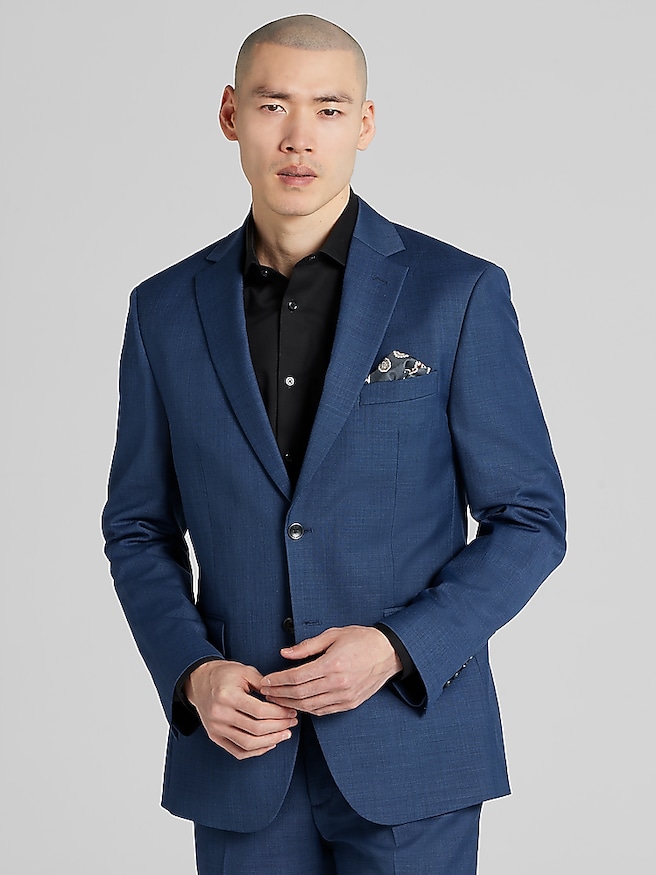
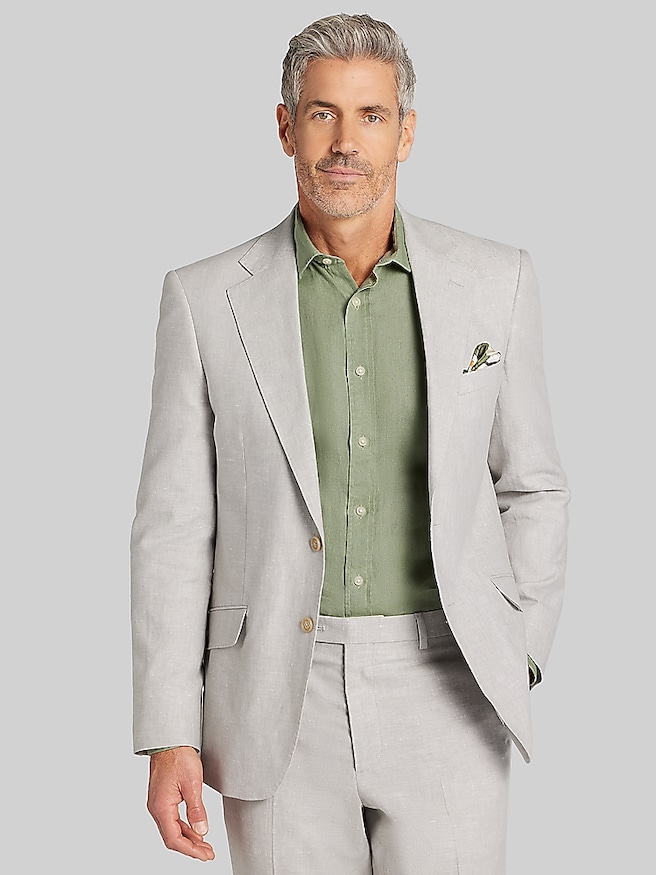
Finding a suit to fit begins with more than choosing a color or pattern. The right suit should follow your natural shape, feel comfortable through a full range of movement and create a clean, balanced outline from every angle. Whether you are building a dependable wardrobe for work, preparing for a formal celebration or replacing an older outfit, pay close attention to the way the jacket and trousers work together. The jacket shoulder seam should rest at the edge of your shoulder bone rather than extending beyond it or pulling inward. Its collar should lie flat against the back of your neck and sit neatly alongside your shirt collar, without a noticeable gap. The lapels should rest smoothly against your chest, and the front should close without strain, puckering or an obvious X-shaped crease. When the jacket is buttoned, it should feel secure while still allowing comfortable movement and enough room for a natural layer underneath. A well-proportioned jacket generally covers the seat and falls around the point where your fingers meet your palms when your arms hang at your sides. The sleeves should finish near the wrist bone, leaving a small, intentional amount of shirt cuff visible. These details may seem subtle on their own, but together they make the difference between clothing that looks borrowed and clothing that feels made for you.
Trousers should be considered with the same care as the jacket. The waistband should sit comfortably at the hips or natural waist without relying on a tightly cinched belt, while the seat and thighs should drape smoothly without clinging, sagging or creating diagonal strain lines. At the hem, the fabric should meet the top of your shoes with a minimal break or a clean, nearly unbroken finish, depending on your preferred silhouette. Fit labels such as slim, tailored and classic can provide a helpful starting point, but body proportions vary, so the most flattering choice is the one that follows your frame without restricting it. A person with a longer torso may prefer different jacket proportions than someone with a shorter torso, while broader shoulders, a fuller midsection or a longer leg can all affect how a standard size sits. Small adjustments through professional alterations can refine sleeve length, trouser length, the waist and other areas, but alterations work best when the underlying size is already close. Try on a suit while standing, sitting and walking, and lift your arms naturally to make sure the fabric remains comfortable during the moments that matter, from greeting guests to carrying a briefcase or moving between a ceremony and a reception. For a formal gathering, coordinated wedding party attire and polished finishing touches can help everyone look composed while still allowing each person to feel comfortable; explore Suit To A Wedding for additional inspiration when dressing for that setting.
A suit to fit can serve many roles throughout the cooler months and beyond. A versatile neutral foundation can move from the office to an evening dinner, while a refined darker option can bring a confident finish to ceremonies, receptions, interviews and other dress occasions. Separating the jacket and trousers with complementary clothing can also extend the usefulness of a suit, giving you more combinations for business days, travel and social plans. Consider the climate and setting when selecting fabric weight, lining and construction: breathable materials may feel more comfortable in heated interiors or during active events, while a more substantial weave can provide welcome structure as the weather cools. Color, pattern and finish should suit both the occasion and the rest of your wardrobe, especially if you want to wear the pieces in several ways. A well-chosen suit can also make a thoughtful gift for a graduate beginning a first professional role, someone preparing for a new job, a member of a wedding party or a man whose wardrobe needs a reliable formal foundation. Because fit is personal, gifting is often easiest when you know the recipient’s usual size, preferred silhouette or access to fitting assistance. Leave room for a shirt, light knit layer or other clothing worn beneath the jacket, and consider how the suit will be used rather than focusing only on the hanger. The best choice is one that helps the wearer stand naturally, move easily and feel prepared when the room turns toward him. Proper care will help preserve that fit: use a substantial hanger that supports the shoulders, allow the fabric to air after wear, follow the care instructions and reserve professional cleaning for when it is needed. With thoughtful sizing, practical versatility and attention to the details at the shoulders, collar, chest, sleeves, waist, seat and hem, finding a suit to fit becomes a straightforward way to build confidence into everyday dressing and important occasions alike.