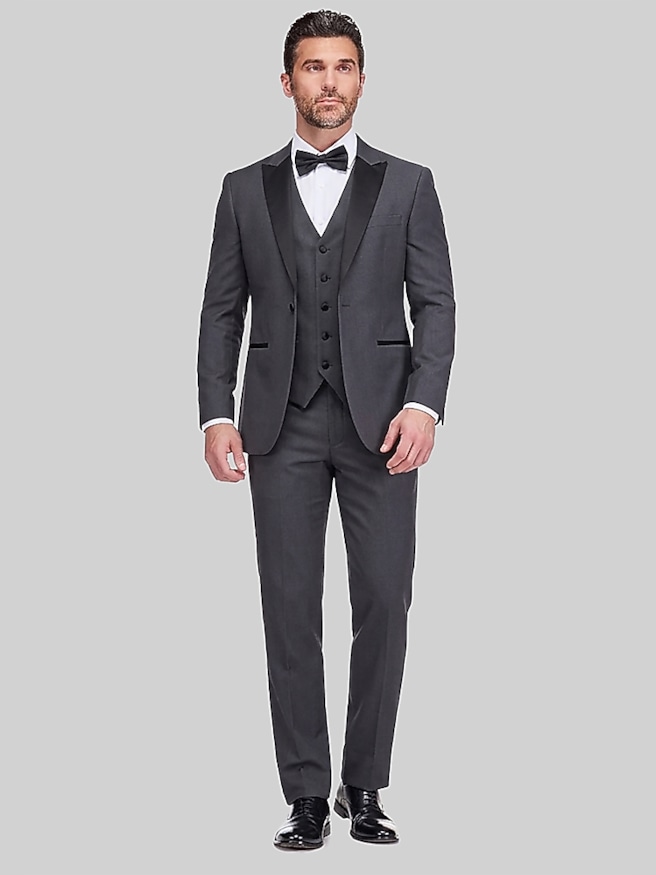
A suit brings a jacket and matching trousers together into a coordinated outfit, with fabric, color, and proportion giving the pieces a consistent appearance. That simple foundation can look quietly professional at a morning meeting, celebratory at a wedding, or appropriately formal at an evening reception. Unlike a sport coat worn with contrasting pants, a matching suit creates an uninterrupted line from shoulder to ankle. A two-piece suit keeps the silhouette straightforward, while a three-piece suit adds a matching vest for another layer of structure and coverage. Navy and charcoal are versatile starting points because they work with a broad range of shirts, ties, and leather shoes. Medium gray offers a softer look that still feels polished, and subtle checks or pinstripes introduce pattern without necessarily making an outfit feel busy. The effect depends as much on scale as color: a fine pattern may read almost like a solid from across a conference room, while a larger windowpane becomes a more noticeable part of the outfit. For a wardrobe centered on meetings, presentations, and office routines, Work Suits connect that coordinated appearance with everyday professional dressing. Beyond the workplace, suits serve graduates preparing for interviews, wedding guests dressing for a stated dress code, and anyone who wants a dependable option for milestone celebrations. A dark suit can suit many formal occasions, though it does not automatically replace a tuxedo when an invitation specifies black tie. The finishing pieces help establish the mood. A crisp shirt and restrained tie keep attention on the wearer during an interview; a textured tie and softly folded pocket square add personality at a reception. Even small choices, such as the width of a lapel or the amount of shirt cuff showing beneath a sleeve, affect the overall impression. The strongest combinations feel considered without looking overworked, leaving enough room for personal taste while respecting the setting.
Fabric and construction influence how a suit feels through a full day, not just how it looks in a mirror. Wool is a traditional suiting material because it can drape cleanly, manage moisture, and recover from some everyday creasing. Its comfort varies with the weight and weave of the cloth; a lighter, more open weave feels distinct from a dense flannel with a softly brushed surface. During cooler months, a weightier fabric can provide welcome warmth on the walk between a station and an office, although indoor temperatures and time spent sitting still matter. Wool blends may introduce stretch or change the texture and care requirements, while cotton often gives a suit a more relaxed character and develops visible creases with wear. Linen has an airy feel and a naturally rumpled appearance that belongs more readily in relaxed settings than in environments calling for a consistently crisp finish. No single fiber tells the whole story. Lining, internal structure, seam quality, and the fabric’s response to movement all contribute to comfort and longevity. A very fine, smooth cloth may feel luxurious but benefit from a gentler rotation than a sturdier fabric chosen for frequent wear. Fit deserves equal attention. Jacket shoulders should follow the wearer’s shape without extending into pronounced ledges or pulling inward, and the collar should rest near the shirt collar rather than standing away from it. With the jacket buttoned, the front should lie reasonably smooth instead of forming a tight X around the fastening. Trousers need enough room through the seat and thighs to sit, walk, and climb stairs comfortably. Slim, tailored, and classic descriptions are useful starting points, but their proportions vary, so the label alone cannot establish the right fit. Someone who spends hours at a desk may appreciate more ease through the waist and upper leg, while someone seeking a closer silhouette still needs freedom of movement. Alterations can refine sleeve length, trouser hems, and some shaping, but a sound fit through the shoulders and overall jacket length provides a better foundation.
Everyday details determine whether a suit becomes a reliable part of a wardrobe or stays reserved for rare occasions. Trouser length changes the line of the outfit: a slight break lets the hem rest gently on the shoe, while little or no break creates a cleaner, shorter finish. The choice works best when considered alongside the leg opening and the shoes normally worn with the suit. Jacket sleeves can leave a modest edge of shirt cuff visible, provided the shirt itself fits properly. For a long day that starts with a presentation and ends with dinner, a comfortable shirt, supportive dress shoes, and a suit with enough ease can matter more than decorative extras. An overcoat should accommodate the jacket beneath it without compressing the shoulders or bunching the sleeves. Care between wearings helps preserve both appearance and useful life. After a day of wear, empty the pockets and place the jacket on a broad, shaped hanger so its shoulders have support. Hang trousers neatly along their crease or with an appropriate trouser hanger, and allow both pieces to air before putting them into a crowded closet. A clothing brush can lift surface dust and lint, while prompt attention to a spill can prevent a small mishap from becoming a lasting mark. Blotting gently is usually safer than rubbing, and the care label should govern cleaning and pressing decisions. Dry cleaning is best based on the garment’s instructions and actual cleaning needs rather than treated as an automatic step after every outing. When professional cleaning is needed, having matching pieces treated together helps maintain a consistent appearance over time. Alternating suits gives fabric time to rest, and avoiding overfilled pockets reduces strain on seams and distortion around the hips. As a gift for a graduation, a career milestone, or another significant occasion, a suit is most successful when the recipient can participate in choosing the fit and arranging alterations. That personal involvement turns an otherwise difficult sizing decision into something practical: clothing that feels comfortable, fits the wearer’s routine, and looks appropriate whenever the occasion calls for it.