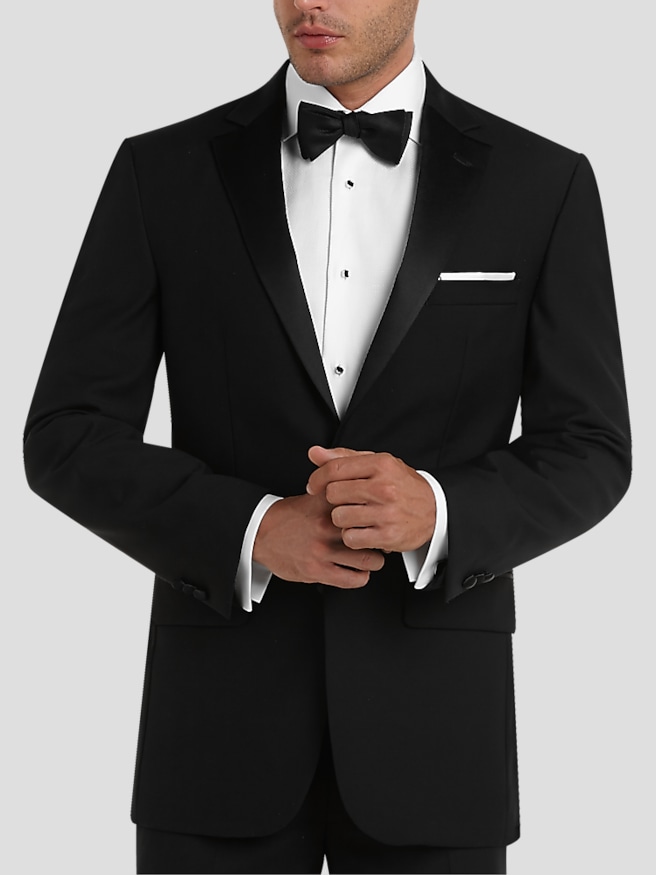
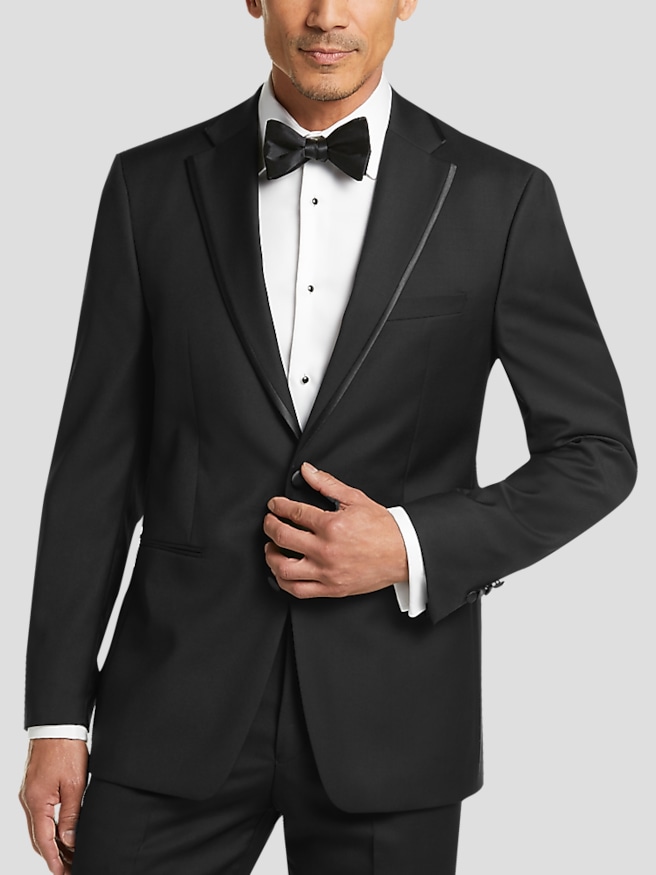
A tuxedo brings a distinct sense of occasion to black-tie weddings, formal receptions, charity galas, and evenings when the invitation calls for more than a business suit. Its defining details are the contrast facings on the lapels, typically satin or grosgrain, with coordinating trim often appearing along the outside seam of the trousers. Those touches give the silhouette depth without relying on a bold pattern: a matte wool body sits against a smooth satin lapel, or a finely ribbed grosgrain facing adds quieter texture. Black remains the most traditional choice, while midnight blue offers a similarly formal appearance with a subtle distinction under evening lighting. Peak lapels create a strong, upward line across the chest and shoulders; a shawl collar forms a continuous curve with a softer visual effect. Both have an established place in black-tie dressing. A single-breasted jacket offers a clean, open front, while a double-breasted design adds overlap and a more substantial shape through the torso. Fabric composition matters as much as those visible details. Wool is valued for its drape, breathability, and natural resilience, helping a tuxedo maintain its shape through a ceremony, seated dinner, and time on the dance floor. Wool blended with mohair can have a crisper hand and a restrained luster, while wool-silk blends may bring a smoother feel and more noticeable sheen. The result depends on the weave, fabric weight, and finishing, not simply the fiber name. A high wool fineness number describes finer fibers rather than guaranteeing greater durability; especially delicate cloth may need gentler handling than a more substantial weave. For someone attending formal events regularly, a balanced fabric with a fluid drape and enough body to recover between wears can be particularly useful. For a groom, a wedding-party member, or a guest preparing for an important celebration, the appeal lies in a coordinated appearance that feels intentional from the first photograph to the final toast.
Fit gives those formal details their impact. A tuxedo jacket should sit cleanly across the shoulders, with its collar resting against the shirt collar rather than pulling away at the back of the neck. The front should close without pronounced tension lines radiating from the button, and the lapels should lie smoothly instead of bowing outward. A close silhouette does not need to feel restrictive: enough room through the chest and upper back makes it easier to reach for a glass, embrace a friend, or sit through dinner comfortably. Slim, tailored, and classic fit descriptions offer useful starting points, but their proportions vary, making actual shoulder shape, torso length, and trouser measurements more informative than the label alone. Jacket length also affects the overall balance; a body that is too short can make the proportions look compressed, while excessive length can overwhelm the wearer. Sleeves generally allow a narrow band of shirt cuff to show, creating a crisp transition between the dark jacket and the shirt. Trousers deserve equal attention because they establish an uninterrupted line from the waist to the shoes. A waistband that stays in place without pinching, a comfortable rise, and enough room through the seat and thigh help the fabric fall naturally. Side adjusters provide a clean finish without a visible belt, and trousers designed for suspenders can offer comfortable support while preserving that smooth waistline. A slight break or almost no break at the hem often complements formal footwear, though the right length depends on the trouser opening and personal preference. Inside the jacket, canvas construction can help shape the chest and lapel roll, while smooth lining allows the garment to move over a shirt without catching. Neat seams, secure buttons, and carefully finished edges are useful signs of considered workmanship. Alterations to sleeve length, waist shaping, or trouser hems can refine the result, but a well-proportioned shoulder is a better starting point than a jacket that needs major reconstruction.
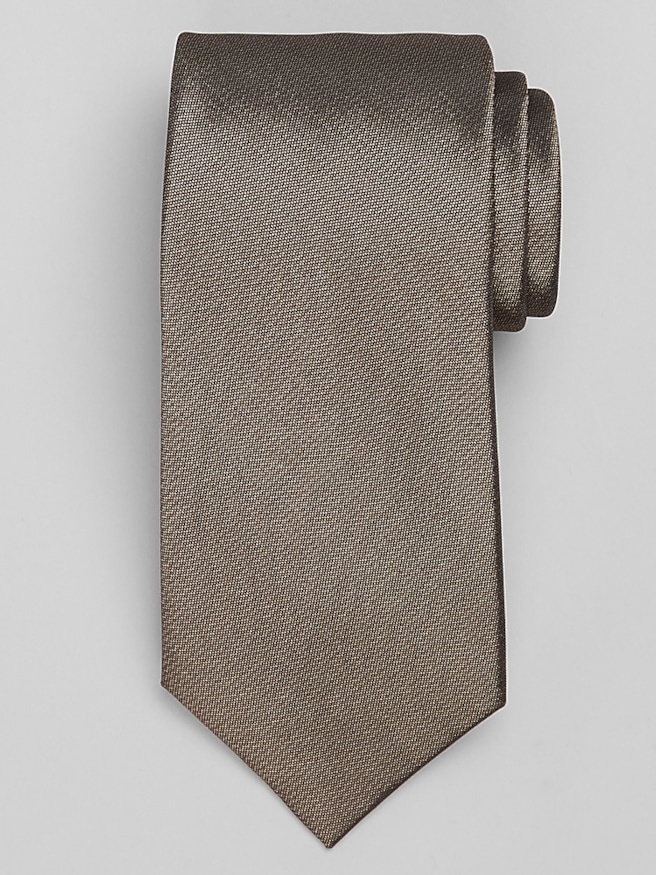
The supporting pieces work best when they reinforce the tuxedo rather than compete with it. A white formal shirt creates a clear contrast, with a pleated, textured, or plain front offering varying degrees of visual detail. A turndown collar is a versatile choice for contemporary black tie, and French cuffs provide a place for understated cufflinks. Shirt studs belong with shirt fronts designed to accommodate them; a concealed placket offers another clean approach. A black bow tie in a texture that relates to the lapel facing keeps the neckline cohesive, while a self-tied shape has the slight irregularity associated with traditional evening dress. Depending on the jacket and ensemble, a cummerbund or low-cut formal waistcoat can cover the waistband and keep the shirt from interrupting the line between jacket and trousers. Highly polished black leather or patent leather shoes complete that line, and socks long enough to cover the calf prevent a strip of bare skin from showing when seated. A simple white pocket square adds contrast without making every accessory look mechanically matched. When an invitation calls for a suit rather than black tie, the Suit Brown Tie page offers a separate direction for coordinating a suit and necktie; that combination has a different role from a traditional tuxedo ensemble. Keeping formalwear looking sharp afterward depends on measured care. The garment label should determine the cleaning method, especially when the body fabric, lapel facing, and trim have different needs. Professional cleaning is appropriate when required, but unnecessary cleaning after every brief wear can place extra stress on fabric and finishing. Allowing the jacket and trousers to air before storage, using a broad, shaped jacket hanger, and protecting the ensemble with a breathable garment bag help preserve its form. Trouser hangers should support the fabric without leaving harsh marks. Gentle brushing with a suitable clothing brush can lift surface dust from wool, while spills and persistent stains are best handled promptly by a professional. Direct heat and heavy pressing can mark delicate facings or create unwanted shine, so pressing instructions deserve attention. With thoughtful care and a fit that allows natural movement, a tuxedo can remain a dependable part of a formal wardrobe across many occasions.