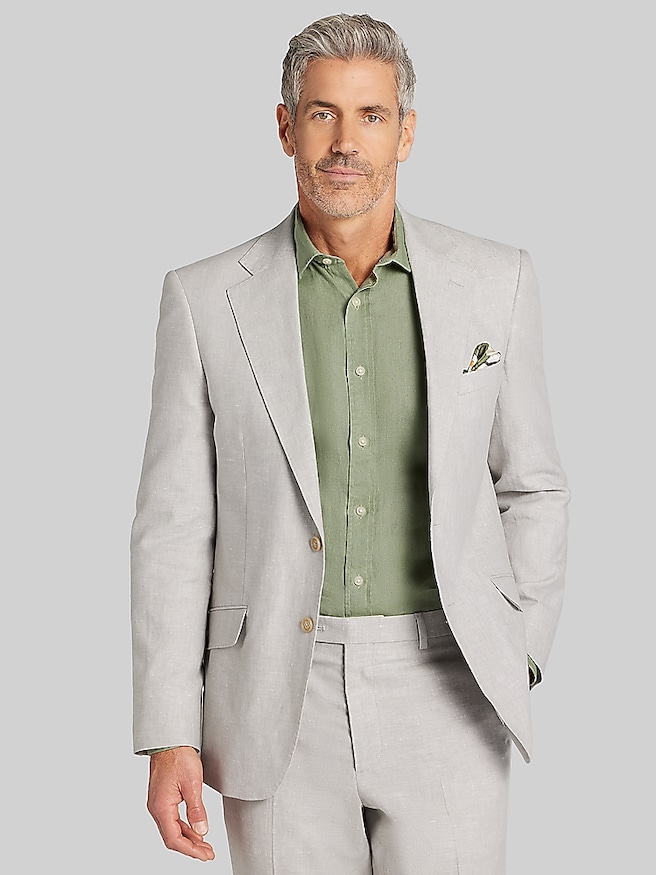
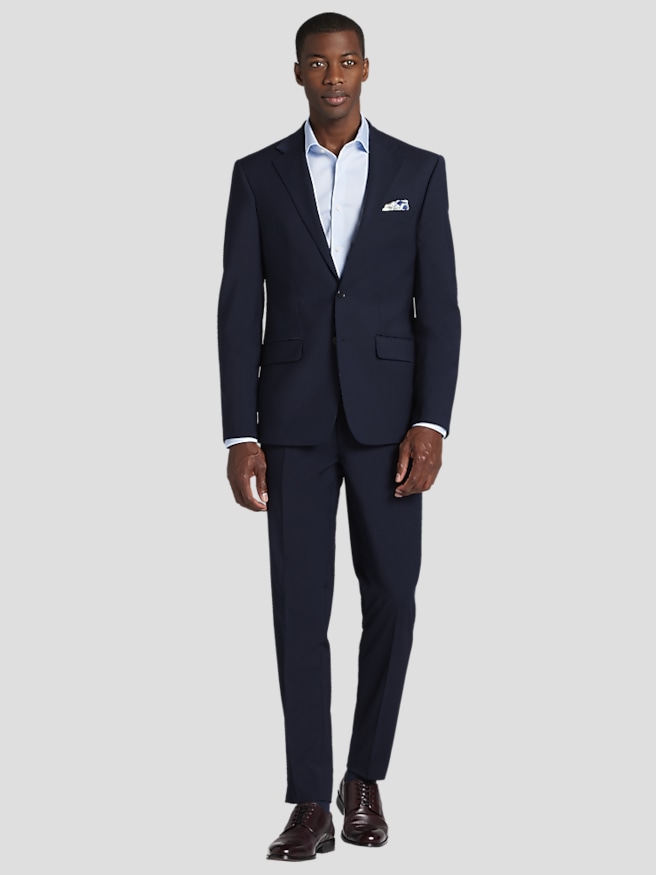
A well-fitted suit follows the body’s shape without squeezing, sagging, or restricting everyday movement. Its appeal comes from balance: shoulders that sit cleanly, a jacket that defines the torso, and trousers that fall in an unbroken line toward the shoes. Whether worn for a job interview, a wedding, or a presentation, that balance makes a stronger impression than an especially tight cut. The shoulder seam should generally meet the point where the shoulder curves into the upper arm, with the fabric resting smoothly rather than forming dents or extending noticeably beyond the body. The jacket collar should sit against the shirt collar without a visible gap or a ridge of bunched fabric beneath it. Across the chest, a buttoned jacket should feel close but comfortable, with lapels lying flat and no pronounced X-shaped pulling around the fastening. A little shaping through the waist creates definition; excessive tension can make even a carefully pressed suit look strained. Jacket length also affects proportion. A traditional jacket generally covers the seat, while shorter cuts create a more abbreviated silhouette that may not suit every build or occasion. Sleeves typically finish near the wrist bone, allowing about a quarter-inch to a half-inch of shirt cuff to show when the arms hang naturally. These details work together rather than in isolation. A jacket can have the right sleeve length and still feel wrong if its shoulders are too broad or its chest is too narrow. Comfort matters just as much once the wearer sits at a conference table, reaches for a handshake, or spends several hours at a reception. A suit is not expected to move like athletic clothing, but it should allow ordinary gestures without persistent pulling. Clean fit gives the wearer room to focus on the occasion instead of adjusting a collar, tugging at a hem, or bracing against a tight waistband.
Suit fit describes the overall proportions of both the jacket and trousers, not simply the number on a size label. Classic fits generally offer more room through the chest, waist, seat, and thighs, making them appealing to someone who prefers an easy drape or needs space through a fuller build. Slim fits usually bring the jacket closer to the torso and narrow the trouser leg, although measurements vary among cuts. For a particularly close silhouette, Suit Extra Slim Fit emphasizes a trim profile; the important distinction is that close-fitting clothing should still hang smoothly rather than cling. A broad-shouldered wearer with a narrow waist may need a jacket that accommodates the upper body before the midsection is refined, while someone with muscular thighs may find that a sharply tapered trouser feels restrictive despite fitting at the waist. Trouser rise, the distance between the crotch seam and waistband, influences both comfort and where the pants sit on the body. The waistband should rest securely at its intended position without digging in or depending on a tightly cinched belt. Through the seat and thighs, fabric should drape without deep tension lines, flaring pockets, or excess folds. At the hem, a slight break creates a small fold where the trousers meet the shoes, while a no-break finish gives a cleaner, shorter line. The best balance depends on leg width, footwear, and personal preference rather than one universal measurement. Flat-front trousers offer a smooth appearance, while pleats can provide additional room when sitting and moving. Tailoring can refine sleeve length, trouser hems, and some waist shaping, but major changes to shoulder construction or jacket length are more involved and may disrupt the garment’s proportions. A sound starting fit is especially useful for a first professional suit, when dependable comfort and versatility matter more than chasing the narrowest possible shape.
Fabric and construction influence how a suit feels, holds its shape, and stands up to repeated wear. Wool is valued for its natural resilience, breathability, and ability to drape cleanly, making it a practical choice for many business and social settings. Wool blends can combine that tailored appearance with other qualities, depending on the fibers used and their proportions. A small amount of stretch may make sitting or reaching more comfortable, but stretch does not compensate for a jacket or waistband that is too small. Cotton often has a less formal character and develops visible creases, while linen has a textured surface and a naturally rumpled finish that suits more relaxed occasions. Fabric weight, weave, lining, and internal structure all contribute to the finished feel. A softly constructed jacket can follow the body with less stiffness, while a more structured chest and shoulder can create a defined outline. For frequent wear, fabric that recovers well from creasing and construction that supports the garment’s shape are useful considerations; a finer or softer cloth is not automatically the most durable choice. Solid navy and charcoal offer a restrained foundation for interviews, office settings, and celebrations, while subtle checks and stripes add visual interest without requiring elaborate accessories. A crisp shirt, a proportionate tie, and polished shoes let the fit remain the focus. Care helps preserve that effect over time. A broad, shaped hanger supports the jacket’s shoulders, and properly hung trousers are less likely to develop unwanted folds. Emptying pockets after wear prevents keys and other objects from distorting the fabric. Gentle brushing and time to air out can reduce surface dust and odors between cleanings. The garment’s care label should determine cleaning and pressing methods, since fibers, linings, and internal components may respond differently to treatment. Rotating suits between wears also gives fabric time to recover. For a graduation gift, a career milestone, or a personal wardrobe refresh, a suit chosen around the wearer’s build and routine can become a dependable part of getting dressed, with enough comfort for a full day and enough polish for its important moments.