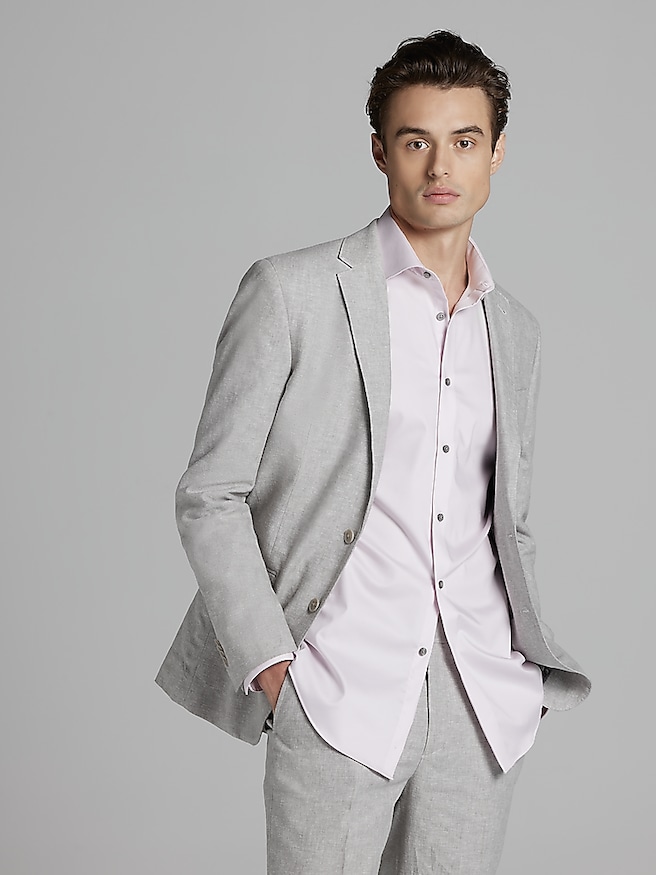
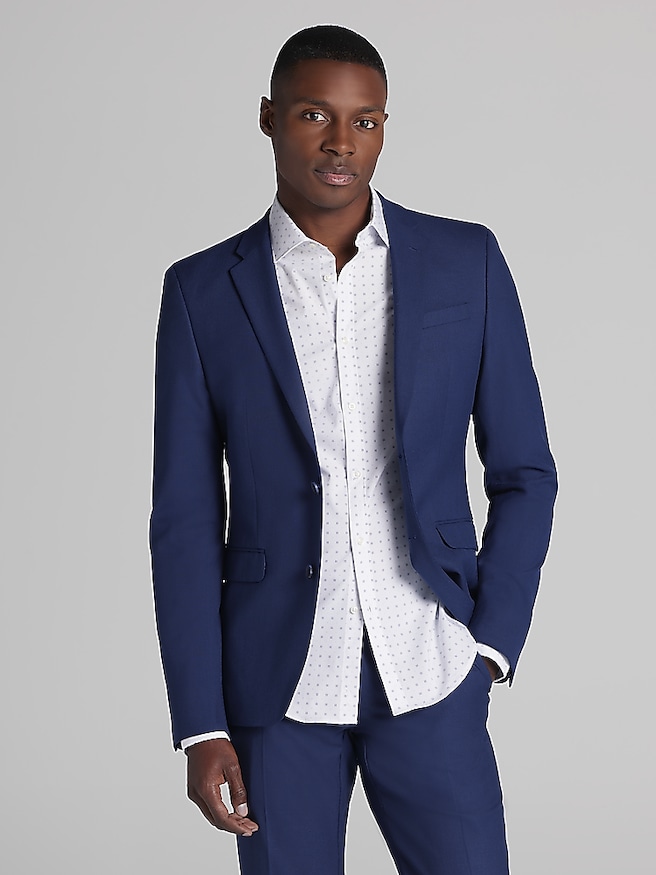
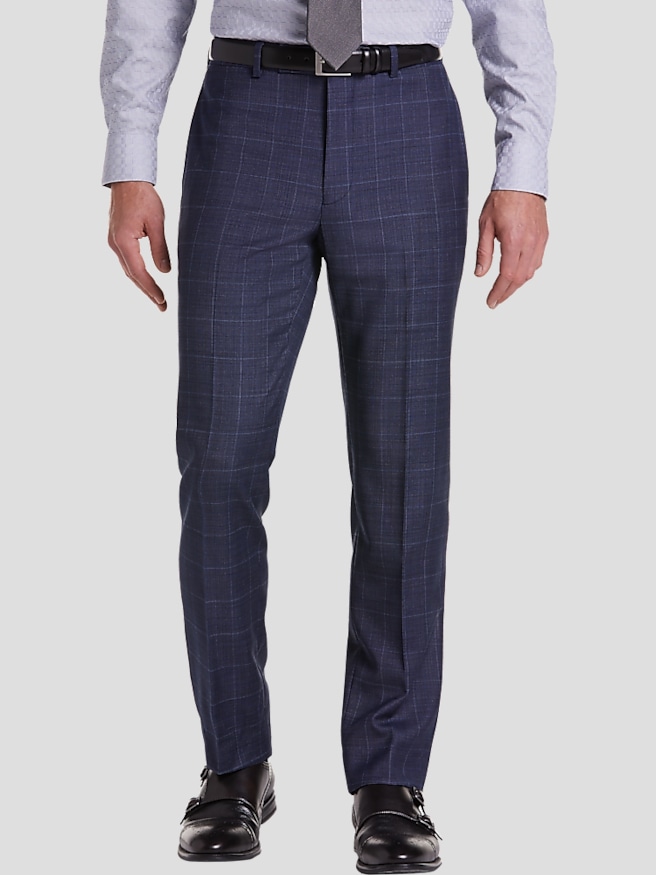
An extra slim fit suit is designed to create a close, sharply tapered silhouette through the jacket and trousers. Compared with a traditional cut, it generally has a more closely shaped chest, a defined waist, narrower sleeves, and trousers that taper to a smaller leg opening. The effect is clean and deliberate: less excess fabric around the torso, a neat line through the seat and thigh, and a trouser hem that sits close to the shoe. Exact proportions vary by design, so “extra slim” describes the overall cut rather than a universal set of measurements. This silhouette often suits lean builds and anyone whose proportions work comfortably with a narrower jacket and trouser profile. A broader chest, fuller thighs, or muscular shoulders may call for additional room, even when a closely tailored look is the goal. The defining feature is shape, not tightness. A well-fitting jacket should follow the body without pulling into an X around the fastening button, and its lapels should lie flat rather than bow outward. Shoulder seams should sit near the natural shoulder edge, with enough space across the upper back for ordinary movement. Trousers should rest smoothly through the seat and allow comfortable sitting without strain at the pockets or seams. For someone comparing silhouettes, Mens Slim Fit Suits offer a related cut that generally leaves more room while maintaining a tapered appearance. An extra slim fit suit makes sense when that closer outline feels natural standing, walking, and seated, whether the setting is a client presentation, a wedding ceremony, or a formal school event. The best result looks composed from every angle, with the jacket and trousers working together rather than either piece appearing noticeably tighter than the other. That balance matters more than choosing the narrowest possible size or treating the fit label as a substitute for how the suit actually sits on the body.
Fabric plays an important role in how an extra slim suit feels and how well its shape holds throughout an event. Wool is a familiar choice for tailored clothing because it can drape smoothly, manage moisture, and recover from some everyday creasing. A finer, softer wool can have a fluid appearance, while a more textured weave gives the surface additional depth. Wool blends combine that character with other fibers, and fabrics containing a small amount of elastane can provide useful give through a closely cut jacket or tapered trousers. Stretch supports movement, but it cannot compensate for a jacket that is too small across the chest or trousers that grip the thighs. Polyester and other synthetic fibers may contribute wrinkle resistance and durability, although the finished feel depends on the blend, weave, and construction. Lining also affects comfort: a smooth interior helps the jacket move over a dress shirt, while the amount and placement of lining influence its weight and feel. For frequent office wear, a fabric with good recovery and a restrained surface texture can be practical through commutes, meetings, and long stretches at a desk. For ceremonies and evening celebrations, a smoother finish can emphasize the suit’s clean outline without requiring a bold pattern. Navy and charcoal create a versatile foundation for business and milestone occasions, while black offers a crisp, formal-looking appearance where the dress code supports it. Subtle checks, fine stripes, and textured solids add interest without obscuring the tailoring. Pattern placement and scale become especially noticeable on a close-fitting silhouette, making restrained designs easy to pair with a solid shirt. Durability depends on more than fiber content alone; fabric weight, seam construction, friction, and care all matter. Enough ease at the elbows, seat, and knees helps limit repeated stress on those areas. A suit that accommodates normal movement is better positioned to keep its intended shape than one whose seams remain under tension all day.
The proportions of an extra slim fit suit carry through to the clothing and accessories worn with it. A dress shirt with a tidy torso and sleeves fits more smoothly beneath a narrow jacket than one with fabric bunching at the waist or upper arms. Tie width can echo the scale of the lapels, and shoes with a streamlined profile keep the transition from tapered trousers to footwear visually balanced. A slight trouser break creates a small fold above the shoe, while little or no break gives the leg a particularly clean finish; either approach works best when the hem hangs freely instead of catching on the calf. Jacket length should remain proportionate to the torso rather than becoming excessively short in pursuit of a close fit. Sleeve length is another small detail with a visible effect, often allowing a narrow edge of shirt cuff to show. These details help the same silhouette feel appropriate for a job interview, graduation portraits, a wedding reception, or an anniversary dinner. For a first suit or a milestone gift, knowing the recipient’s measurements and preferred fit is more useful than guessing from a casual shirt size. Tailoring can refine trouser hems, sleeve length, and some areas of shaping, but major changes to the shoulders or overall jacket balance are more limited. Between occasions, a broad, supportive hanger helps preserve the jacket’s shoulders, and trousers benefit from hanging neatly rather than remaining folded over a chair. Empty pockets reduce distortion, while gentle brushing can remove surface dust before it settles into the fabric. Following the care label is essential, particularly with blended fibers, stretch fabrics, and structured jackets. Professional cleaning when needed, prompt attention to spills, and avoiding unnecessary heat help protect the finish. Allowing the suit to air after wear and storing it with room around it can also help maintain its appearance. With considered proportions and consistent care, an extra slim silhouette can remain a polished part of a wardrobe for both regular commitments and important celebrations.