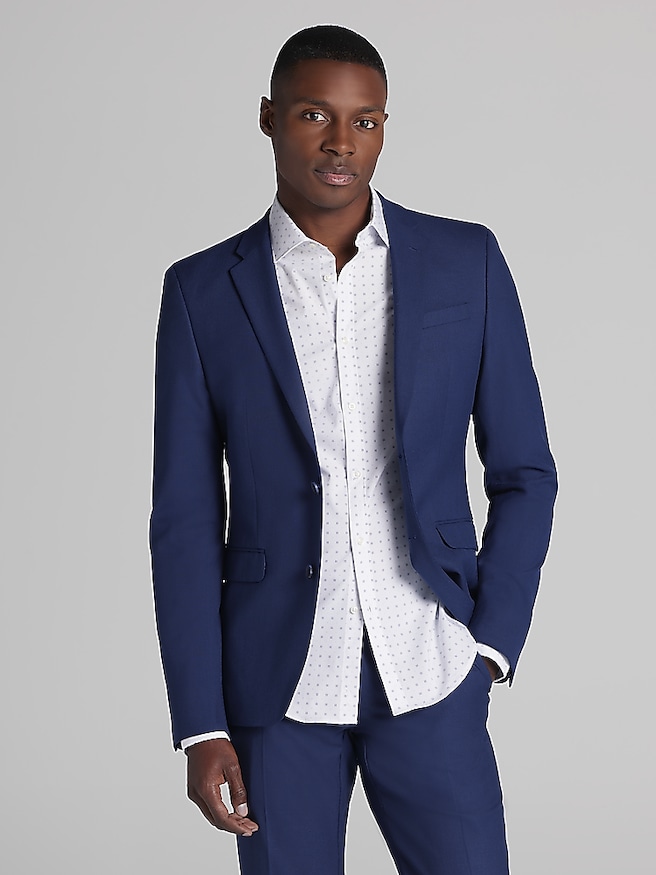
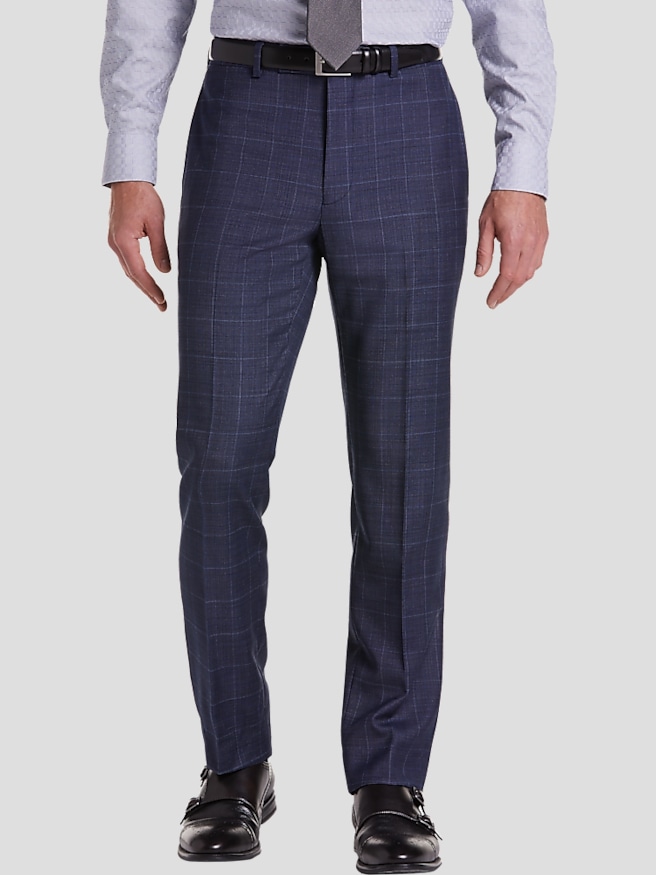
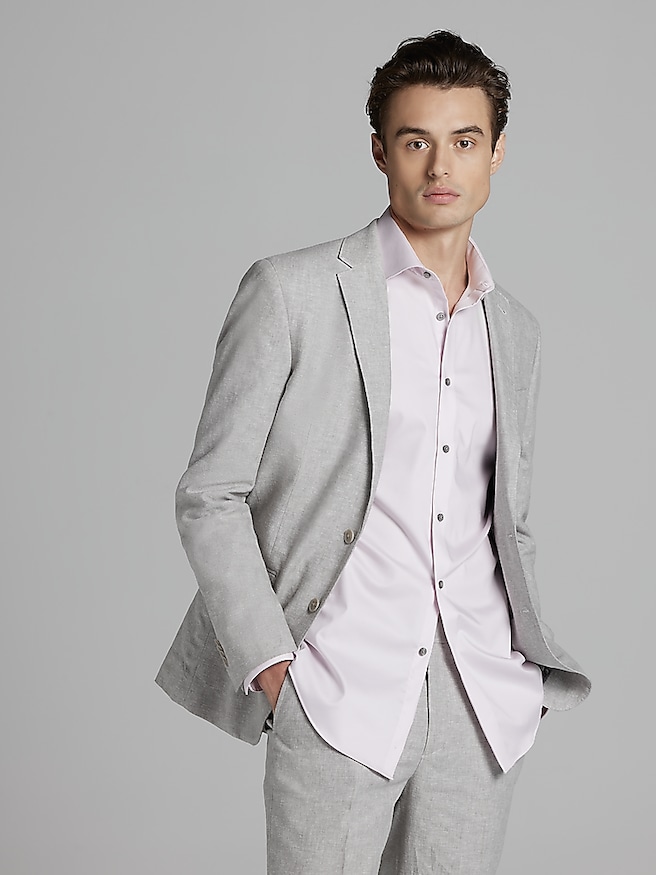
Men's slim fit suits feature a close-to-the-body silhouette through the chest and waist, narrower sleeves, and tapered pant legs for a clean, modern appearance. The shape follows the body without the extra fullness associated with a classic fit, but a well-fitting slim suit should never feel restrictive. Its appeal comes from proportion: a defined shoulder line, a gently shaped jacket, and trousers that fall neatly from the hip to the shoe. A two-piece suit pairs a matching jacket and pants, while a three-piece suit adds a vest for a more layered, dressed-up look. Slim fit describes the cut rather than a particular fabric, color, or level of formality, and measurements can vary between suit designs. The cut often complements lean builds, though suitability depends more on individual proportions and comfort than on a body-type label. Someone with broad shoulders or muscular thighs may need additional room in those areas while still preferring a tapered waist and leg. At the shoulders, the jacket should sit smoothly without extending far beyond the natural shoulder or creating dents below the sleeve seam. The collar should rest against the shirt collar, and the buttoned front should lie flat rather than pull into an X across the stomach. Sleeves generally leave about a quarter to a half inch of shirt cuff visible, depending on personal preference and the shirt's fit. Pants should have enough space through the seat and thighs to sit comfortably, with a taper that does not catch tightly around the calves. A slight break or no break at the hem can emphasize the streamlined shape without exposing excessive ankle when standing. Walking across an office, reaching for a handshake, and sitting through a wedding ceremony all require ease that a mirror alone cannot reveal. Hemming and modest adjustments at the waist can refine the silhouette, but they cannot reliably correct a jacket that is fundamentally too narrow through the shoulders or chest. The strongest slim fit is precise, not squeezed.
Fabric influences how a slim fit suit hangs, moves, and holds its appearance over repeated wear. Wool is a traditional suiting material because it offers breathability, a smooth drape, and natural resilience that helps light wrinkles relax between wears. Fine wool fabrics can look especially refined, while more substantial cloth may provide a firmer shape and greater resistance to everyday abrasion; fiber quality, weave, and construction matter alongside fabric weight. Wool blends combine characteristics from multiple fibers, with the balance affecting texture, wrinkle resistance, and care requirements. Polyester can contribute strength and shape retention, while viscose can add softness and fluidity. Neither a fiber name nor a percentage alone tells the whole story, so the feel of the cloth and the way it falls across the body remain important. Stretch fabrics incorporate elastic fibers or use fabric construction that allows additional give, which can be useful in a closer cut. For shoppers who prefer a streamlined silhouette with added flexibility, Men's Slim Fit Stretch Suits offer a related option to consider. Stretch can make movements such as climbing stairs or sitting at a desk more comfortable, but it does not replace adequate room in the jacket and trousers. A suit that stays under tension can develop stressed seams, distorted pockets, or premature wear regardless of its fabric. Lining also affects the wearing experience: a fully lined jacket has a smooth interior that slides easily over a shirt, while partial lining reduces the amount of fabric inside the jacket. Structure through the chest and shoulders helps establish the outline, and softer construction creates a less rigid impression. For frequent use, secure stitching, neatly finished seams, and smooth pocket openings are practical details. Pants deserve particular attention at the seat and inner thighs, where friction is common. A fabric with good recovery and a cut that allows natural movement can help preserve the suit's shape beyond the first wear.
The occasion gives a slim fit suit its context. Navy and charcoal are versatile choices for business meetings, interviews, and many wedding settings because they pair easily with a range of shirts and ties. A subtle pinstripe can create a more businesslike impression, while a restrained check adds interest without overwhelming the silhouette. Black has a distinct, formal appearance, although a black suit is not a substitute for a tuxedo when an invitation specifies black tie. For a graduation, an awards dinner, or an important presentation, a solid suit keeps attention on the wearer and provides a straightforward foundation for accessories. A white shirt delivers crisp contrast, while pale blue brings a softer look that still feels polished. The shirt should fit comfortably beneath the jacket without excess fabric gathering at the waist or upper arms. Lapel width and tie width tend to look most balanced when they share a similar scale, and a pocket square can introduce texture or a small accent rather than match the tie exactly. Clean, well-maintained dress shoes complete the line of tapered trousers; a restrained belt, when worn, should complement the shoes. Care helps maintain that finished appearance. The garment's care label should govern cleaning and pressing, since shell fabric, lining, and internal construction may have separate requirements. Many structured suits call for professional dry cleaning, but unnecessary cleaning can add wear. Airing the suit after use, brushing away surface dust with an appropriate clothing brush, and addressing spills promptly according to care instructions can reduce buildup between cleanings. A broad, shaped hanger supports the jacket's shoulders, and trousers hung carefully retain a cleaner crease. Unbuttoning the jacket before sitting reduces strain across the front, while avoiding overfilled pockets helps prevent bulges and stretching. Alternating suits between wears gives fabric time to recover. For a graduation or career milestone, a slim fit suit can also be a thoughtful gift when the recipient's measurements, preferred silhouette, and usual dress requirements are known. Its lasting usefulness comes from a comfortable fit, suitable fabric, and a look that feels natural at the occasions that matter.