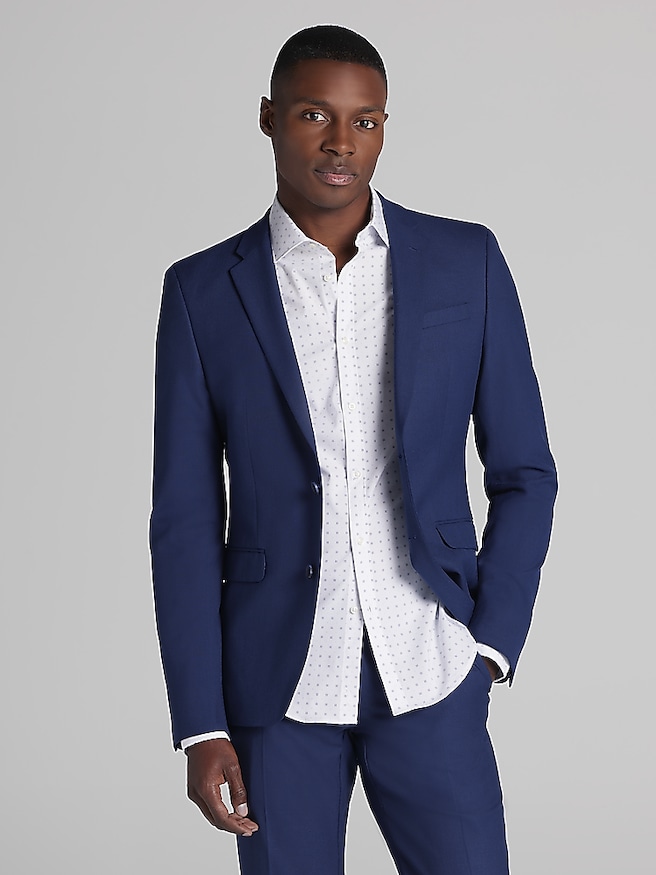
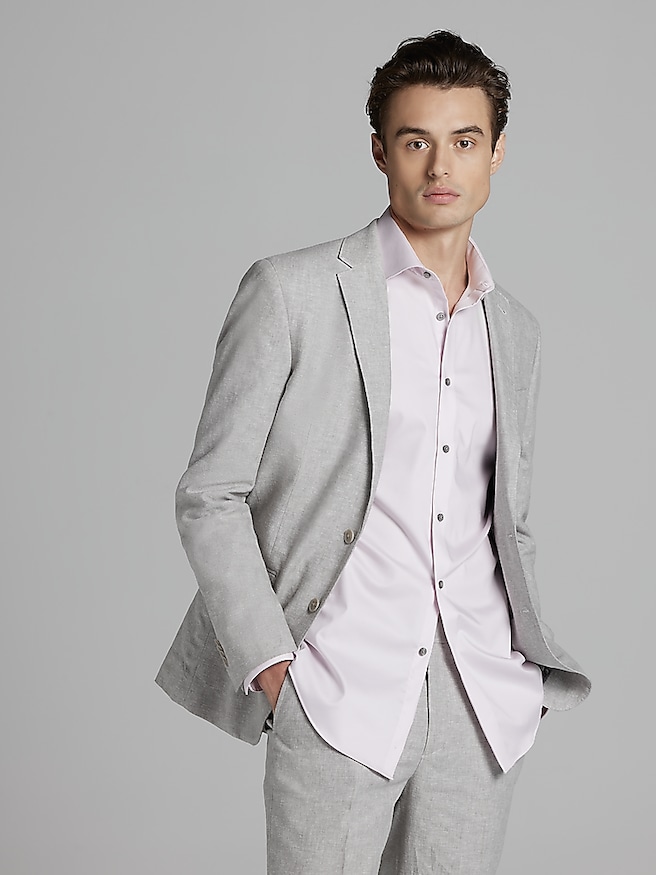
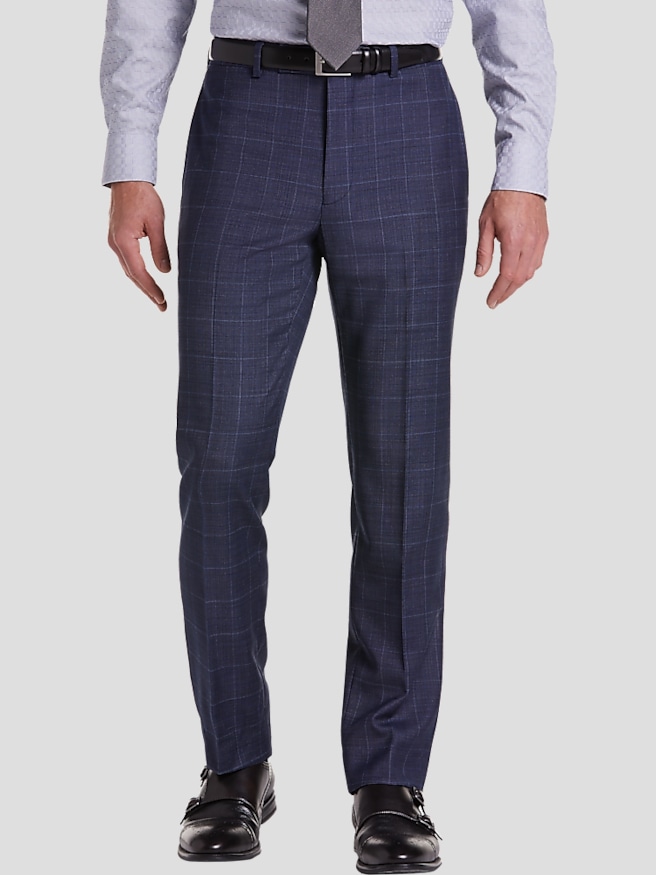
Slim fit men's suits have a close-to-the-body silhouette, with a shaped jacket waist, narrower sleeves, and trousers that taper toward the ankle. The result is a clean, contemporary profile that follows the body's lines without relying on excess fabric. Compared with a classic fit, a slim fit generally has less room through the chest, waist, seat, and thighs; compared with a modern fit, it usually has a more pronounced taper. Exact proportions vary by cut, so the fit designation describes the overall shape rather than guaranteeing the same measurements across every suit. A well-fitting slim suit should look streamlined while still allowing comfortable sitting, walking, and reaching. Jacket shoulders should lie smoothly, with the shoulder seam near the natural edge of the shoulder, and the lapels should rest against the chest rather than bow outward. When the jacket is buttoned, strong pulling around the closure suggests that more room is needed. The trousers should sit securely at the waist and fall smoothly over the seat, with enough space through the thighs to sit at a desk or climb stairs without strain. A lean build may suit these proportions naturally, while an athletic build can work well when the chest, upper arms, and thighs have sufficient room. Slim fit is a matter of proportion, not a requirement to have one particular body type. Someone who prefers more space through the torso or legs may feel more comfortable in a less tapered cut. Jacket length, sleeve length, and trouser hems also affect the finished appearance: a balanced jacket anchors the silhouette, a small glimpse of shirt cuff adds definition, and a slight trouser break keeps the tapered leg looking neat. Alterations can refine details such as sleeve length, hems, and some waist shaping, but a jacket that fits correctly through the shoulders and chest provides a stronger starting point than one that needs extensive reconstruction.
Fabric gives a slim fit suit much of its character, influencing how it drapes, moves, and holds its shape. Wool is a traditional suiting material because its natural resilience helps fabric recover from light creasing, while its drape supports a structured appearance without necessarily feeling stiff. The weight and weave matter as much as the fiber name: a fine, smooth weave can look polished and understated, while a more textured weave adds visible depth. Wool blends combine fibers to balance characteristics such as softness, shape retention, and strength. Synthetic blends may offer wrinkle resistance and durability, although comfort and appearance depend on the fabric's construction and finish rather than fiber content alone. A small amount of stretch can make a close-fitting suit more accommodating during movement, especially when sitting through a meeting or standing for a wedding ceremony. Stretch should complement the fit, not substitute for adequate room. Cotton and linen suiting have a distinct surface and a tendency to crease more visibly, giving them a more relaxed character than smooth worsted wool. Color and pattern further shape the impression. Navy and charcoal provide a restrained foundation for professional settings, while medium gray offers a softer contrast with shirts and ties. The blue spectrum ranges from deep, subtle shades to brighter tones with more visual presence; Men's Blue Slim Fit Suits brings that color family into the same streamlined silhouette. Fine stripes, small checks, and subtle woven patterns can add interest without overwhelming the suit's proportions. Details such as lapel width, pocket style, and the jacket's button arrangement also contribute to the overall effect. A notch lapel has a familiar, versatile appearance, while a peak lapel creates a more pronounced line toward the shoulders. The strongest combination is one in which fabric, color, and construction support the intended occasion rather than compete for attention.
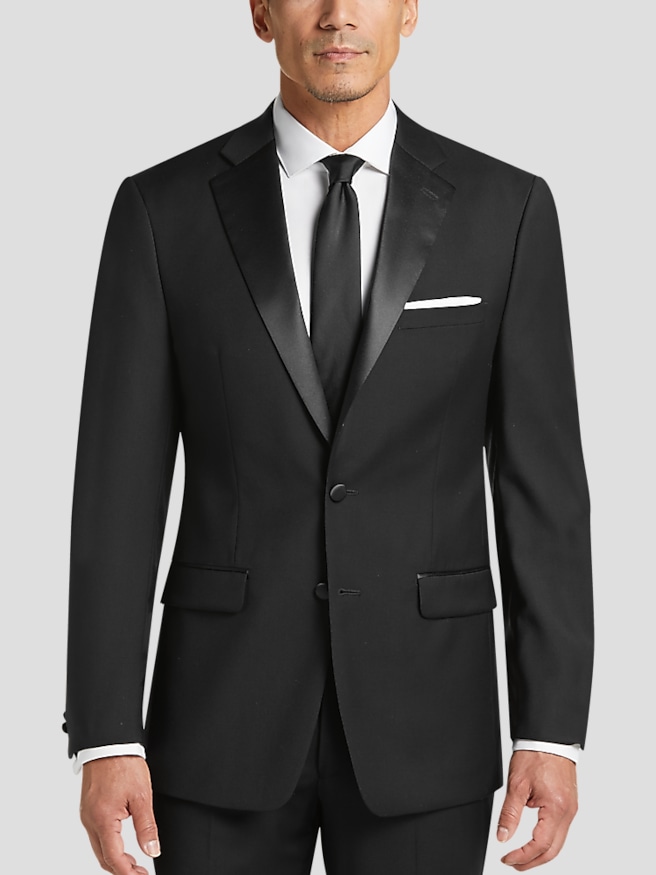
Slim fit suits work across business, wedding, graduation, and dressier social settings, with the shirt, shoes, and accessories helping establish the level of formality. For an interview or an important presentation, a dark solid suit, crisp dress shirt, restrained tie, and polished leather shoes create an orderly appearance that keeps attention on the person wearing it. At a wedding, a textured tie or carefully folded pocket square can add personality while respecting the stated dress code. A suit is not interchangeable with a tuxedo when an invitation specifies black tie, so the occasion's expectations matter as much as the silhouette. For a dinner or reception with a less formal dress code, an open-collar shirt can soften the look while preserving the jacket's structure. Proportion remains important throughout: a collar that sits comfortably beneath the lapels, sleeves that do not bunch under the jacket, and shoes that balance the narrow trouser opening help the outfit feel cohesive. A slim fit suit can also be a meaningful gift for someone approaching a career milestone, graduation, or wedding, though accurate measurements and personal preferences are especially important with a close-fitting cut. Ongoing care helps preserve both appearance and useful life. Follow the garment's care label, address spots promptly using an appropriate method, and avoid unnecessary cleaning that can place added stress on the fabric. After wearing, let the suit air out before returning it to the closet. A broad, supportive hanger helps maintain the jacket's shoulder shape, while properly hanging the trousers reduces avoidable creasing. A breathable garment bag can protect against dust without trapping residual moisture. Gentle brushing, when suitable for the fabric, removes surface debris; professional pressing can restore a crisp finish when needed. Rotating between suits gives each garment time to recover between wears, and keeping the jacket and trousers together for recommended cleaning helps maintain a consistent appearance. With comfortable proportions, suitable fabric, and thoughtful care, a slim fit suit can remain a dependable part of a polished wardrobe.