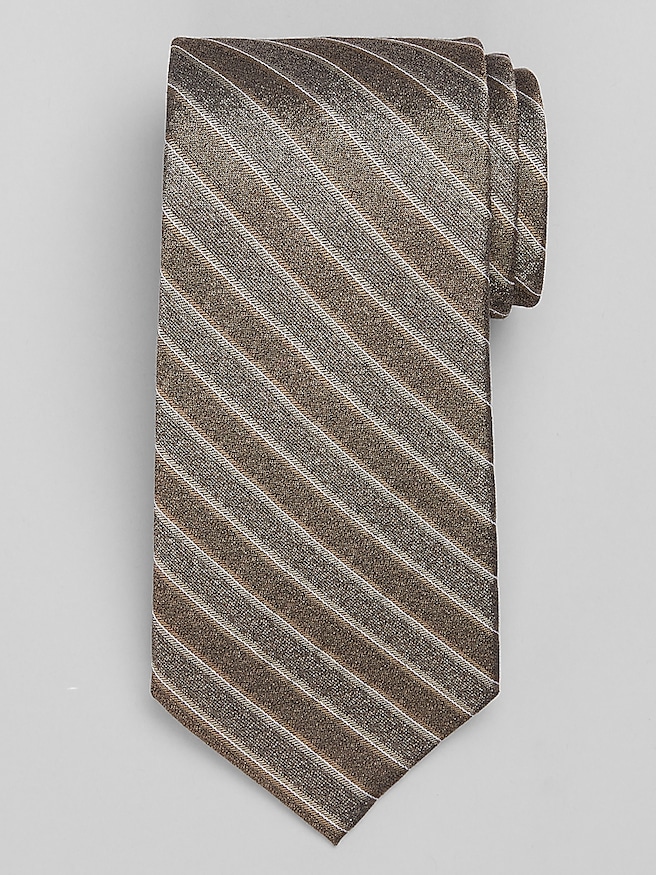
Striped ties for striped shirts bring depth to tailored clothing without relying on a bold print or an unusual color. The appeal is in the relationship between the two patterns: a fine stripe on a dress shirt gives a broader tie stripe room to stand out, while a more pronounced shirt stripe often works with a tie whose pattern feels smaller and quieter. That contrast helps each piece remain distinct instead of blending into a busy field of lines. Color creates another point of connection. A navy tie with a restrained burgundy stripe can sit comfortably against a blue-and-white shirt because the blue tones establish common ground, even when the stripes run in separate directions. The colors do not need to match exactly; a shared undertone or a repeated accent is often enough to make the combination feel considered. Diagonal tie stripes also interrupt the vertical lines of a shirt in a way that adds movement without overwhelming a suit. For an office presentation, narrow blue shirt stripes, a darker striped tie, and a solid charcoal jacket create a clear focal point around the face. For a wedding or an anniversary dinner, a richer accent color and a fabric with a gentle sheen can give the same basic pairing a more celebratory character. The jacket matters, too. A solid suit or sport coat provides a quiet frame, especially when both the shirt and tie have visible contrast. A patterned jacket introduces another layer, so the size and intensity of each pattern become more important. Stripes with generous spacing tend to look more graphic, while closely spaced lines can read almost like texture from across a room. Neither effect is inherently more formal; fabric, color, and the surrounding clothing shape the overall impression. The strongest combinations usually have one pattern that leads and another that supports it, giving the outfit definition without making every element compete for attention. That balance is useful anywhere a necktie should look intentional but not become the entire conversation.
Fabric influences how those stripes look, how the tie knots, and how comfortably it wears throughout a full day. The appeal of Striped Silk Ties includes the way silk can carry crisp color and a subtle luster, although the finish varies with the weave. A smooth woven silk tie may reflect light more noticeably than one with a textured surface, changing the contrast between adjacent stripes as the wearer moves. Ribbed weaves add dimension that pairs well with a smooth dress shirt, while a softer, less reflective finish gives patterned clothing a quieter character. Wool and wool-blend ties can introduce a more substantial, matte texture; cotton and linen blends often have a drier surface and a less polished drape. Polyester and other synthetic blends vary widely in hand, sheen, and wrinkle resistance, so fiber content alone does not tell the whole story. The outer fabric, internal lining, and construction all contribute to the tie’s weight and the shape of its knot. A thick tie can form a substantial knot even with a simple four-in-hand, while a lighter fabric may accommodate a fuller knot without becoming bulky. Collar shape helps determine the right balance: a narrow opening generally suits a more compact knot, and a wider spread leaves space for additional fullness. Tie width also looks most cohesive when it relates to the jacket’s lapels rather than following a measurement in isolation. Length is equally practical. With the knot secured and the collar buttoned, the front blade generally looks balanced when its tip reaches around the waistband or belt buckle. Torso length, neck size, and the amount of fabric used in the knot all affect that result. A tie that lies flat, a collar that closes comfortably, and a knot that sits neatly beneath it make patterned dressing look composed from the first meeting through the last photograph. Clean edges and an even drape also let the stripes remain the visual focus.
For daily business clothing, striped ties offer enough variety to distinguish familiar shirt-and-suit combinations without requiring a completely separate wardrobe for every occasion. A small rotation built around the colors already present in dress shirts can support client meetings, job interviews, religious services, and dinners where a jacket and tie feel appropriate. More subdued combinations tend to keep attention on the person speaking, while brighter or wider stripes can add personality when the setting allows it. For someone who wears a tie only occasionally, familiar colors and a moderate stripe scale can make the piece easier to coordinate with an existing suit. The same considerations make a striped tie a thoughtful gift for a graduate, a new professional, or someone marking a career milestone. A recipient’s usual shirt colors, preferred tie width, and approach to dressing provide better clues than choosing a pattern in isolation. Care helps preserve both the appearance and the useful life of neckwear. The care label should guide cleaning, since silk, wool, blended fabrics, and internal linings may respond differently to moisture and heat. After wear, carefully reversing the tying steps rather than pulling the narrow end through a tight knot reduces unnecessary stress on the fabric and seams. Allowing the tie to rest untied helps it recover from creasing. Storage on a suitable tie rack or in a loose roll can prevent sharp folds, while keeping neckwear away from rough surfaces helps protect against snags. A fresh spill is best blotted gently rather than rubbed, with further treatment based on the care instructions or advice from a cleaner experienced with ties. Pressing also calls for caution because excessive heat or pressure can flatten texture and leave unwanted shine. With sensible care and attention to proportion, striped ties for striped shirts can remain a dependable part of dressed-up clothing, bringing color, texture, and a clear sense of coordination to pieces already worn and enjoyed.