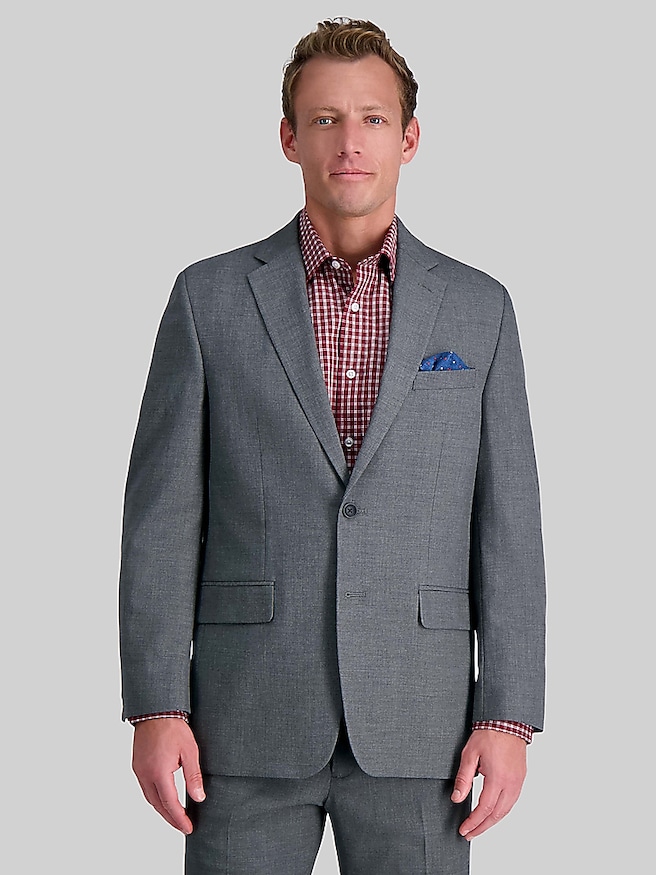
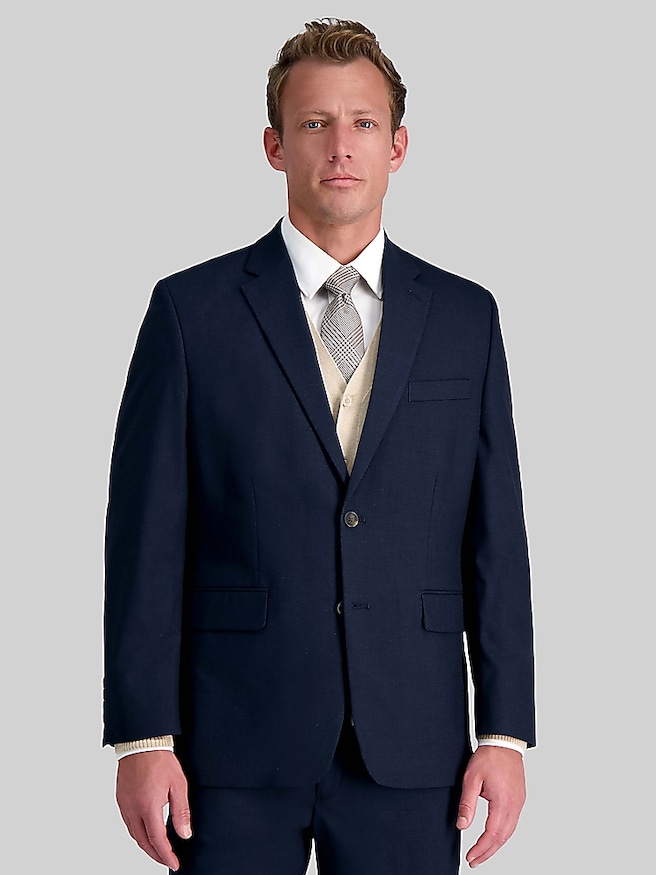
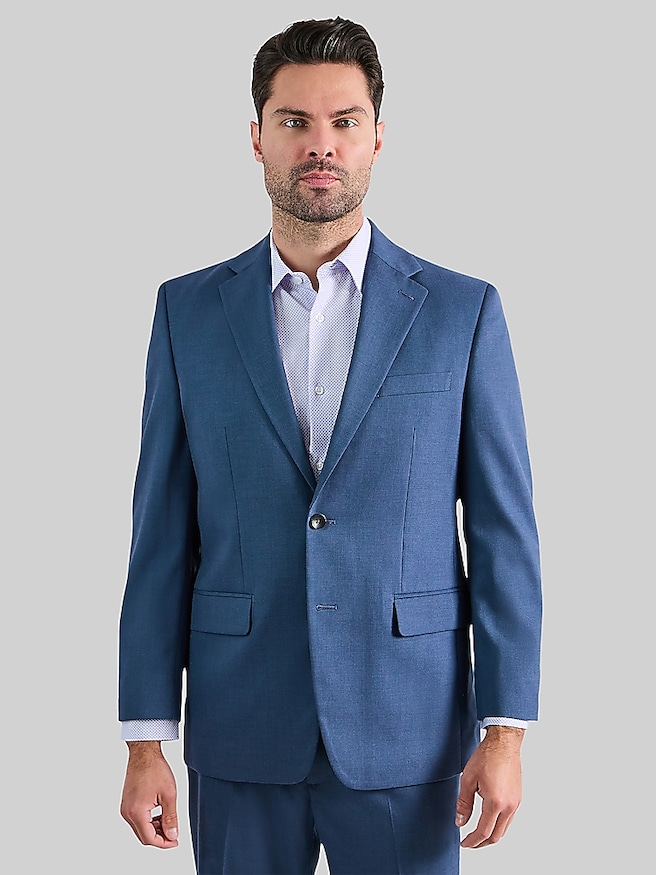
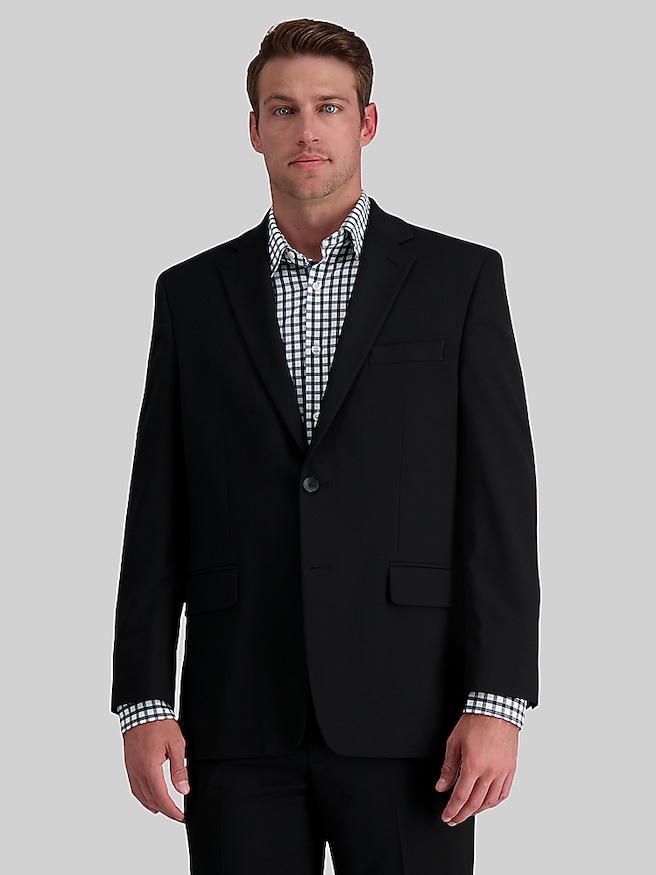
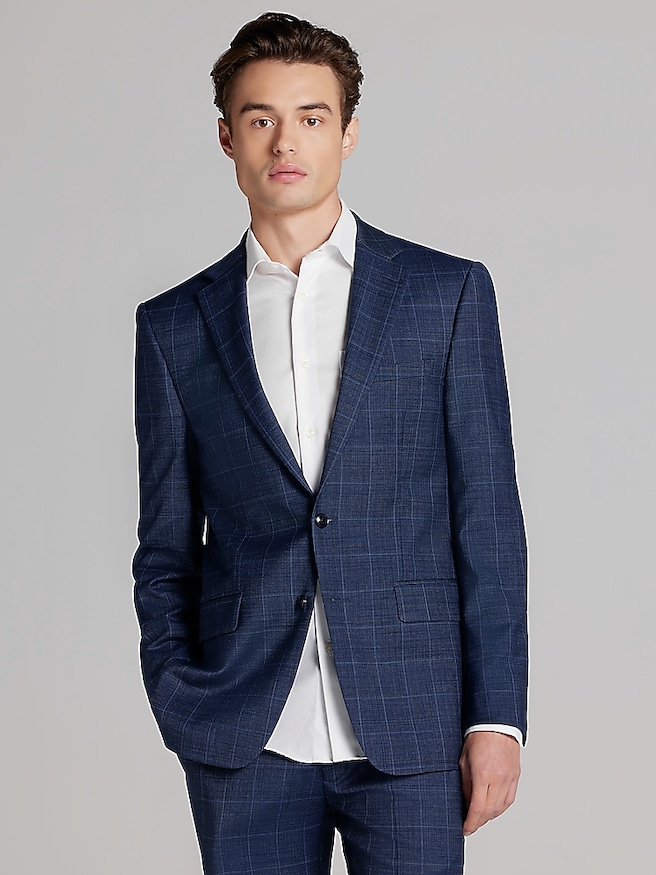
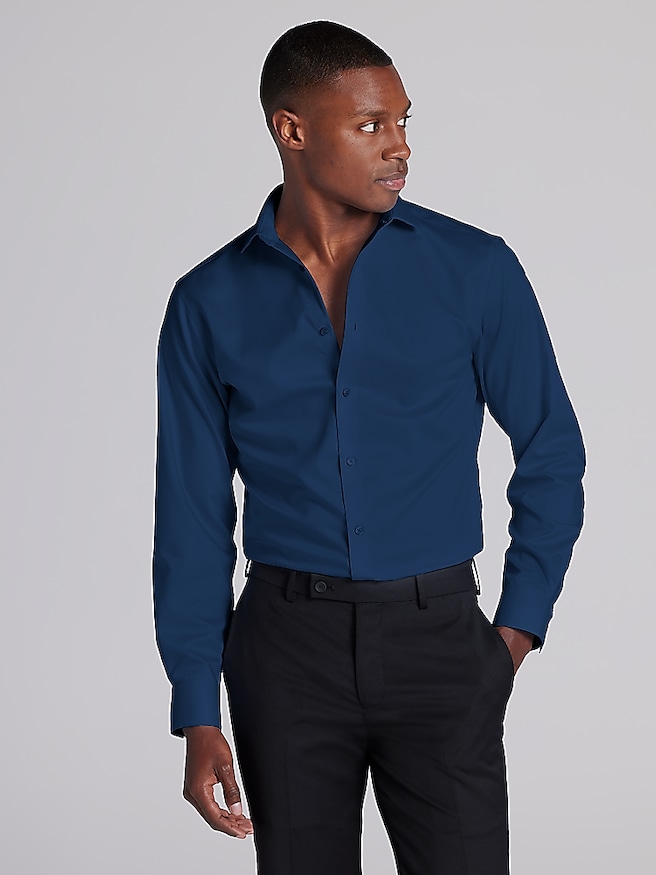
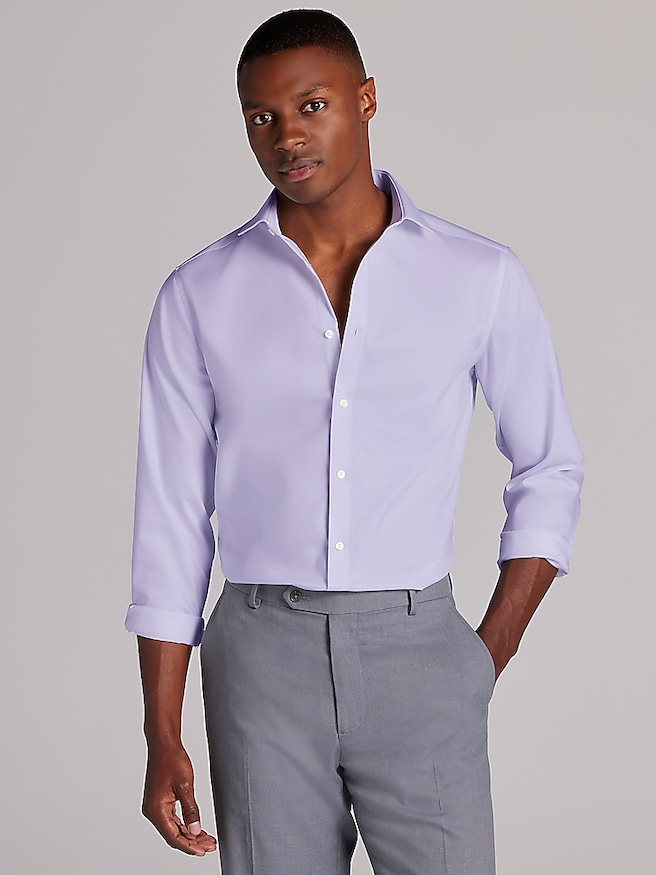
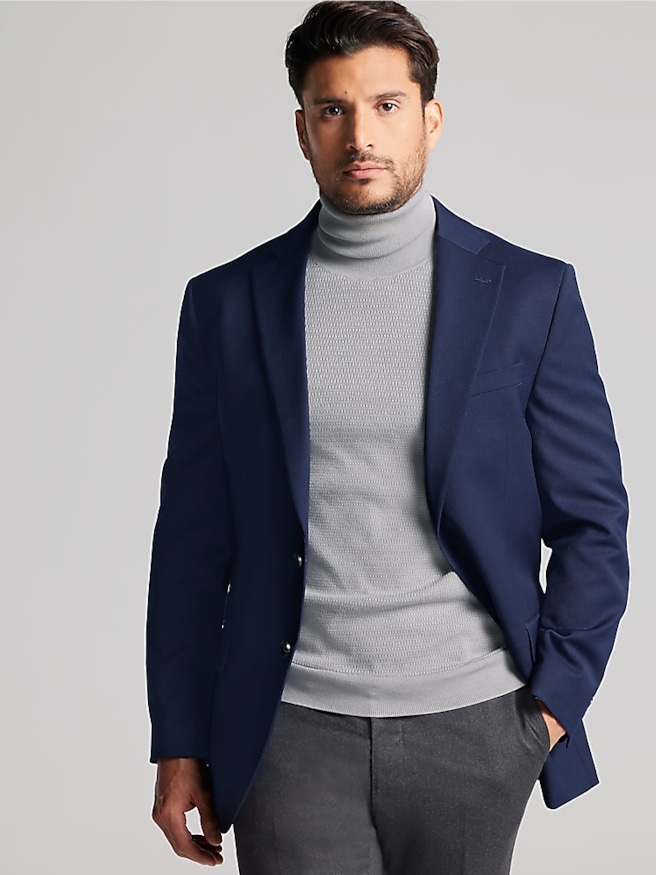
Spring business attire for men combines breathable fabrics, tailored fits, and office-appropriate colors in clothing suited to professional settings. Lightweight suits, blazers, dress shirts, and trousers form the foundation, with the level of formality shaped by the workplace and the day’s schedule. A client presentation may call for a coordinated suit and tie, while a routine day in a business casual office may suit a sport coat, an open-collar shirt, and chinos. Navy and gray remain useful anchors because they pair easily with white, light blue, and subtle patterned shirts. Tan, stone, and lighter gray add a spring character without making an outfit feel too relaxed for work. Color alone does not determine how formal clothing looks: a pale gray suit with a crisp shirt can look more polished than dark trousers paired with an untucked shirt. Fabric and construction matter just as much. Lightweight wool can provide breathability, a smooth drape, and resilience against everyday creasing, especially in an open weave. Cotton offers a familiar feel and a clean appearance, although its tendency to wrinkle varies with the weave and finish. Linen allows airflow and brings visible texture, with natural creasing that works especially well in less formal offices. Cotton-linen and wool-linen blends can balance that texture with a more structured appearance, depending on their composition. Jacket lining also influences comfort; partial lining or an unlined construction may reduce bulk, but the outer fabric still plays a major role in how the garment feels. For a commute followed by hours in an air-conditioned meeting room, a breathable shirt under a lightweight jacket provides useful flexibility. Spring office clothing works best when it looks composed at a desk, feels comfortable on a walk between buildings, and remains appropriate when an unexpected meeting appears on the calendar. The goal is not simply lighter clothing, but a professional wardrobe with enough structure for business and enough ease for a full working day.
Fit gives spring business clothing its finished appearance, whether the outfit centers on a suit or coordinated separates. A jacket should sit cleanly across the shoulders without extending noticeably beyond them, and its collar should rest close to the shirt collar rather than leaving a visible gap. When buttoned, the front should lie relatively smooth instead of pulling into an X shape. Enough room through the upper back and sleeves makes everyday movements easier, from reaching for a laptop bag to taking notes across a conference table. Slim, modern, and classic fit labels can help narrow the choices, but their proportions vary; shoulder placement, chest room, and trouser shape are more useful than the label alone. Trousers should sit securely at the waist without relying on a tightly cinched belt, with sufficient ease through the seat and thighs for sitting comfortably. A slight break at the shoe creates a traditional business finish, while little or no break produces a sharper line that works well in many contemporary offices. Excess fabric pooling around the ankles can make even carefully chosen clothing look unfinished. Shirts deserve the same attention. A collar worn with a tie should close comfortably, and the placket should remain flat across the chest. Sleeves should reach the wrist without slipping over the hand, with a small amount of cuff visible beneath the jacket. Poplin offers a smooth, crisp surface, while twill has a subtle diagonal texture and often a softer drape; fabric weight and finishing affect the feel of both. Fine stripes, small checks, and restrained patterns add variety without competing with a jacket or tie. Stretch blends may improve ease of movement, though stretch does not replace a suitable fit. For someone who spends much of the day seated, room through the waistband and knees can matter more than a narrowly tapered silhouette. For someone frequently standing in front of clients, a clean jacket line and trousers that hang smoothly help maintain a polished impression.
A practical spring work wardrobe also depends on how easily its pieces coordinate and how well they hold up to repeated wear. A consistent palette of navy, gray, blue, and stone allows shirts, trousers, and jackets to move between outfits without requiring every combination to match exactly. Separates usually look more intentional when the jacket and trousers have a clear contrast in color or texture, rather than appearing to be slightly mismatched parts of a suit. Brown leather loafers or lace-up shoes complement many lighter neutrals, while black dress shoes provide a more formal finish with charcoal or navy. Suede introduces a softer texture for business casual settings, though it requires care around moisture. Minimal leather sneakers belong only in workplaces where the dress code supports them; a casual Friday policy does not necessarily extend to client-facing appointments. A belt in a compatible leather tone, a restrained tie, and socks that relate to the trousers keep the overall appearance cohesive. These considerations are useful for established professionals refreshing their work rotation as well as graduates preparing for interviews or a first office role. For plans outside business hours, a spring outfit for men can carry similar colors and textures into a more relaxed setting. Long-term wear depends on care as much as coordination. Care labels should determine whether a garment is machine washable, suitable for professional cleaning, or requires another method. Non-iron and wrinkle-resistant finishes can simplify shirt maintenance, but they do not remove the need for proper washing, drying, and storage. Hanging jackets on shaped hangers helps support their shoulders, while hanging trousers neatly helps preserve the crease. Allowing clothing to air out between wears and rotating frequently used pieces can limit repeated stress on the same areas. Secure buttons, tidy seams, and fabric that recovers well after movement are useful signs of thoughtful construction. With appropriate care and a comfortable fit, spring business attire can serve interviews, presentations, business travel, and ordinary office days with the same composed, professional character.