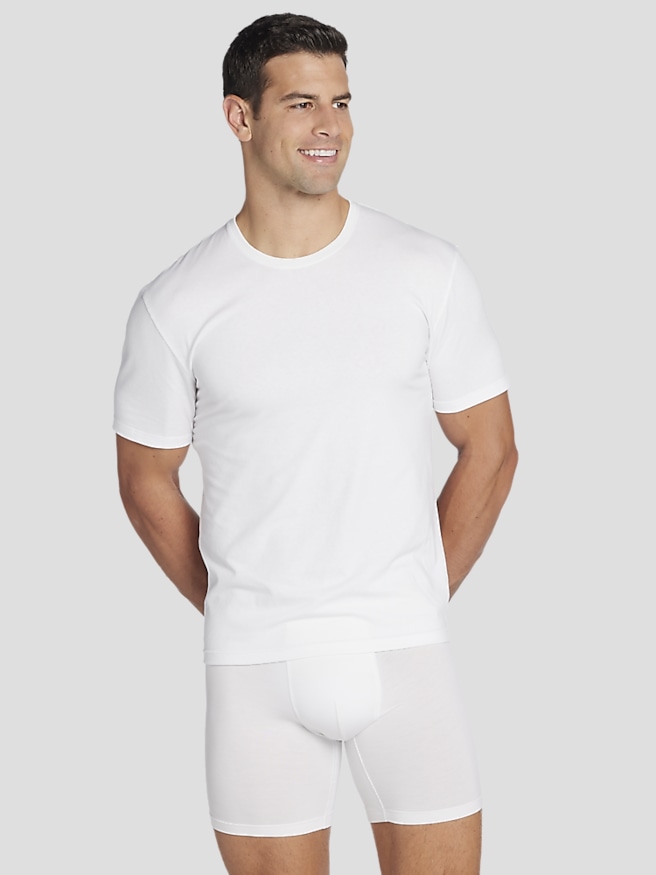
Spandex undershirts combine flexible fibers with materials such as cotton, modal, nylon, or polyester to create a close-fitting layer beneath everyday clothing. Spandex, also called elastane, gives fabric stretch and helps it recover its shape after movement. That flexibility is useful when reaching across a desk, lifting a briefcase, or sitting through a long meeting: an undershirt should follow the body without pulling against the shirt above it. The other fibers in the blend contribute much of the fabric’s feel. Cotton offers a familiar, soft texture and absorbs moisture, while modal contributes a smooth hand and fluid drape. Nylon and polyester can create lightweight, smooth fabrics, and some blends are designed to move moisture away from the skin or dry quickly. Those performance qualities depend on the fabric construction and any treatments, not simply the presence of spandex. A stretch undershirt is not automatically moisture-wicking, and a close fit does not automatically make it a compression garment. For everyday layering, the goal is usually comfortable contact with the body rather than firm pressure. Fabric weight matters, too. A fine, lightweight knit can sit discreetly beneath a fitted dress shirt, while a more substantial knit may offer greater coverage under casual clothing. Neither thickness nor stretch percentage alone tells the whole story; the balance of fibers, knit structure, and garment cut determines how an undershirt feels in use. A small amount of spandex can provide useful flexibility without making the fabric feel especially elastic. More stretch may suit someone who prefers a body-following fit, but it does not necessarily mean better comfort or longer wear. The most useful choice is a blend that feels pleasant against the skin, lies smoothly beneath clothing, and returns to its original shape without persistent ripples or sagging. For someone who wears button-front shirts regularly, that quiet combination of softness and recovery can make an undershirt a practical part of getting dressed.
Fit determines how well spandex undershirts perform as a base layer. The fabric should skim the chest and torso without digging into the underarms, pulling across the shoulders, or gathering in thick folds at the waist. Stretch can accommodate movement, but sizing down sharply can create tension lines that show through an outer shirt and make the neckline or sleeves feel restrictive. Shoulder seams should rest comfortably near the shoulder edge, and sleeve openings should allow easy movement without squeezing the upper arm. Length deserves equal attention. An undershirt intended to stay tucked needs enough coverage to remain inside the waistband when its wearer bends or reaches, without leaving excess fabric bunched beneath trousers. A quick seated check can reveal problems that are less obvious while standing: the hem should stay settled, and the body should not feel tight across the stomach. Neckline choice depends on what goes over it. A crew neck offers coverage beneath a fully buttoned shirt, while a V-neck can remain less visible when the top button is open, provided the depth suits the shirt opening. Sleeveless cuts reduce fabric around the upper arms, but short sleeves provide an additional layer between the underarm and the outer shirt. Smooth seam construction and low-profile neckbands can also help reduce visible outlines, especially beneath fine fabrics. Color is another practical consideration. A shade close to the wearer’s skin tone often appears less noticeable beneath a light dress shirt than a sharply contrasting shade. Darker layers can work well beneath opaque, dark-colored clothing; Men's Black Undershirts are a natural consideration for that purpose. Black is not necessarily invisible beneath white or pale fabric, so it helps to assess the complete outfit in ordinary lighting. The right undershirt should support the appearance of a dress shirt, polo, or sweater rather than announce itself through a prominent collar, sleeve ridge, or folded hem.
Care has a direct effect on the comfort and useful life of a stretch undershirt. Always follow the garment’s care label, since cotton-rich, modal-rich, and synthetic blends may have distinct washing and drying requirements. Excessive heat can damage elastic fibers over time, so a lower drying setting or air-drying may be appropriate when the label allows it. Avoid chlorine bleach unless it is specifically permitted, and check guidance on fabric softeners for fabrics with moisture-management finishes. Washing with similar colors helps protect the appearance of lighter and darker layers, while keeping undershirts away from exposed hooks and rough fasteners can reduce snags. Overloading the washer can also limit cleaning and leave garments tightly twisted together. After washing, gently reshaping the neckline and hem can help the garment dry neatly without unnecessary pulling. Durability is best judged by more than softness on the first wear. Even stitching, secure hems, and fabric that rebounds after a gentle stretch are useful qualities to consider. Over time, persistent bagging, stretched neckbands, thinning fabric, and seams that twist away from their original position can signal that an undershirt is no longer providing the same smooth foundation. Keeping several undershirts in rotation spreads wear and allows each garment to be washed and dried according to its instructions. Their everyday uses extend from office outfits and business travel to dinners, celebrations, and casual days in a polo. For exercise, a stretch undershirt may feel flexible, but purpose-built performance features matter more than stretch alone when managing perspiration. As a practical gift, undershirts make the most sense when the recipient’s size, preferred neckline, and usual fabric feel are already known. Someone accustomed to relaxed cotton layers may prefer a cotton-rich stretch blend over a slick, tightly fitted fabric. With suitable care and a comfortable fit, spandex undershirts provide an unobtrusive foundation that helps the rest of an outfit sit as intended.