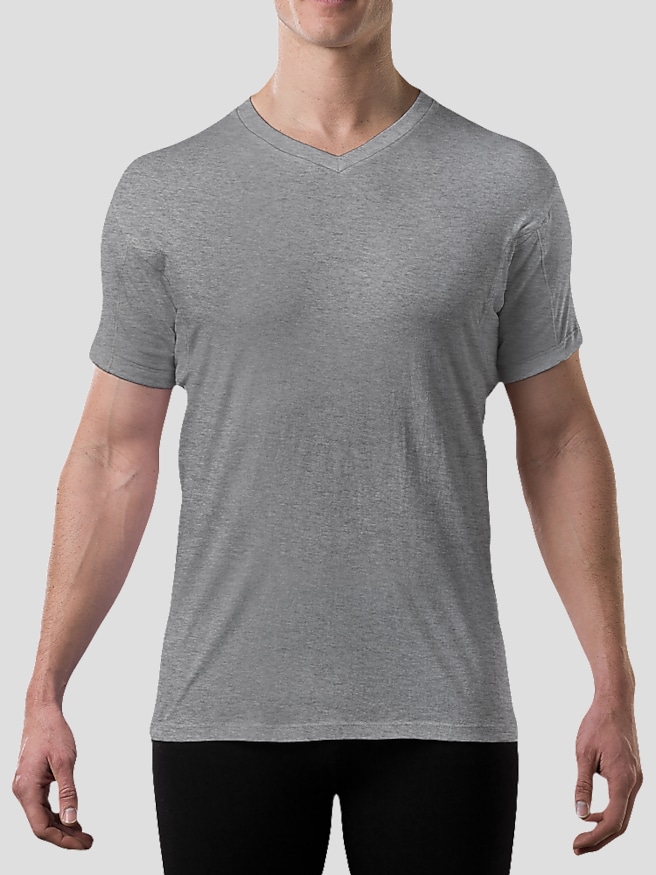
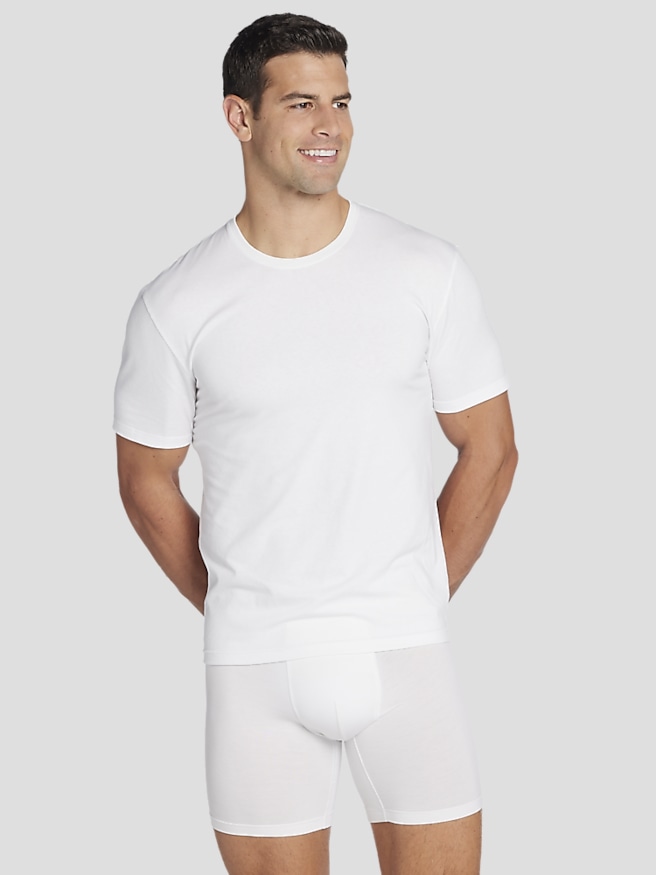
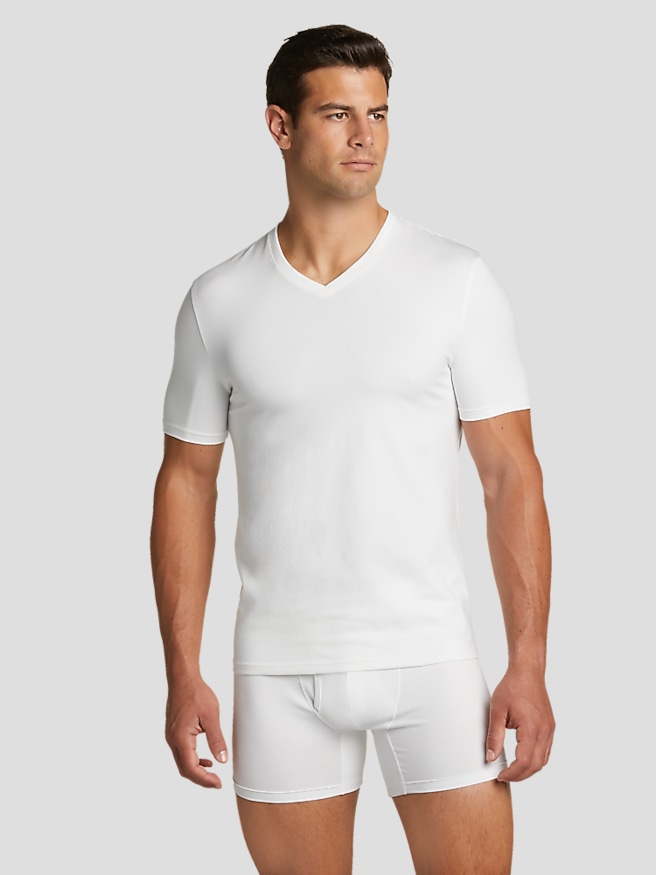
Men’s black undershirts provide a soft layer between the body and outer clothing, with a dark, understated color that works particularly well beneath black, charcoal, navy, and other deep-toned shirts. Their purpose is practical: they can absorb some perspiration, help limit direct contact between body oils and a dress shirt, and make textured fabrics feel more comfortable against the skin. Black is also a useful choice when an undershirt is meant to show, such as a neat crew neckline beneath an open casual shirt. It is less discreet under white or sheer fabrics, where the contrast may remain visible; the best pairing depends on the opacity of the outer shirt and whether the base layer should blend in or become part of the outfit. Neckline makes a noticeable difference. A crewneck sits higher on the chest and creates a defined edge at the collar, while a V-neck can stay out of sight beneath a dress shirt with the top button undone, provided the opening is not deeper than the V. Sleeveless undershirts leave the arms uncovered and reduce fabric around the shoulders, although they do not provide the underarm coverage of short sleeves. For office clothing, a black undershirt beneath a dark button-down can create a consistent foundation without drawing attention away from the shirt, tie, or jacket. With an overshirt and jeans, a visible black neckline can look deliberate rather than like an exposed underlayer. Fabric weight matters in either setting: a lightweight knit generally adds less bulk, while a more substantial knit may offer greater coverage if the shirt will occasionally be worn on its own. Not every undershirt is designed for standalone wear, so opacity, length, and overall cut are worth considering. These small distinctions help separate a layer that simply fits beneath clothing from one that supports how the full outfit looks and feels throughout a workday, a trip, or an evening out.
Material and fit shape much of the experience of wearing a black undershirt. Cotton is a familiar choice for its softness and absorbency, with a natural feel that suits everyday layering. Its ability to absorb moisture does not necessarily mean it dries quickly, however, especially when the fabric becomes saturated. Modal blends often have a smooth surface and fluid drape, making them appealing beneath closely tailored shirts where excess fabric can bunch. Polyester and other performance-oriented blends may be engineered to move moisture away from the skin and dry more quickly, though those qualities depend on the fabric construction and finish rather than fiber content alone. A small amount of elastane can add stretch and help a shirt recover its shape after movement. For someone who spends hours seated at a desk, reaches overhead during the day, or carries a shoulder bag on a commute, that flexibility can make a close-fitting layer feel less restrictive. Fit should follow the torso without pulling across the chest, cutting into the underarms, or creating pronounced horizontal stretch lines. A relaxed cut provides more room, but extra material can gather at the waist beneath a trim dress shirt. A closer cut generally keeps the outline smoother, and Mens Fitted Undershirts offer a related option for shoppers who prefer that streamlined shape. Body length is just as important as width: enough length helps the hem stay tucked when sitting, bending, or reaching, while excessive length can collect inside the waistband. Sleeves should sit comfortably without rolling into a ridge beneath the outer shirt. Flat, neatly finished seams and smooth neck edges can also reduce distractions where fabric rests against the skin. Size labels alone cannot capture every proportion, so chest measurements, torso length, and the intended fit provide better context than automatically choosing a smaller size for a snug result. The most useful black undershirt allows ordinary movement while keeping its neckline, sleeves, and hem where they belong.
Durability in men’s black undershirts comes from the interaction of fabric quality, construction, fit, and care. A neckline that lies flat, stitching that remains secure, and a knit that returns to shape after stretching all contribute to a dependable everyday layer. A heavier fabric is not automatically more durable, just as a very soft hand does not by itself indicate how a shirt will perform after repeated washing. Friction, frequent high-heat drying, and an overly tight fit can place stress on fibers and seams over time. Black fabric also makes fading, lint, and deodorant residue more noticeable, so its appearance benefits from consistent care. The care label should set the washing and drying routine, particularly for blends containing stretch fibers or specialized finishes. Washing dark clothing with similar colors, turning shirts inside out, and using an appropriate amount of detergent can help maintain a cleaner-looking surface. Avoiding chlorine bleach and unnecessary heat can help protect color and elasticity when consistent with the garment’s care directions. Residue around the underarms is best addressed with a fabric-safe treatment suited to the label rather than aggressive scrubbing, which can wear the surface. Allowing deodorant to dry before dressing may also reduce transfer onto the fabric. For travel, a comfortable black base layer can work beneath several dark shirts, although each undershirt still needs washing after wear according to activity and personal needs. For daily dressing, rotating clean layers gives each shirt a break from repeated wear and makes it easier to notice stretched collars or thinning areas before they affect an outfit. Black undershirts can also be a practical gift for someone building an office wardrobe, replacing worn basics, or refining a regular shirt-and-jacket routine. Familiarity with the recipient’s size, preferred neckline, and fabric preferences makes the choice more personal and useful. Whether worn under business clothing or a casual button-down, a well-chosen undershirt earns its place through unobtrusive comfort, reliable coverage, and a shape that works with the clothing above it.