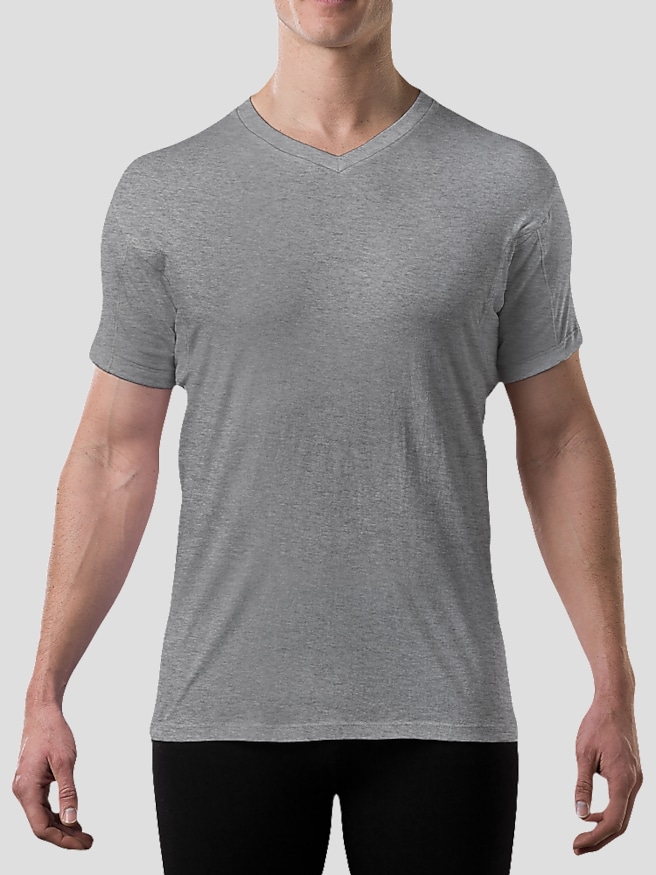
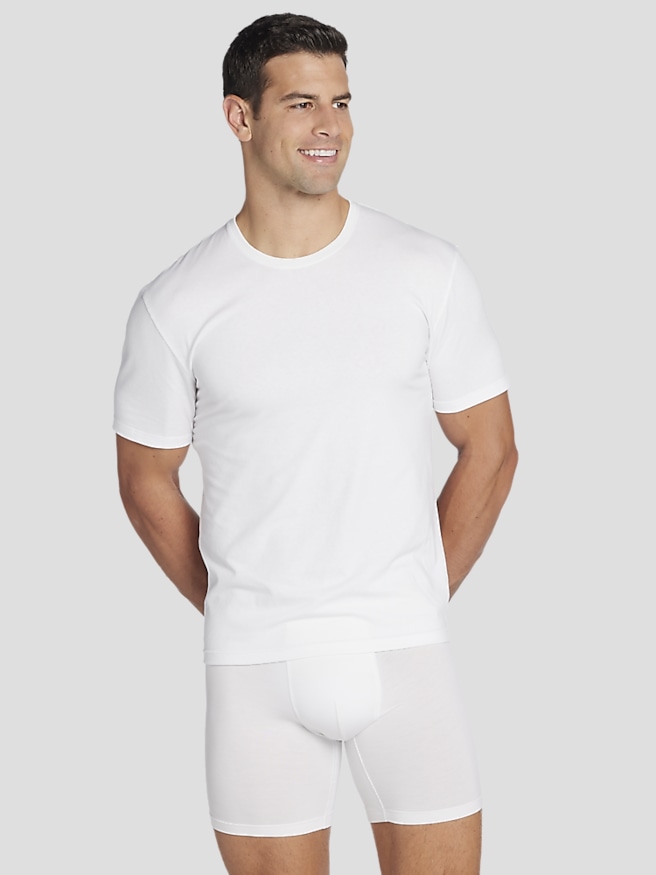
Men's fitted undershirts are close-fitting base layers designed to sit smoothly beneath dress shirts, polos, and other everyday tops without the extra fabric of a relaxed T-shirt. Their shape follows the torso, helping reduce folds around the waist and bunching beneath sleeves while leaving room for comfortable movement. Under a tucked-in button-down, that difference can be noticeable: the shirt has a cleaner line through the midsection, and less fabric gathers above the waistband when sitting at a desk or getting out of a car. A fitted undershirt should feel close, not restrictive. The neckline should rest comfortably, the shoulder seams should sit near the edges of the shoulders, and the body should allow a full reach without pulling sharply across the chest or underarms. Fabric that stretches visibly thin or creates deep horizontal tension lines may indicate a fit that is too tight. Excess material collecting at the sides can suggest more room than a fitted base layer needs. Length matters just as much as width. A longer body can help an undershirt remain tucked when bending, reaching for a shelf, or moving between meetings, while a hem that is excessively long may create its own bulk beneath tailored trousers. Sleeves should lie flat under the outer shirt rather than roll into a thick ridge. For men who wear dress shirts regularly, these details make fitted undershirts a practical part of getting dressed rather than an afterthought. They also serve a purpose beneath casual shirts, where a smooth foundation can help lightweight fabric drape more evenly. An undershirt can provide an additional layer between skin and the outer garment, absorbing some perspiration and helping limit direct contact with body oils. It does not replace regular laundering, but it can make an outfit feel more comfortable through a full day of work, travel, or a dressed-up occasion. The most useful fit supports the outfit without drawing attention to the layer underneath.
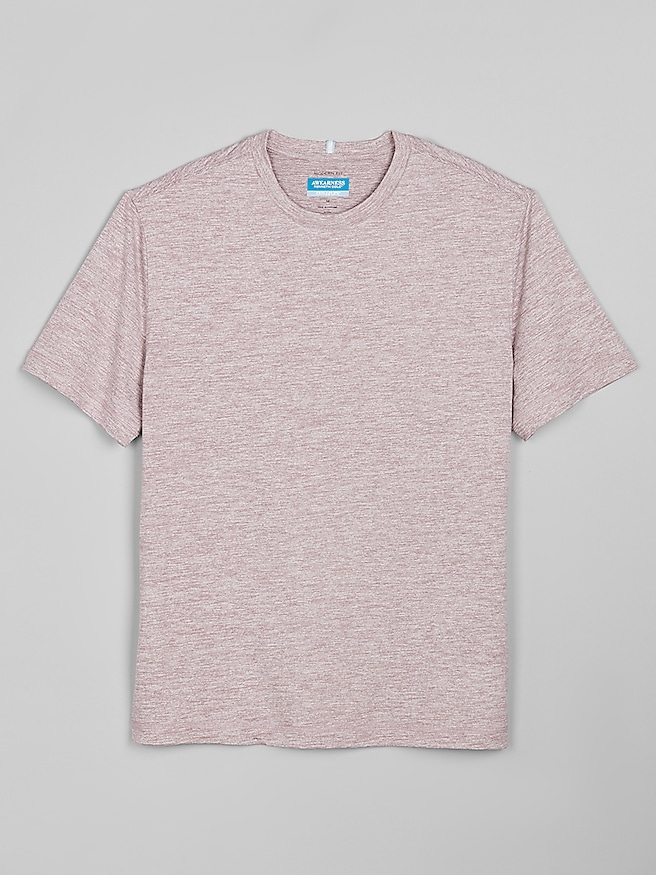
Fabric gives men's fitted undershirts much of their character, from the way they feel against the skin to how well they recover after movement. Cotton is a familiar choice for its softness, breathability, and absorbency, especially for everyday wear beneath woven shirts. A cotton knit with added elastane, also called spandex, can offer more give across the shoulders and help the body return to shape after stretching. Modal and similar regenerated-cellulose fibers are often used for a smooth hand and fluid drape, which can feel less bulky beneath a close-cut shirt. Polyester or nylon blends may be designed to move moisture and dry more quickly, although performance depends on the fabric's construction and finish rather than its fiber name alone. Absorbency and moisture-wicking are not the same feature: an absorbent fabric takes in moisture, while a wicking fabric helps move it across or away from the skin-facing surface. Neither quality guarantees that perspiration will never show through an outer shirt. Fabric weight also affects the result. A fine, lightweight knit may disappear more easily beneath tailoring, while a more substantial knit can provide additional coverage but take up more space. Neckline choice is equally important. A crew neck creates a higher line at the collar and can work beneath a fully buttoned shirt or when a visible undershirt edge is intentional. For open-collar outfits, Men's V Neck Undershirts provide a lower neckline that can remain below the opening, depending on the depth of both garments. Color deserves the same attention as cut. Under a light-colored dress shirt, a shade closer to the wearer's skin tone may be less noticeable than bright white, which can create a distinct outline. A fitted undershirt is not automatically invisible; contrast, neckline depth, sleeve edges, and the outer shirt's fabric all influence what shows. Smooth seams and a flat collar help complete the understated appearance.
Lasting comfort depends on construction and care as much as the first impression of softness. Well-finished seams should feel unobtrusive against the skin, especially around the underarms and shoulders, where repeated movement can make a rough edge distracting. Flat seams may reduce friction, but placement and finishing matter too. A collar that lies evenly, a hem that stays flat, and stitching that flexes with the knit are useful signs of thoughtful construction. Shape retention becomes particularly important with fitted undershirts because a stretched neckline or loose body changes how the entire layer sits beneath clothing. Following the care label helps protect both the fabric and any stretch fibers. Gentle washing, an appropriate detergent, and drying as directed can help limit unnecessary wear; fabric softener may interfere with certain moisture-management finishes, so the garment's instructions should determine whether it belongs in the wash. Giving an undershirt enough room in the laundry load also helps it wash and rinse properly. Once clean, smoothing the neckline and folding without stretching the shoulders can keep the next wear straightforward. A regular rotation allows time for washing and complete drying between uses, rather than relying on one base layer for every outfit. For a business traveler, a comfortable fitted undershirt can make a long day in a button-down feel less fussy. For someone dressing for a wedding or another formal event, the right neckline and body length can help preserve a neat shirt front through sitting, standing, and dancing. Men who prefer casual clothing may appreciate the same close fit beneath an overshirt or polo. These everyday uses also make undershirts a practical gift when the recipient's size, preferred neckline, and fabric preferences are known. The best match is not simply the tightest cut or the softest first touch, but a balanced combination of coverage, movement, comfortable seams, and dependable shape that works naturally with the clothes worn over it.