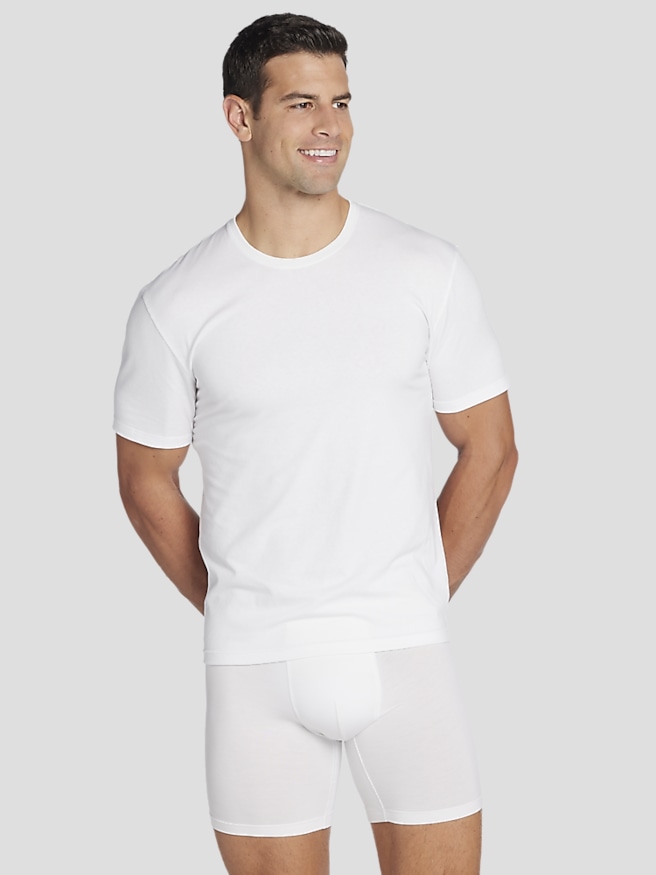
Comfortable men's undershirts combine soft fabric, a close but flexible fit, smooth seams, and enough length to stay tucked beneath another shirt. As the layer closest to the skin, an undershirt can make a noticeable difference through a full day of sitting, reaching, walking, and getting dressed for different occasions. Its purpose is more than adding coverage: it creates a soft barrier between the body and an outer shirt, helps absorb perspiration, and can reduce friction from a dress shirt's fabric or seams. Material plays a large part in that experience. Cotton is familiar for its softness, absorbency, and easy everyday feel, while combed cotton uses fibers processed to remove shorter strands for a smoother surface. Cotton with a small amount of stretch can provide gentle give across the shoulders and chest without needing an overly loose cut. Modal and other regenerated cellulosic fibers often contribute a smooth hand and fluid drape, making blends containing these fibers appealing beneath fitted clothing. Fabric described as bamboo is often bamboo-derived rayon or viscose; its comfort depends on the finished textile, knit, and construction rather than the fiber name alone. Polyester blends can support quicker drying and moisture movement, although performance varies with the fabric's design and finish. Absorbency and moisture management are not identical: one describes taking in moisture, while the other concerns how moisture moves through the fabric and dries. Lightweight jersey generally creates a smooth, unobtrusive layer, while a rib knit offers natural give and a more body-following feel. Fabric weight also affects coverage and drape, with thinner knits adding less bulk and more substantial knits providing a firmer feel. For men who notice every seam or label, a soft neckline, flat seam construction, and a tag-free or comfortably finished label area can matter as much as fiber content. Comfort comes from these details working together, not from a single material being right for everyone.
Fit determines how well that fabric works beneath the rest of an outfit. A comfortable undershirt usually sits near the body without pulling tightly across the chest, pressing into the underarms, or restricting movement through the shoulders. Excess fabric can bunch at the waist or create ridges beneath a dress shirt, while a cut that is too narrow may ride upward whenever the arms lift. The right balance leaves room to move without introducing loose folds that need repeated adjustment. Length deserves particular attention for anyone who spends part of the day seated at a desk or moving between meetings. A hem that remains below the waistband through ordinary movement helps keep the layer secure, especially beneath a tucked button-front shirt. Shoulder seams that sit comfortably near the shoulder edge and arm openings that do not pinch contribute to an easier fit, too. Neckline shape changes both the feel and the appearance of the finished outfit. A crew neck provides coverage near the collar and works naturally beneath a fully buttoned shirt or when a visible neckline is intentional. A V-neck sits lower at the chest and can remain out of sight when the top button of an outer shirt is open, depending on the depth of both necklines. Short sleeves provide coverage beneath the arms, while sleeveless shapes leave that area uncovered and have a different feel under fitted sleeves. Neither shape is universally more comfortable; the better match depends on the outer layer, personal preference, and where coverage is wanted. Color also influences visibility. A shade closer to the wearer's skin tone often shows less beneath a light-colored shirt than a sharply contrasting shade, though fabric opacity matters as well. Dark undershirts can blend more naturally beneath darker clothing. For an office presentation, a wedding, or a long travel day, the most useful foundation is one that stays in place and lets the shirt above it hang smoothly rather than drawing attention to itself.
Durability and care help preserve the qualities that make an undershirt comfortable in the first place. A soft knit still needs enough structure to hold its shape through repeated washing, and well-finished hems and evenly sewn seams can help it withstand regular wear. Neckbands are particularly noticeable over time: a neckline that retains its shape creates a cleaner appearance and avoids the loose, rippled edge that can show through another layer. Stretch recovery matters for similar reasons, helping fabric return toward its original shape after movement instead of remaining baggy at the waist or elbows of a short sleeve. Care requirements vary by fiber blend and construction, so the garment's care label is the best reference for washing and drying. Excessive dryer heat can contribute to shrinkage or affect elastic fibers, while rough handling and washing alongside abrasive closures may encourage surface wear. Thorough drying before storage helps keep frequently worn base layers fresh, and rotating undershirts gives each one time between wears and laundering. A comfortable fit after washing is just as important as the feel of a new garment, particularly when consistent length and neckline shape are part of an everyday dressing routine. For darker outfits, Men's Black Undershirts offer a color direction that can work beneath dark button-front shirts or as an intentionally visible layer at the neckline. Across colors and silhouettes, comfortable men's undershirts suit a broad range of routines, from daily office dressing to wearing a suit for an important celebration. They can also make a practical gift for a partner, father, brother, or graduate building a professional wardrobe, especially when the recipient's preferred size, neckline, and fabric feel are already known. An undershirt may be a small part of the outfit, but its effect is felt throughout the day: less distracting fabric against the skin, fewer adjustments at the waistband, and a smoother foundation beneath clothing that needs to look put together. Those everyday benefits make softness, reliable fit, and lasting construction more meaningful than any single feature on its own.